The Jakarta issue
What Jakarta's Commuter Line Shows You Between Beos and Bogor
One Red Line ticket, four centuries of Jakarta: from a Dutch trading company's terminus to a botanical garden 60km south, for less than the price of a coffee.

By Tomé SoaresThe city read on foot, one kampung at a time
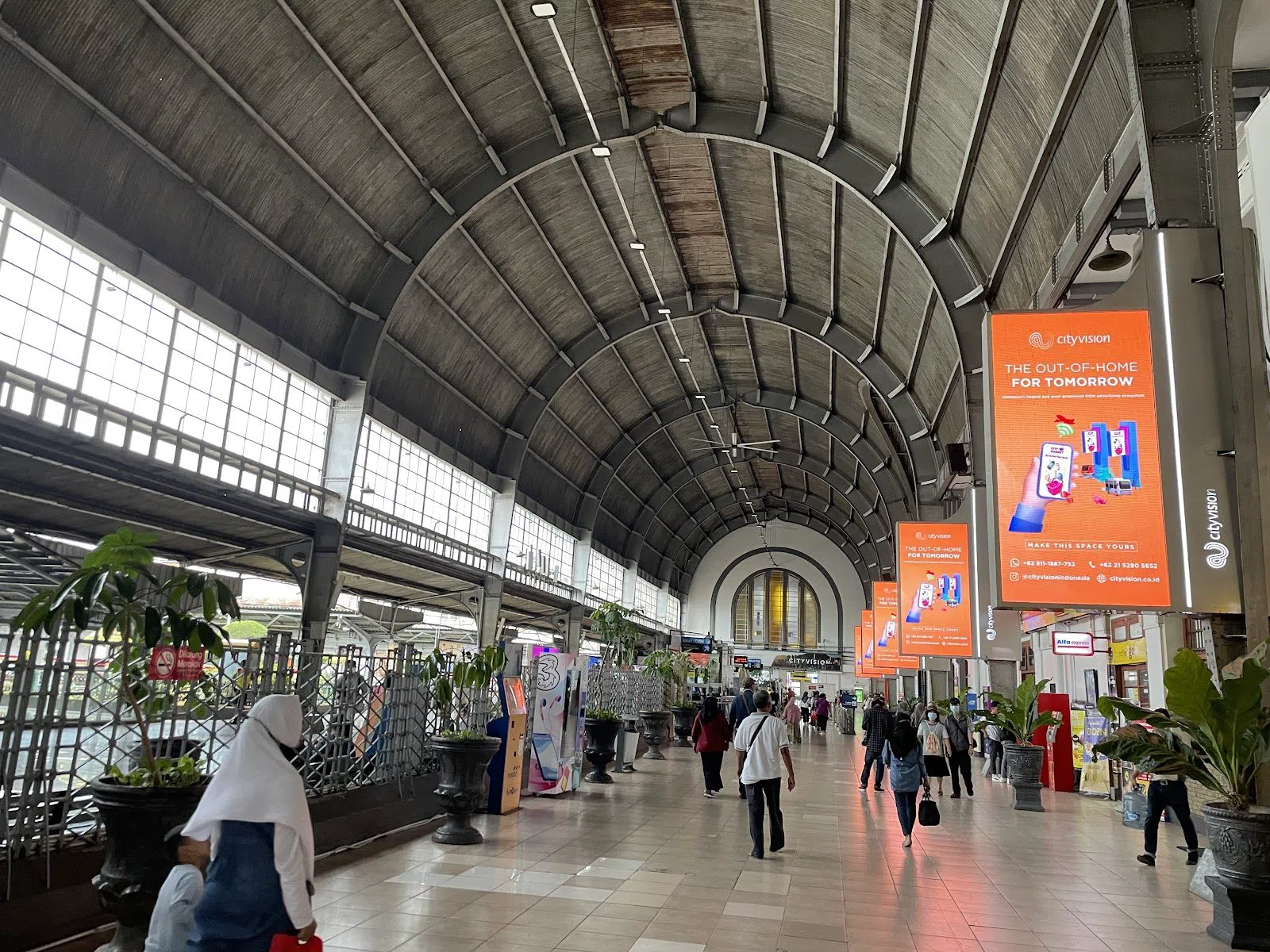
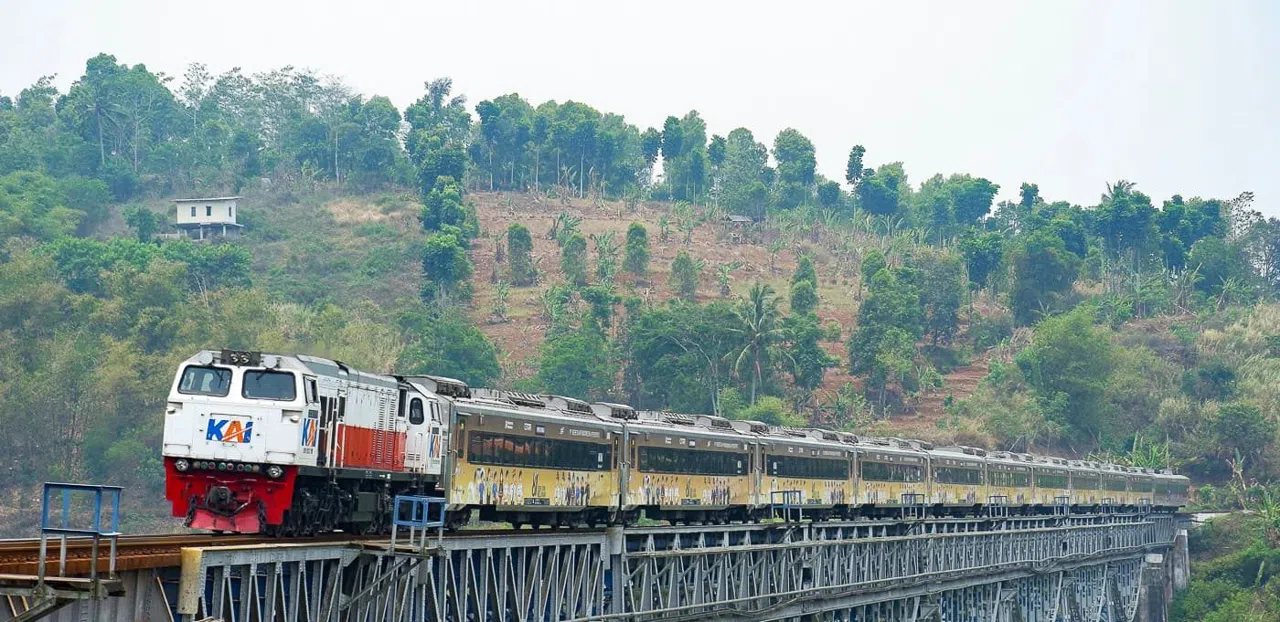
The tap of a stored-value card at Jakarta Kota costs Rp 3,000 and buys a morning no coach tour can assemble. One line runs from a Dutch trading company's terminus in the old town, through the most congested interchange in Indonesia, and out to a botanical garden 60km south: bank vaults, water dungeons, a working sailing port, a mosque built to face the colonial cathedral across the street, all strung along the same rails. The commuters pressed in beside you are not part of the display, which is why the day works.
Buy the card before you reach the barrier
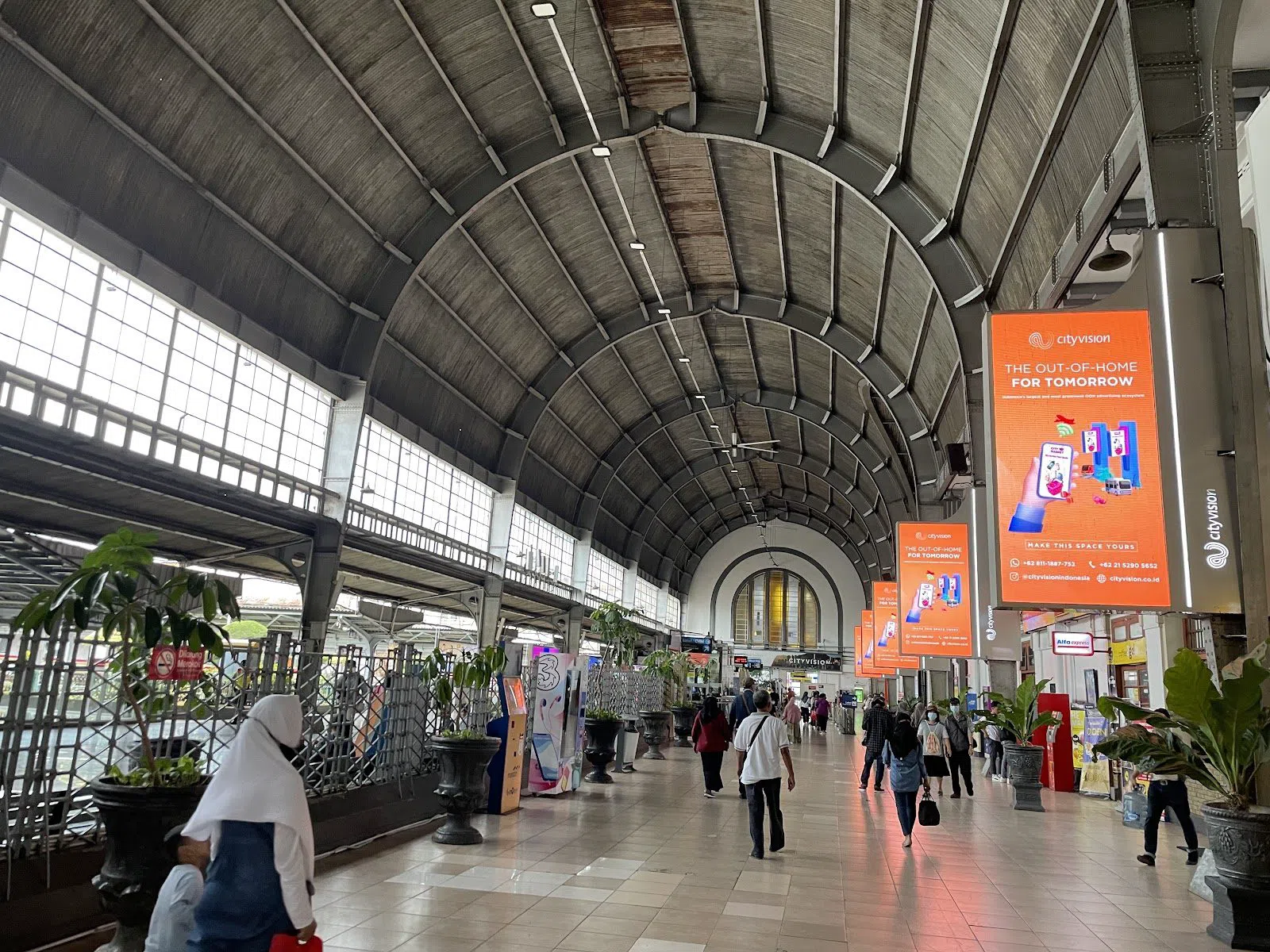
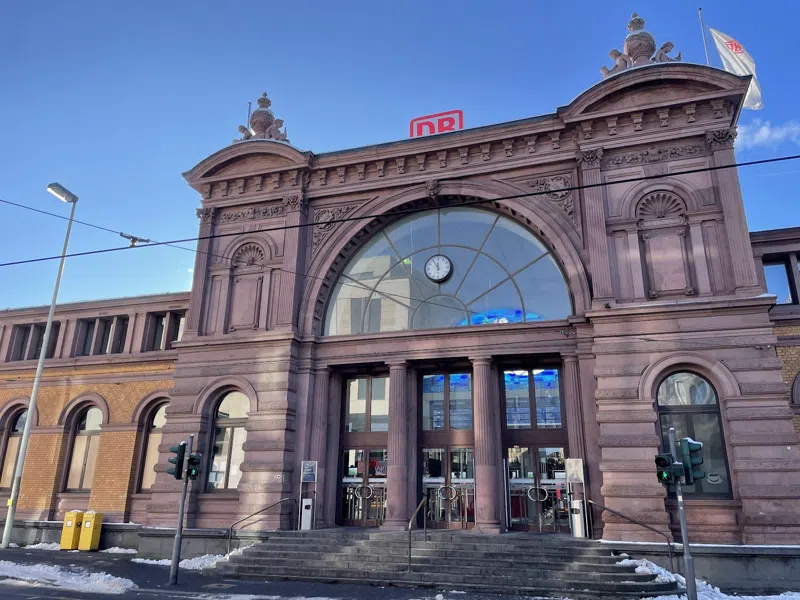
Jakarta Kota Station (Kota Tua, West Jakarta) is where this starts, and nobody calls it that. It is Beos, after the Bataviasche Ooster Spoorweg Maatschappij, a railway company whose initials outlived it by a century. It is also the only place in Indonesia where a working commuter terminus doubles as a protected colonial monument: the great steel shed still swallows trains every four minutes while tourists stand in the middle of the concourse trying to photograph the roof.
Do the photograph before 08:00 or after 10:00. Between those hours the shed is a wall of moving people and you will get elbows, not architecture.
The fare system is simple and unforgiving in one specific way. KRL fares start at Rp 3,000 (about US$0.20) for the first 25km, station entry is free with a valid tap, and you pay with a Kartu Multi Trip card or QRIS from your phone. Tap-in is per person. A couple cannot share one card; a party of eight needs eight taps. Buy and top up before you join the barrier queue rather than in it: the peak-hour line at the machines is the mistake visitors here make most often.
Everything below sits on the Red Line between Jakarta Kota and the southern terminus, with two short walks off it. There is no door policy anywhere on the network; it is public infrastructure, and groups are fine as long as you handle the cards in advance. For the wider city, where to stay and what to eat outside the old town, the Jakarta guide covers it. This piece stays on the rails.
Plan your Jakarta trip
Live prices from our booking partners.
Free cancellation on many rooms. We may earn a commission when you book.
The banks that financed the rails
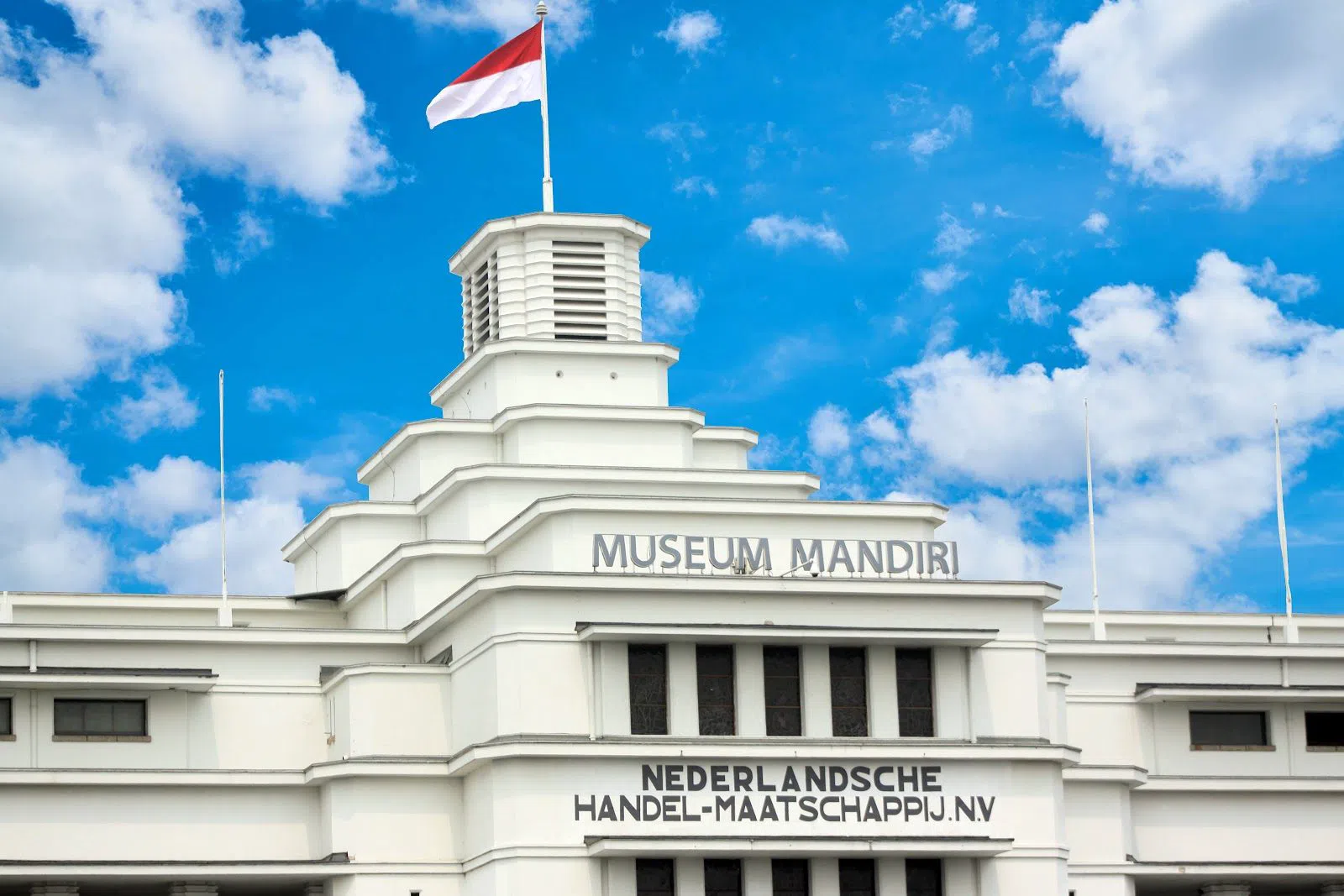
Walk out of Beos and turn left, and you are at the door of Museum Bank Mandiri (Kota Tua) in about thirty seconds. This was the Netherlands Trading Society building, the trading company that financed the railway, and it holds the best-preserved colonial interior in the city: teak counters, stained glass, the original mosaic floors, and a vault you can walk into. Entry is Rp 5,000 for adults and around Rp 3,000 for students, roughly US$0.35, less than the tram fare would have been in 1930. It closes on Mondays. School and tour parties come through constantly and reduced group rates exist, though larger parties should email ahead rather than arrive as a block of forty.
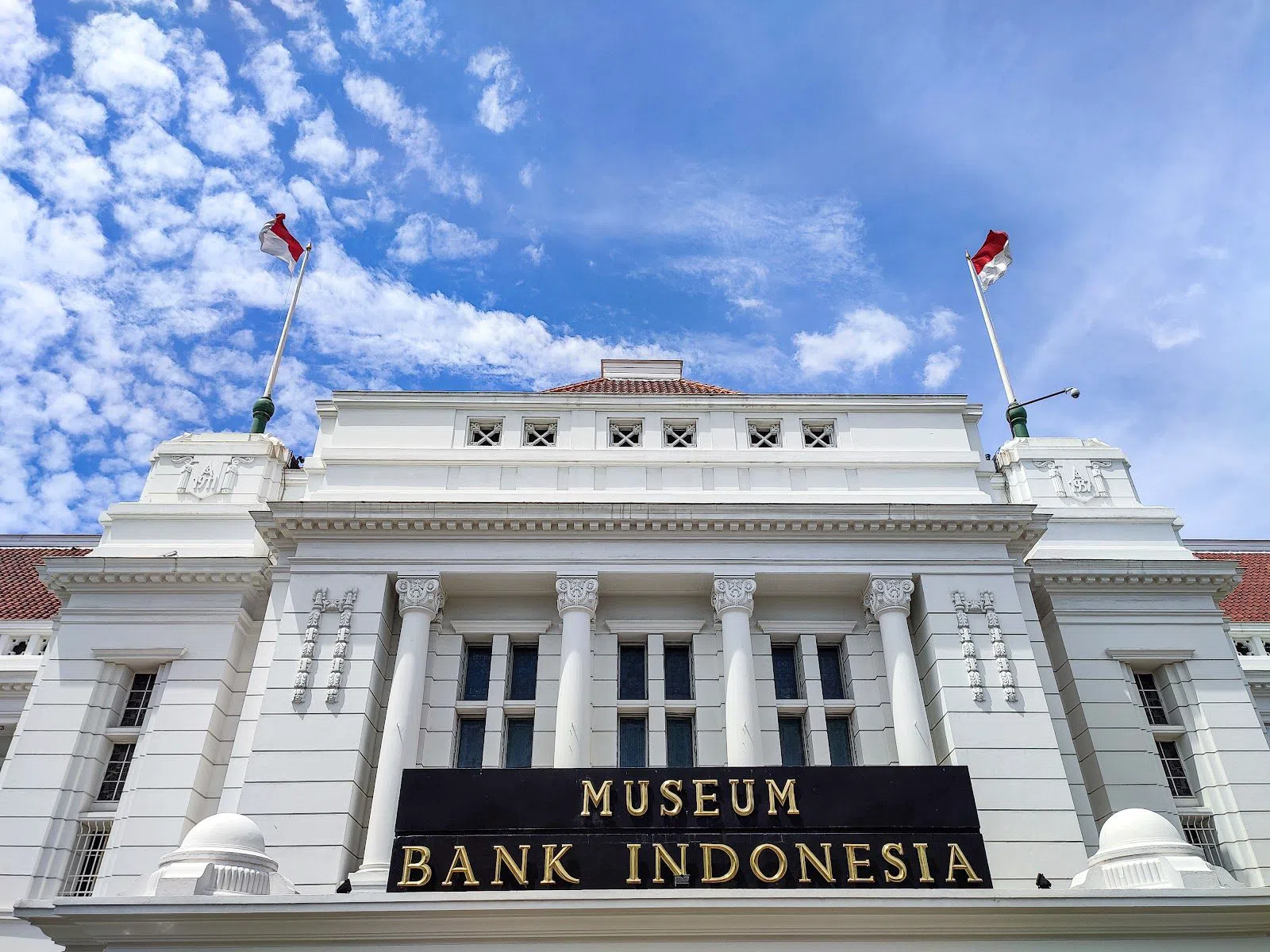
Across Jalan Pintu Besar Utara is Museum Bank Indonesia (Kota Tua), the other half of the pair and the more polished exhibition of the two. It traces money from the spice trade to the rupiah, with the lighting and interactive displays the Mandiri building deliberately does without. Entry is free, which makes it an easy add for a group; the stated route for parties is a written or emailed request to the museum. Bank Indonesia's public-facing page carries no opening hours. The museum keeps standard Tuesday-to-Sunday hours and closes Mondays, but check on the day rather than trusting a blog.
Seen back to back, the two buildings make the point of the whole journey. The line you just arrived on was laid to move sugar, coffee and cash rather than people, and these are the offices where that was arranged.
Fatahillah Square, from the courtroom to the cellars
Five minutes south on foot, the cobbles open onto Taman Fatahillah, and the white bulk on the far side is the Jakarta History Museum (Kota Tua), better known as Museum Fatahillah. This was the city hall and the courtroom, and beneath it are the water dungeons, low brick cells that flooded with the tide, where prisoners were held before sentencing. The building is the unvarnished counterweight to the bank interiors: same century, same administration, nothing decorative about it.
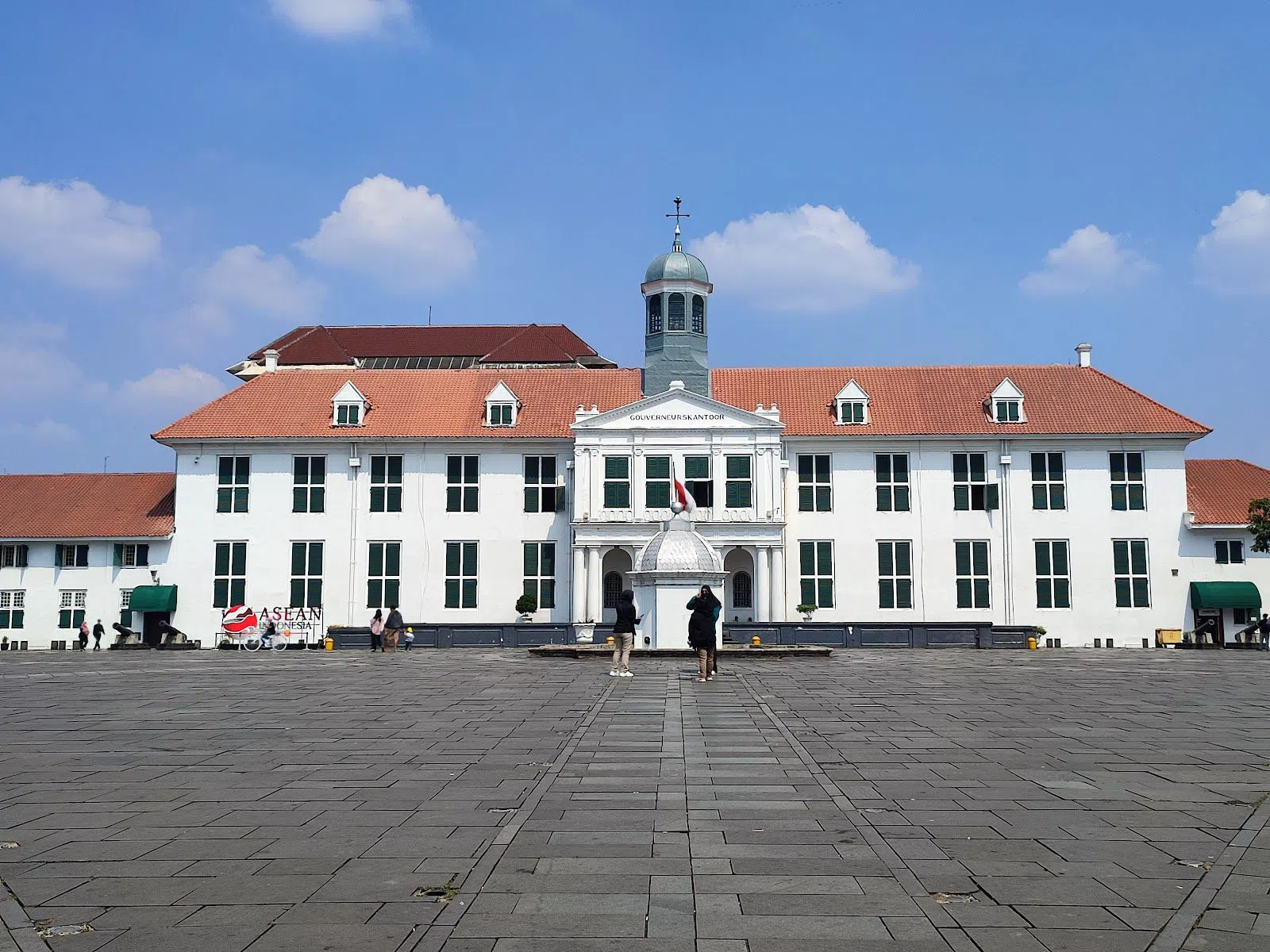
Entry is Rp 5,000 individually, with published group tariffs from about Rp 1,500 a head for students to Rp 3,750 for adults. It opens Tuesday to Sunday, 09:00 to 15:00, and shuts on Mondays and public holidays. That 15:00 close catches people out: if you have started with the banks, do not leave this until after lunch.
The square itself is loud, full of rented bicycles with wide-brimmed hats, and busiest at weekends. It suits groups better than couples looking for atmosphere; go early on a weekday if you want the courtyard quiet.
Lunch over the square
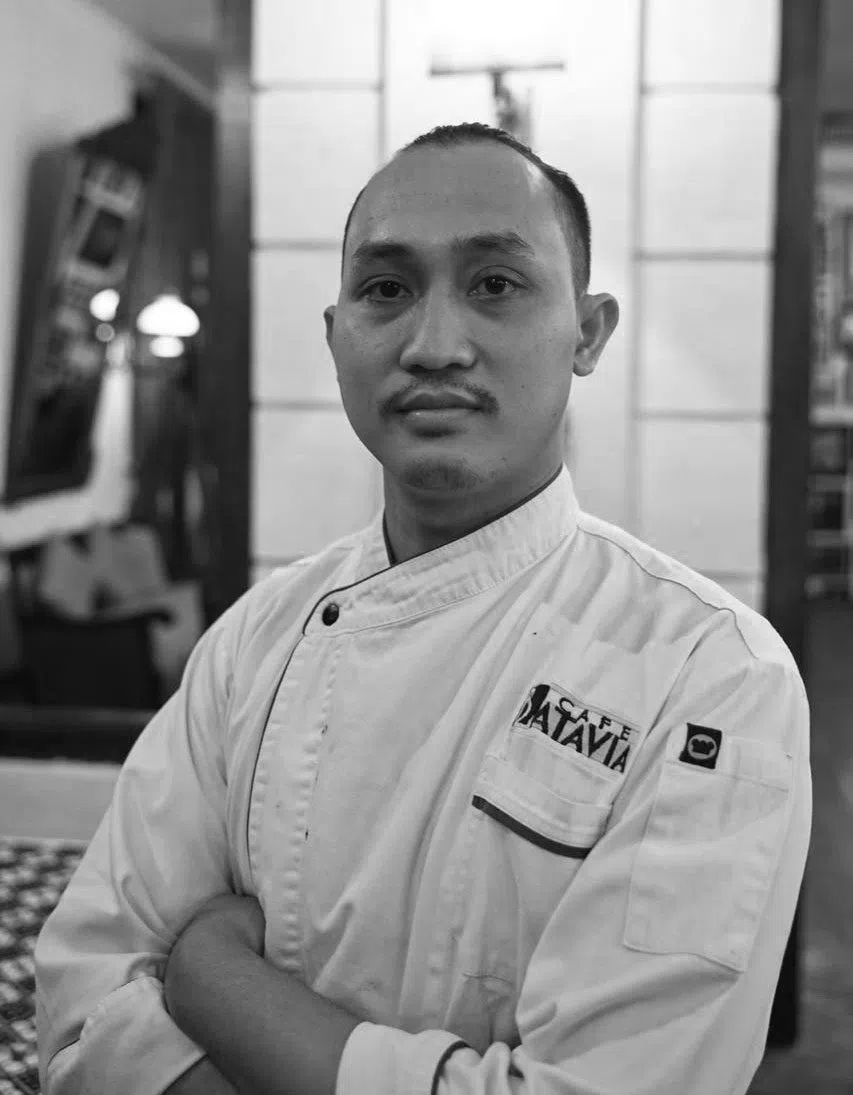
Café Batavia (Fatahillah Square, Kota Tua) has been trading since 1993 inside a shell more than two hundred years old, and it remains the natural mid-route stop. The upstairs room, with its black-and-white photographs and long windows over the square, is the reason to come; ask for a window table and you get both the view and the best light in the building. Mains and pasta run about Rp 130,000 to 200,000 (US$8 to 13), with cocktails above that, mid-to-upper by Jakarta standards, and you are paying partly for the room.
It takes groups and reservations, including a VVIP room for private parties; book by WhatsApp or phone on +62 21 691 555 531, and book ahead at weekends. The downstairs bar gets loud after dark, which is worth knowing whether you want that or want to avoid it.
Down Kali Besar to the sea
From the square it is a five-minute walk northwest to the old canal and Toko Merah (Kali Besar, Kota Tua), the deep red house on Jalan Kali Besar Barat that is one of the oldest surviving buildings in the city. The ground floor and grounds are free and openly accessible, and it is comfortably the most photogenic thing on the water. The upper-floor café and function hall take bookings, and a coffee or a light plate runs roughly Rp 50,000 to 120,000 (US$3 to 8). The interior is only fully open when the café and function rooms are working, and the building closes around 20:00, so this is an afternoon stop rather than an evening one.
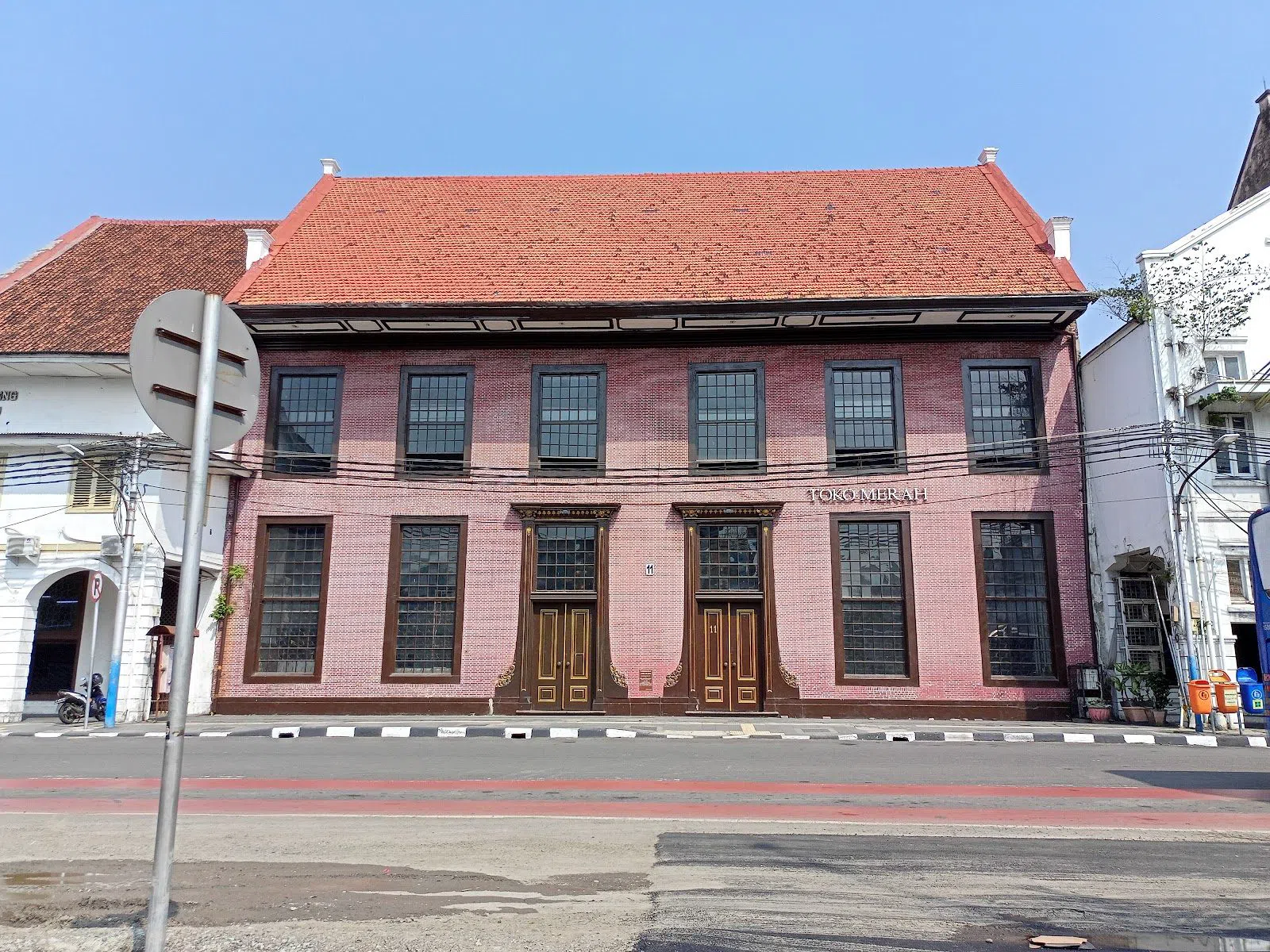
North of here the old town stops being curated. It is roughly 2km to the harbour and the walk is flat but hot and traffic-heavy; a ride-hail bike or a bajaj takes ten minutes and costs very little.
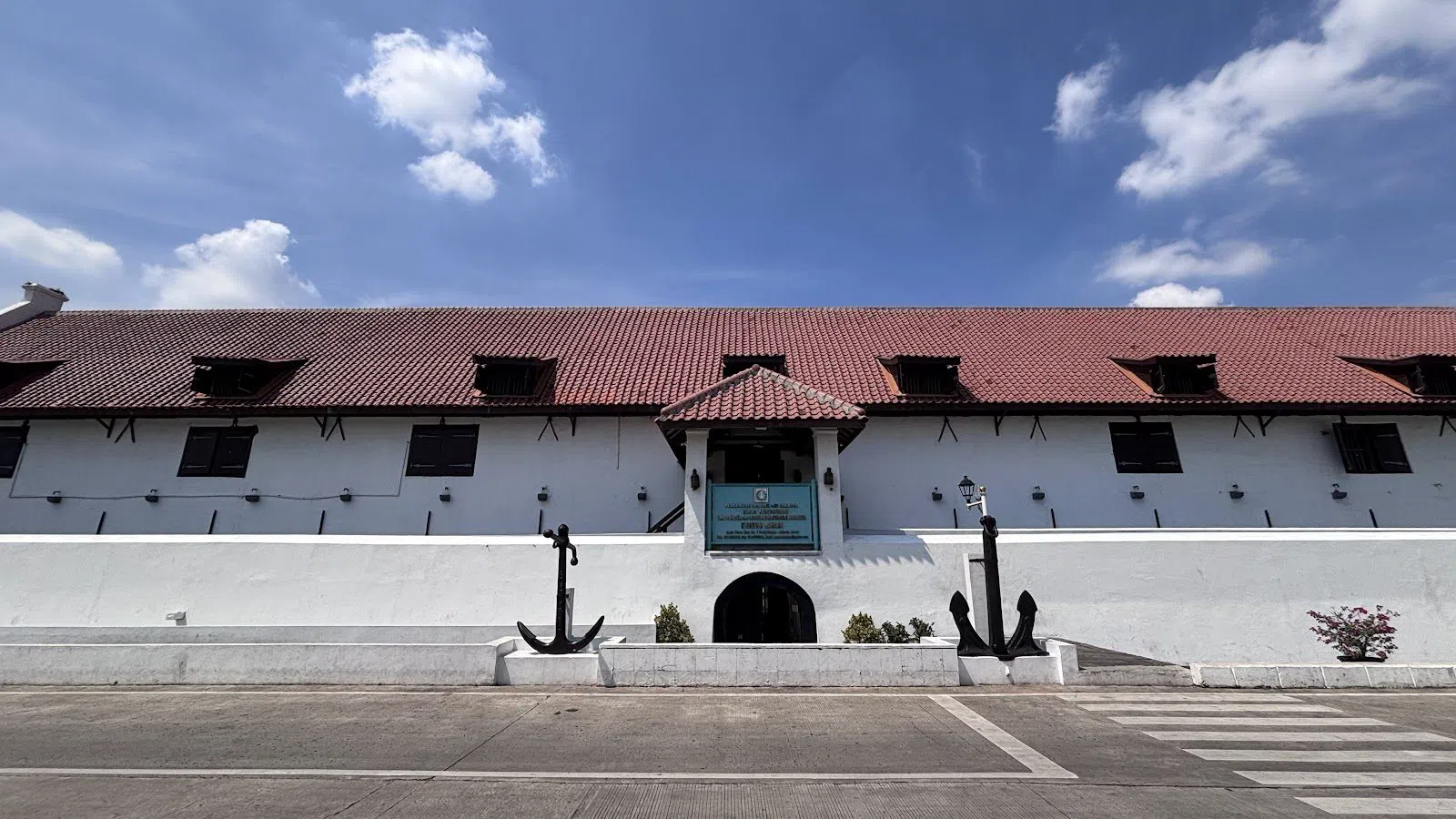
Museum Bahari (Pasar Ikan, Penjaringan) occupies the Dutch East India Company warehouses on Jalan Pasar Ikan. Fire gutted the museum in January 2018 and original collections were lost. It has been rebuilt and reopened, but the displays are thinner than the building deserves. Come for the warehouse interiors themselves (the timber, the scale, the smell of the water) rather than the exhibits. Foreign-visitor entry is Rp 50,000 (about US$3) and bundles the Menara Syahbandar lookout tower, so one payment covers both for a party; Indonesians pay far less. Tuesday to Sunday, 09:00 to 15:00.

A few hundred metres on is Sunda Kelapa Harbour (Penjaringan, North Jakarta), the 500-year-old port that Batavia was built to control, and the one stop on this route where the history is not behind glass. Wooden pinisi cargo boats still load inter-island freight by hand, plank by plank, with porters running the gangways. It is free to walk the quayside; small fees apply for guided access to certain areas or a sampan across the basin, around Rp 50,000.
Treat it as the live industrial site it is. Freelance guides and boat touts will approach, so agree a price up front, in cash, before anyone leads you anywhere. Wear closed shoes, and do not step onto a deck uninvited. Groups are fine on the quay but should stay together; this is a working port with no railings and no interest in your itinerary.
Glodok, the layer the colonial buildings erase
Back at the station, one stop south (or ten minutes on foot from either Jakarta Kota or Mangga Besar) is Vihara Dharma Bhakti (Glodok), the temple also known as Jin De Yuan, on Jalan Kemenangan III. This is the oldest Chinese temple in the city and it sits in a Chinatown that predates the railway entirely, a community that survived the 1740 massacre and rebuilt, then rebuilt again after a fire in 2015.
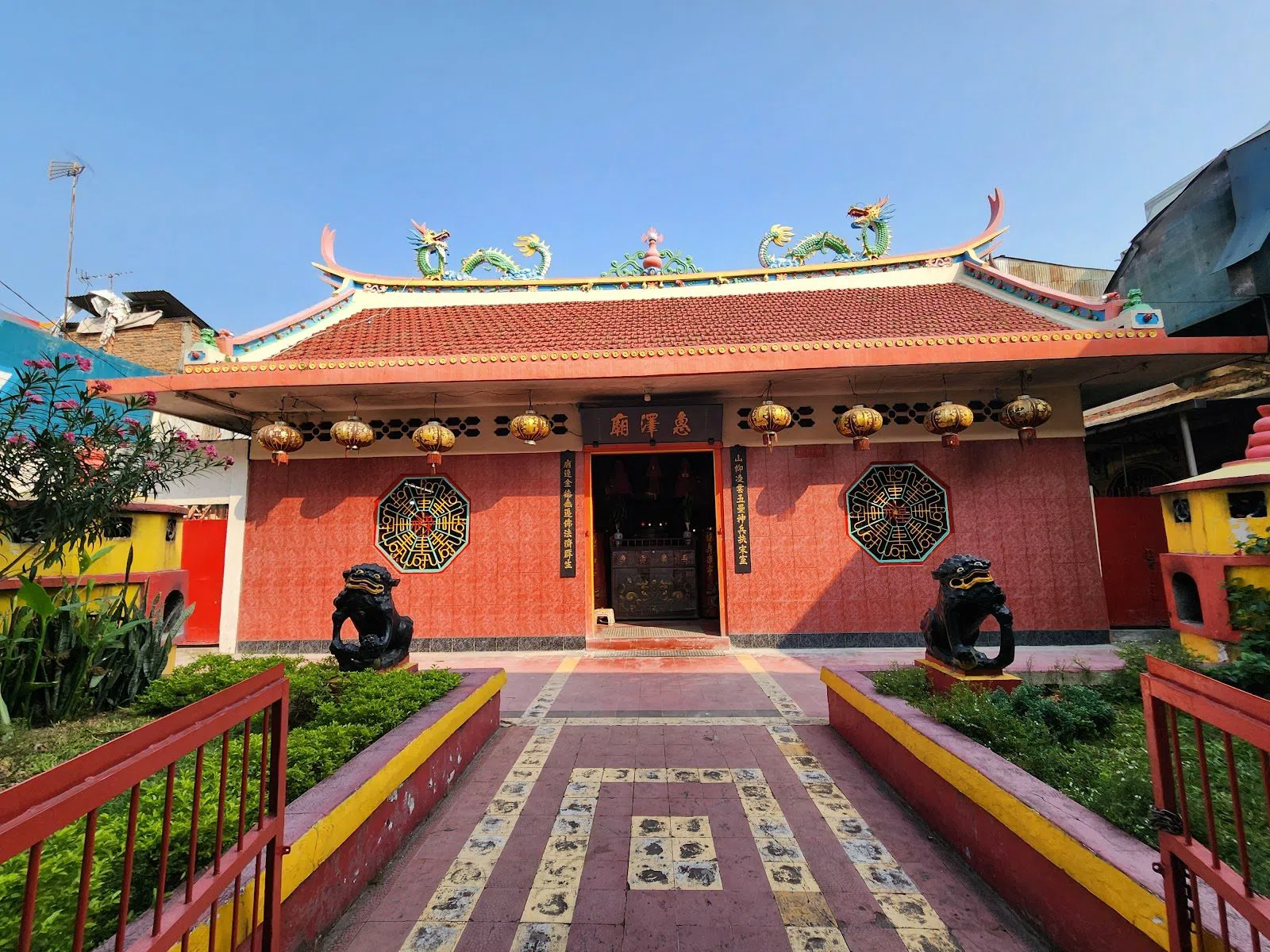
It is free and open daily 06:00 to 16:00, and it is a working temple rather than a monument: incense coils overhead, worshippers all day, no ticket desk. Keep groups small and quiet, stay out of the way of people praying, and expect serious crowds around Imlek, the Lunar New Year. The lanes around it (wet market, herbalists, bakeries) are the best unstructured walking on the whole route.
Juanda and the mosque that answers back
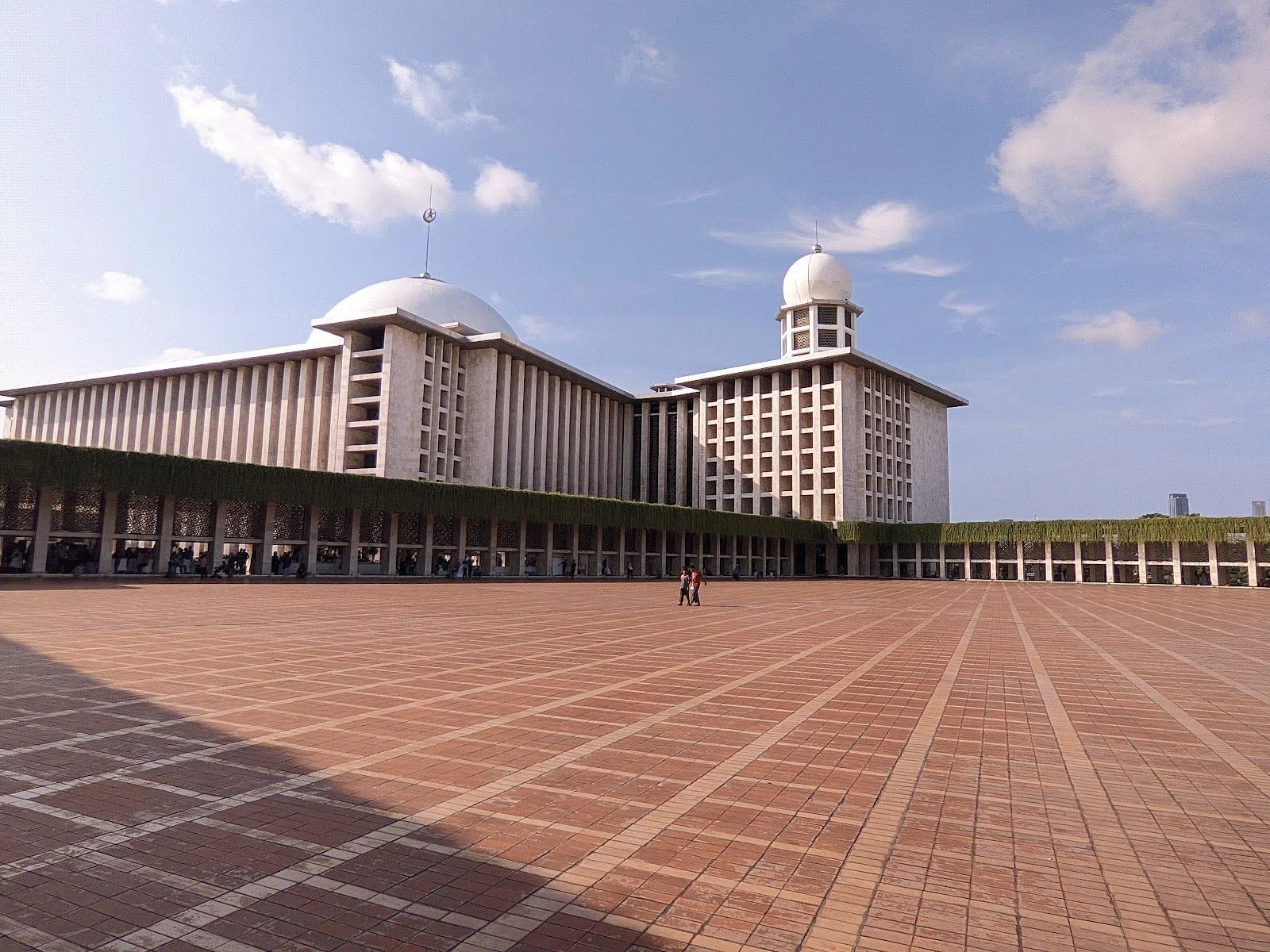
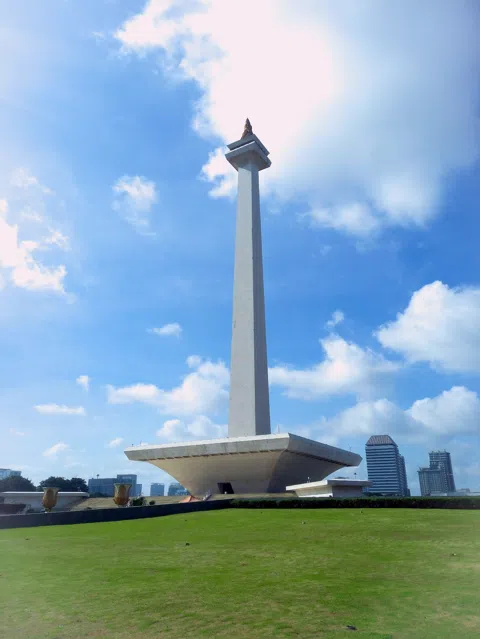
Ride south to Juanda and walk a few minutes to Istiqlal Mosque (Sawah Besar, Central Jakarta), the largest mosque in Southeast Asia and, more to the point here, one built deliberately facing the Dutch-era cathedral across the street. That siting was the argument: post-independence Jakarta answering colonial Jakarta at conversational distance.
Non-Muslim visitors are welcomed free of charge and volunteer guides run roughly twenty-minute tours; a donation for the guide is customary. Modest dress is required and free cover-ups are lent at the entrance, so nobody gets turned away over clothing. It closes to tourists around Friday prayers, roughly 11:30 to 13:30, so plan around that or lose the stop. The Tunnel of Friendship connecting the mosque to the cathedral is a genuinely unusual five-minute walk, and few visitors expect it.
Coffee older than the line at Cikini
Cikini is where the route stops being about the Dutch. Bakoel Koffie (Cikini, Menteng) sits about 300 metres from the station on Jalan Cikini Raya, and it is Indonesia's oldest coffee roaster, founded as Tek Sun Ho in 1878 and still run by the founding family, now in its fourth generation. The business is older than the electrified line that stops outside. Coffee from around Rp 35,000, mains Rp 60,000 to 110,000 (US$4 to 7), open daily from roughly 08:00 until midnight. It is a walk-in café that seats groups comfortably, and reservations are available through Chope. Still trading in mid-2026.
Ten minutes further along the same street is Taman Ismail Marzuki (Cikini), the arts centre known as TIM and the modern answer to everything upstream on this line. The grounds are free and open; individual venues ticket separately. Two things here are new rather than merely old: the Planetarium reopened on 23 December 2025 after thirteen years dark, and the rebuilt Jakarta Public Library opened in July 2026. Planetarium tickets are Rp 10,000 for adults and free for students with valid ID, but the star-theatre sessions are timed and do sell out, so groups should book through Loket.com in advance rather than turning up hopeful.
Manggarai and the honest picture

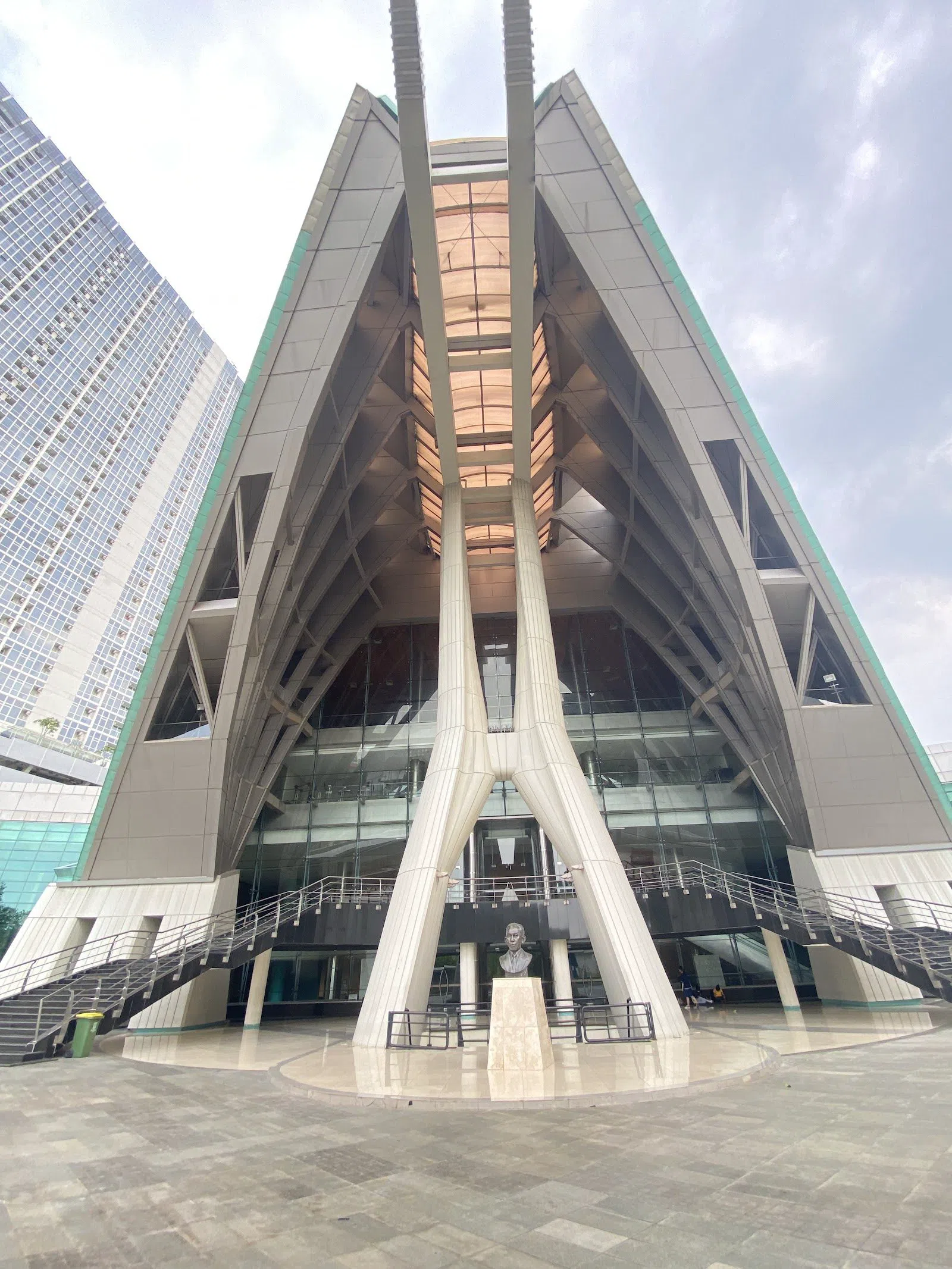
Manggarai Station (Manggarai, South Jakarta) is the interchange everything passes through, and it is the most congested station in Indonesia. The original 1918 station building still stands, half-buried under the new decks; you can see the old roofline from the upper platforms if you know to look.
Do not bring a group through here between 07:00 and 09:00 or between 17:00 and 19:30. Solo and in pairs it is an education in Jakarta's density. With luggage or children it is a bad idea. Ongoing works to bring the LRT into the same complex mean platform assignments and layouts change; read the signage on the day and ignore old blog maps entirely.
Ninety minutes to the end of the Red Line
Stay on to the southern terminus and the payoff is Kebun Raya Bogor (Bogor, West Java), the botanical gardens founded in 1817, about 60km and ninety minutes from Beos for the price of a coffee. The station you arrive at is part of the story too: an 1881 Indische Empire building at the end of the same line you boarded in the old town.
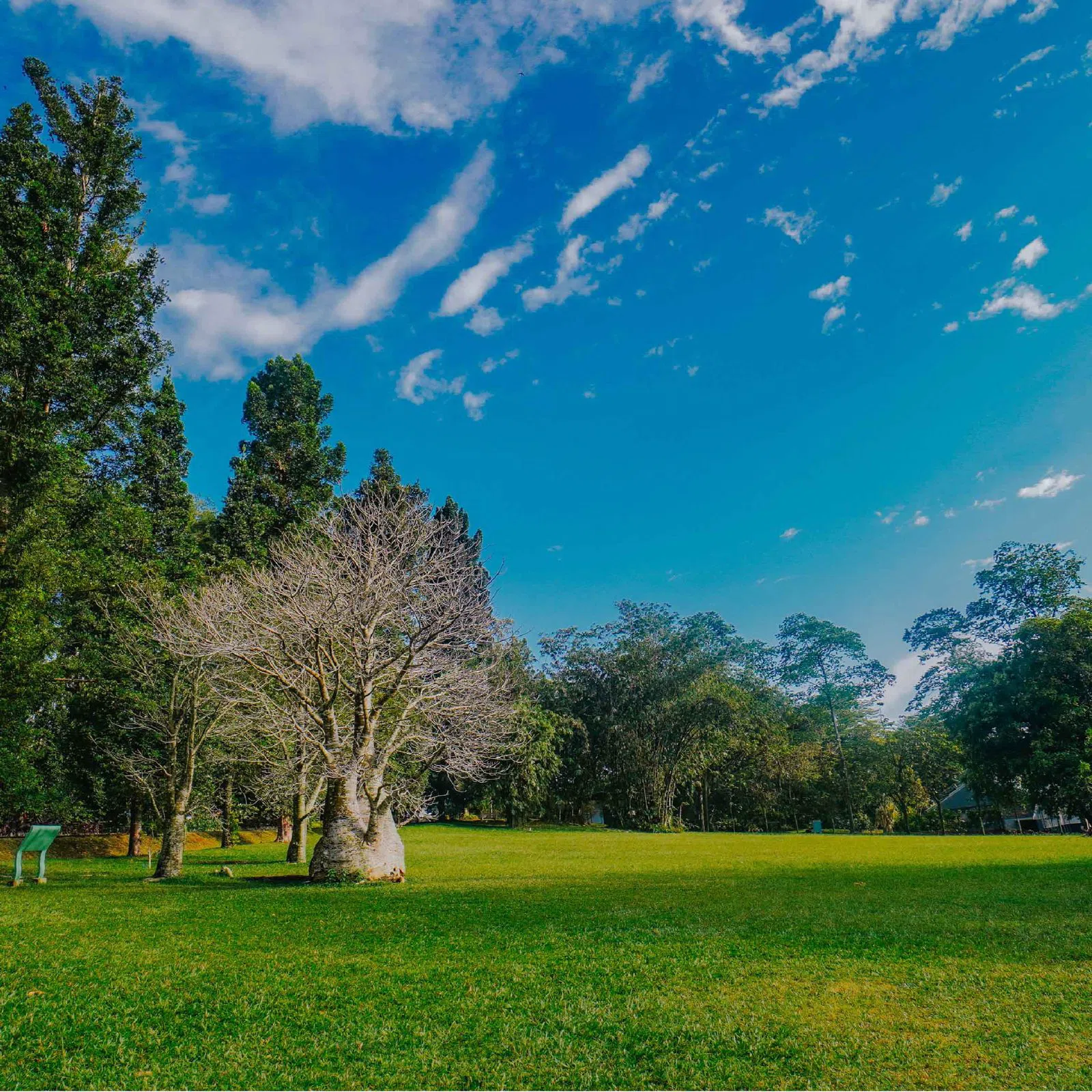
Entry is Rp 15,500 on weekdays and Rp 25,500 at weekends (US$1 to 1.60), with bicycle hire at Rp 15,000 to 20,000 and a Zoology Museum ticket available as an add-on. Buy online through kebunraya.id or tiketkebunraya.id to skip the gate queue, which matters at weekends. Gates open 08:00 on weekdays and 07:00 at weekends, closing at 16:00. It rains here most afternoons, reliably enough to plan around: take an early train, walk the gardens before noon, and be back on the platform before the sky opens.
Practical notes
Buy one Kartu Multi Trip per person and top it up at the start of the day. Fares start at Rp 3,000 for the first 25km, and the full run to the southern terminus still costs less than a bottle of imported water. QRIS payment works but is slower at the gate when the network is busy.
Museums, the temple, sampan rides and harbour guides are cash. Carry small notes (Rp 5,000 and Rp 10,000) because nobody at a Rp 5,000 ticket window wants to break a hundred.
Ride between 09:30 and 16:00 to stay out of the crush. Museums close at 15:00 and on Mondays, which effectively kills a Monday itinerary in the old town, and Istiqlal is shut to visitors around Friday midday. Kota Tua in the morning, Cikini in the late afternoon, the gardens as a separate early start.
Wear closed shoes for the port and long trousers or a skirt for the mosque, though cover-ups are lent free at the door.
Fares, all four museums, the harbour and a coffee come to well under Rp 150,000 a head. Lunch at Café Batavia will exceed everything else on that list combined, and is still worth it once.
Menteng and Cikini put you a short walk from a Red Line platform and within twenty minutes of the old town, which is what matters most; compare rates and locations through Jakarta hotel search before booking anything out by the airport.
Before you go
How much does a full day on the KRL cost?
Fares start at Rp 3,000 (about US$0.20) for the first 25km and rise a little with distance, so a day covering Jakarta Kota, Glodok, Juanda, Cikini, Manggarai and the run to Bogor costs very little. Entry fees add Rp 5,000 at Museum Bank Mandiri and the Jakarta History Museum, nothing at Museum Bank Indonesia and Istiqlal Mosque, and Rp 50,000 at Museum Bahari for foreign visitors. The whole day sits under Rp 150,000 a head before lunch.
Do I need a special card, or can I pay with my phone?
Either works. Buy a Kartu Multi Trip stored-value card, or pay by QRIS from your phone. What matters is that tap-in is per person, so a couple or a group cannot share one card. Buy and top up before you reach the barriers, not while you are standing in the peak-hour queue.
Which station do I use for the Kota Tua museums?
Jakarta Kota, the terminus everyone calls Beos. Museum Bank Mandiri is about thirty seconds from the exit, Museum Bank Indonesia is across the road, and the Jakarta History Museum and Café Batavia are a five-minute walk south on Fatahillah Square. Toko Merah is five minutes further, on the old canal at Kali Besar.
How bad is Manggarai at rush hour, and can I avoid it?
It is the most congested interchange in Indonesia. Between 07:00 and 09:00, and again from 17:00 to 19:30, it is hard work with luggage, children or a group. Go through between 09:30 and 16:00 instead, and read the signage on the day rather than an old map, because LRT construction keeps changing platform assignments.
Can I do Kota Tua and Kebun Raya Bogor in the same day?
You can, but it makes for a long and rushed day. Bogor is roughly 60km and ninety minutes from Beos, the gardens close at 16:00, and it rains there most afternoons. Better to give the gardens their own early start, arriving when the gates open at 08:00 on a weekday, and keep the old town, Glodok and Cikini for a separate day.