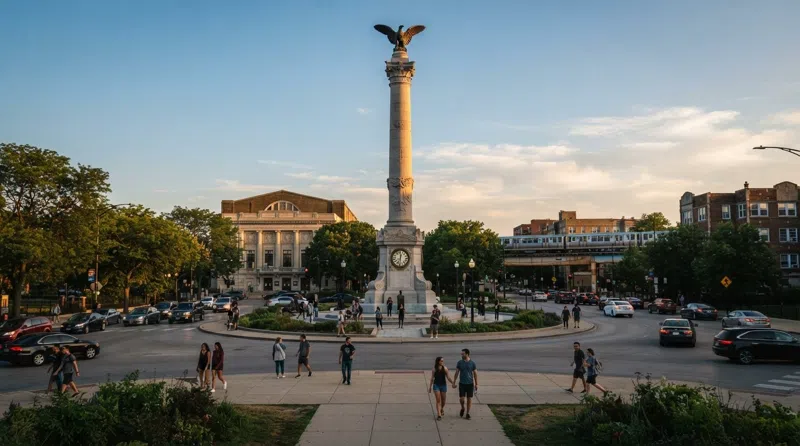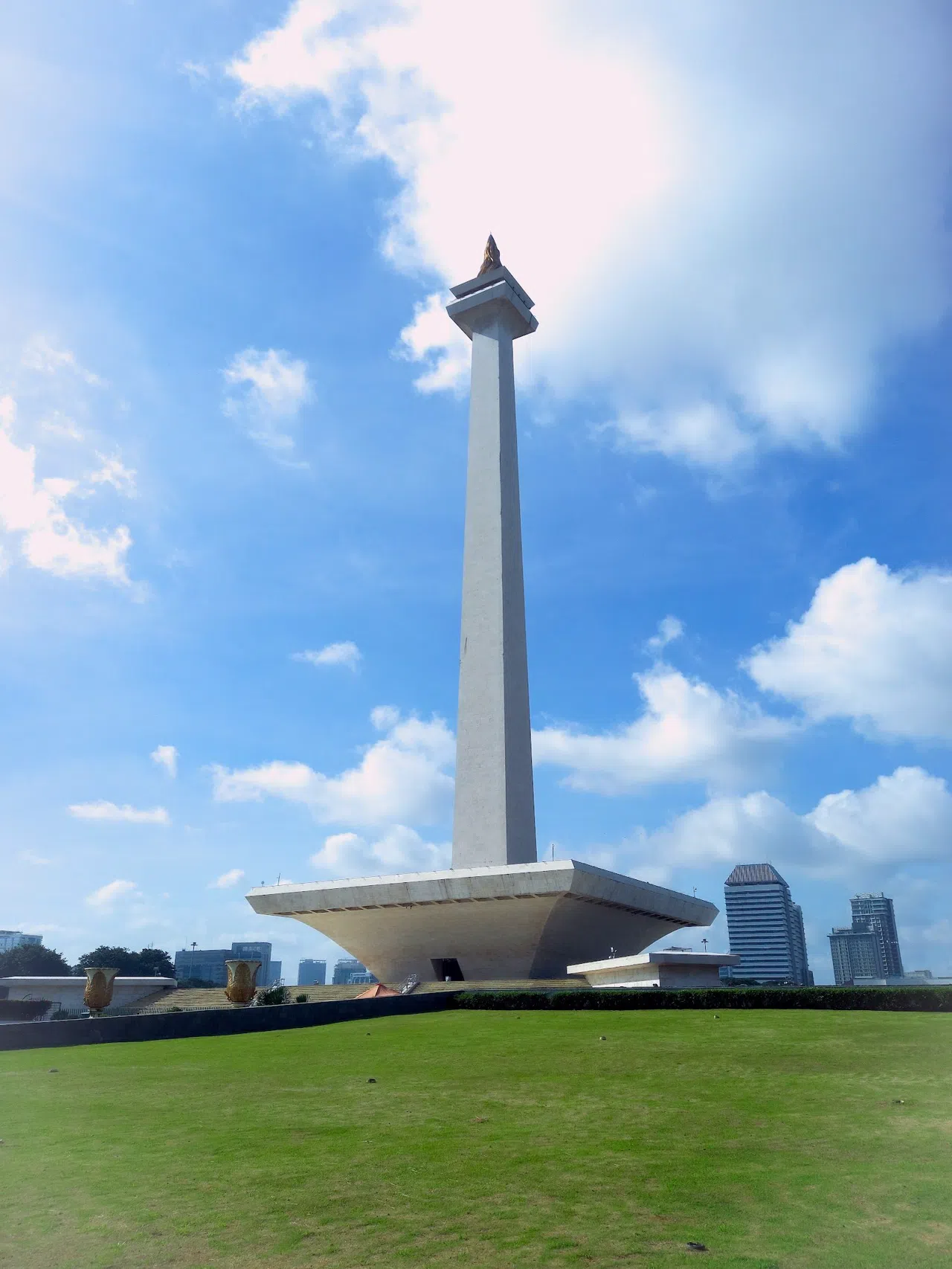

Medan Merdeka is the biggest square in the city and for most of the day it feels like the emptiest: a flat green kilometre with a single marble spike at the centre and a gold flame on top that catches the light long before you have worked out how far away you still are. Walk in from the Medan Merdeka Barat gate at seven in the morning and you share it with joggers, a police band rehearsing, and vendors unfolding tables under the trees. By nine the heat has pushed everyone into the shade, and the flame is the only thing still working.
What you are actually standing under
Monumen Nasional (Monas) & Medan Merdeka (Gambir, Central Jakarta) is a 132-metre marble obelisk in a park that was the colonial city's parade ground and is now the reason almost everything important sits within a kilometre of it. Sukarno ordered it in 1961, a new republic building something taller than anything the Dutch had left behind, and the public did not get inside until 1975. The form is usually explained as a lingga and yoni, the paired Javanese symbols, which is why the shaft rises out of a broad low plaza rather than a plinth. The gilded bronze flame at the top is the part everyone photographs, and at midday it is genuinely hard to look at straight on.
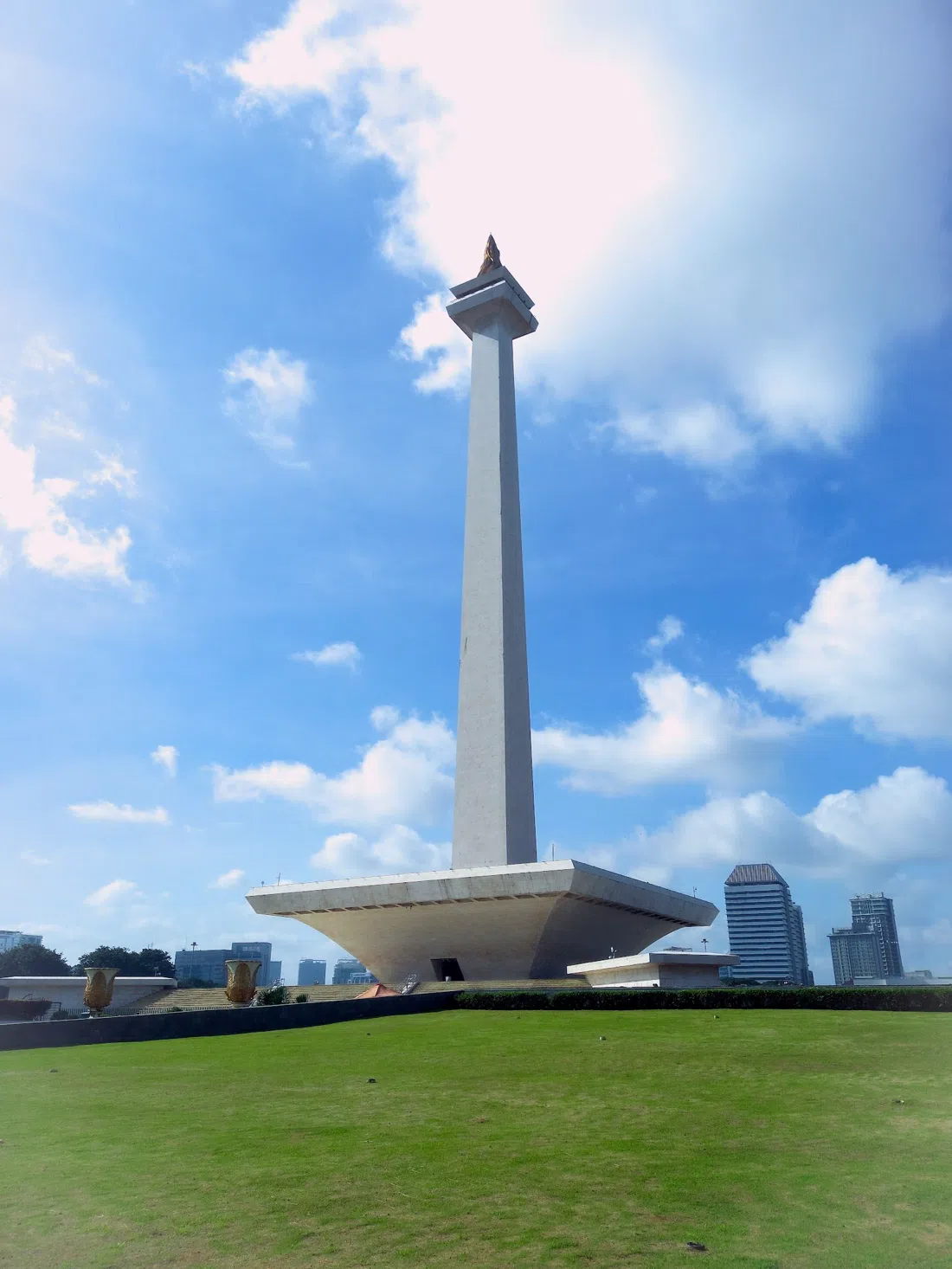
At ground level the visit is a walk rather than a tour. You cross the grass on paved paths, climb the steps to the plaza, circle the base where cast relief panels run through the national story, and stand directly beneath the shaft looking up, which is the moment the scale lands. Inside the base, when it is open, there is a hall of historical dioramas and an independence chamber, and a lift up to the observation platform near the flame. That lift, not the ticket desk, is the bottleneck of the whole experience.
The tower is shut and the grounds are open
The monument's interior (lift, observation deck and the museum in the base) has been closed since 9 September 2026 for an intensive cleaning of the obelisk. The work is targeted to finish in October 2026, but there is no confirmed reopening date, so treat any promise of a view as unconfirmed until you are standing at the door. Check the monument's own channels in the week you travel rather than trusting a third-hand itinerary.
The grounds carry on as normal: open Tuesday to Thursday 06:00 to 18:00, Friday to Sunday 06:00 to 22:00, closed Mondays. The free dancing-fountain show runs Friday to Sunday at 19:30 and 20:30, which is the best reason to come back after dark. Park entry is free. When the interior does reopen, the monument ticket has historically run around Rp20,000 for domestic visitors with a higher rate for foreigners. Expect that structure rather than that exact number.
How long the square takes
With the tower closed, a proper circuit of the grounds (in one gate, up to the plaza, round the base, out the other side) is 45 minutes to an hour, and that is honestly enough. When the lift is running, add the queue and the deck and you are looking at two to two and a half hours for the monument alone.
The better way to think about it is as a half-day on foot. Everything worth pairing with Monas sits on or just off the four Medan Merdeka roads, and the walking distances are short even if the heat makes them feel longer. Four hours gets you the square, one national collection, and the mosque-and-cathedral pair. Six gets you those plus the old town to the north.
Tickets at the gate and whether to book a guide
There is nothing to pre-book for the park. It is a public open space with gates rather than a timed attraction, and no queue-skip product exists for it. Tour coaches drop at the Medan Merdeka Barat and Medan Merdeka Selatan gates and everyone walks in from there; when the interior is open, groups join the lift queue with everybody else, so a booking does not move you forward.
What a guide actually buys you here is context and traffic. The relief panels and the dioramas are thin on English labelling, and the drive between Monas and anything north of it is unpredictable enough that a car and a local driver can be the difference between two stops and four. Guided options run seven days a week and start from 65 USD per person; across the bookable tours in this area there are 1,109 traveller reviews, with the top-rated one at 4.8 out of 5 from 374 reviews. If you are confident on foot and happy with ride-hailing apps, you do not need one. If you are on a tight window (a port call, a long layover, a family that will not tolerate a wrong turn), it is money well spent.
Rules, gates and groups
There is no door policy and no dress code on the grounds, but there is very little shade and almost no railing-free shortcut across the grass, so stay on the paths. Bring water. The park suits everyone, including pushchairs and wheelchairs, because it is flat and paved throughout. The monument's own interior is the part where access depends on a working lift.
Groups are routine and the square absorbs them without fuss. Couples get more out of the first hour after opening or the last hour before the fountains, when the coaches have gone and the light is doing the work.
The two national collections across the road
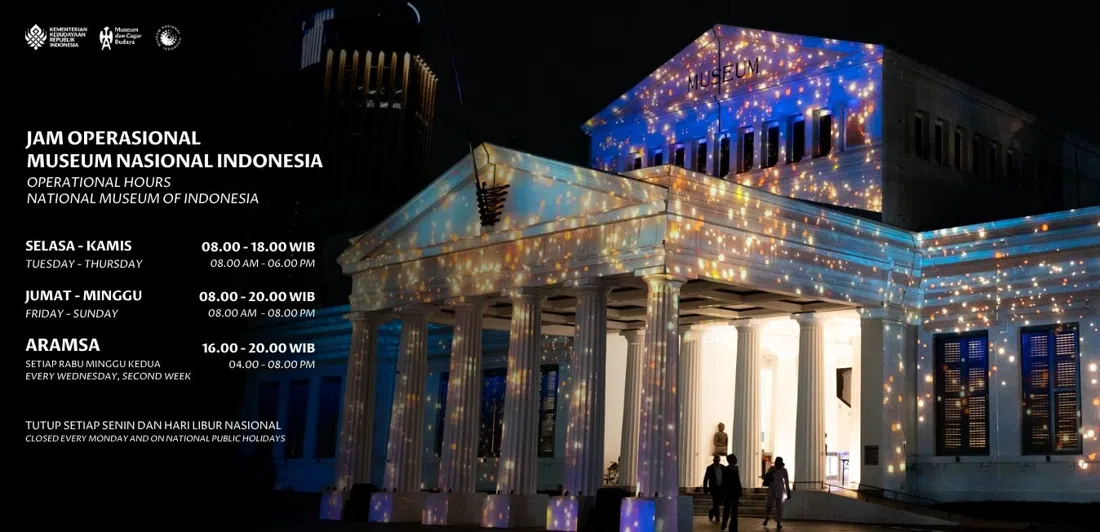
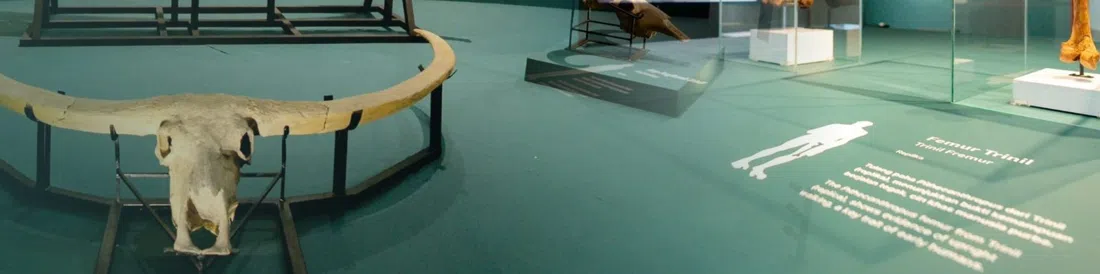
Museum Nasional Indonesia (Medan Merdeka Barat), still universally called Museum Gajah after the bronze elephant outside, is a two-minute walk west of the Monas grounds and the best indoor companion to the monument. It reopened in October 2024 after the 2023 fire and remains inside a phased three-year revitalisation, so wings rotate in and out; accept that you will miss something and go anyway. Entry is around Rp15,000 for adults and Rp7,500 for children, group bookings handled at the ticket desk, and school parties and coaches are entirely normal here.
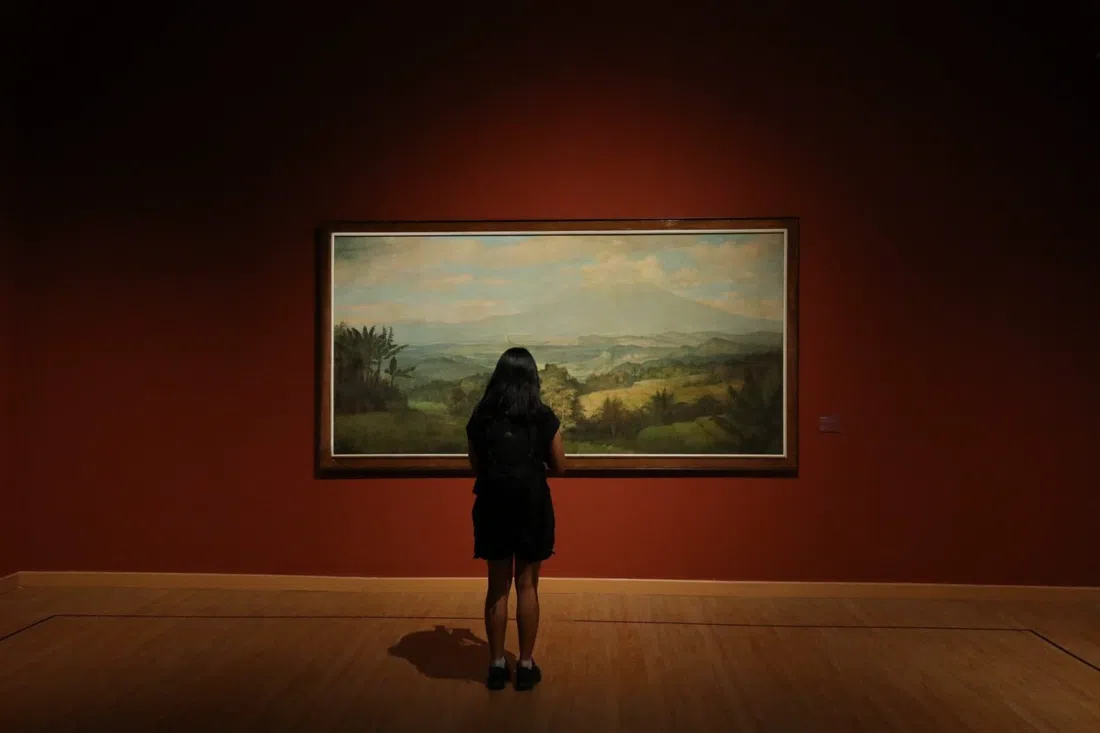
Galeri Nasional Indonesia (Medan Merdeka Timur) sits directly across the eastern side of the square and is free, with Rp0 timed-entry tickets issued at the desk, which means a large party may be split across slots, so go in as two or three smaller groups rather than one block. It opens Tuesday to Thursday 10:00 to 18:00 and Friday to Sunday 10:00 to 20:00, closed Mondays. That late weekend close is what makes it the natural pairing with a fountain evening at the monument.
A mosque, a cathedral and a tunnel between them
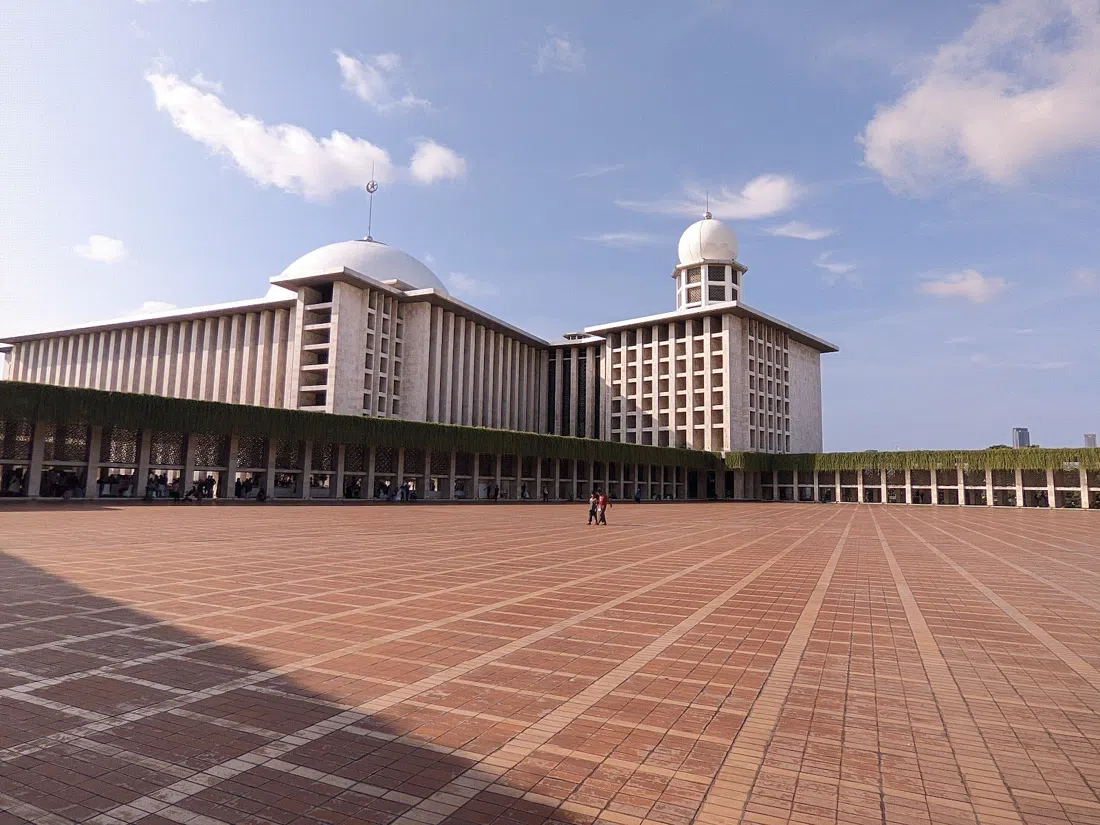
Istiqlal Mosque (Gambir, ten minutes northeast on foot) is the largest mosque in Southeast Asia and actively welcomes non-Muslim visitors: register at the information desk for a free guided tour of about twenty minutes, with the last one usually around 16:30. Robes are lent to anyone who needs cover, shoes come off, and tourist access pauses around prayer times, which is enforced rather than advisory. Entry is free with a donation box.
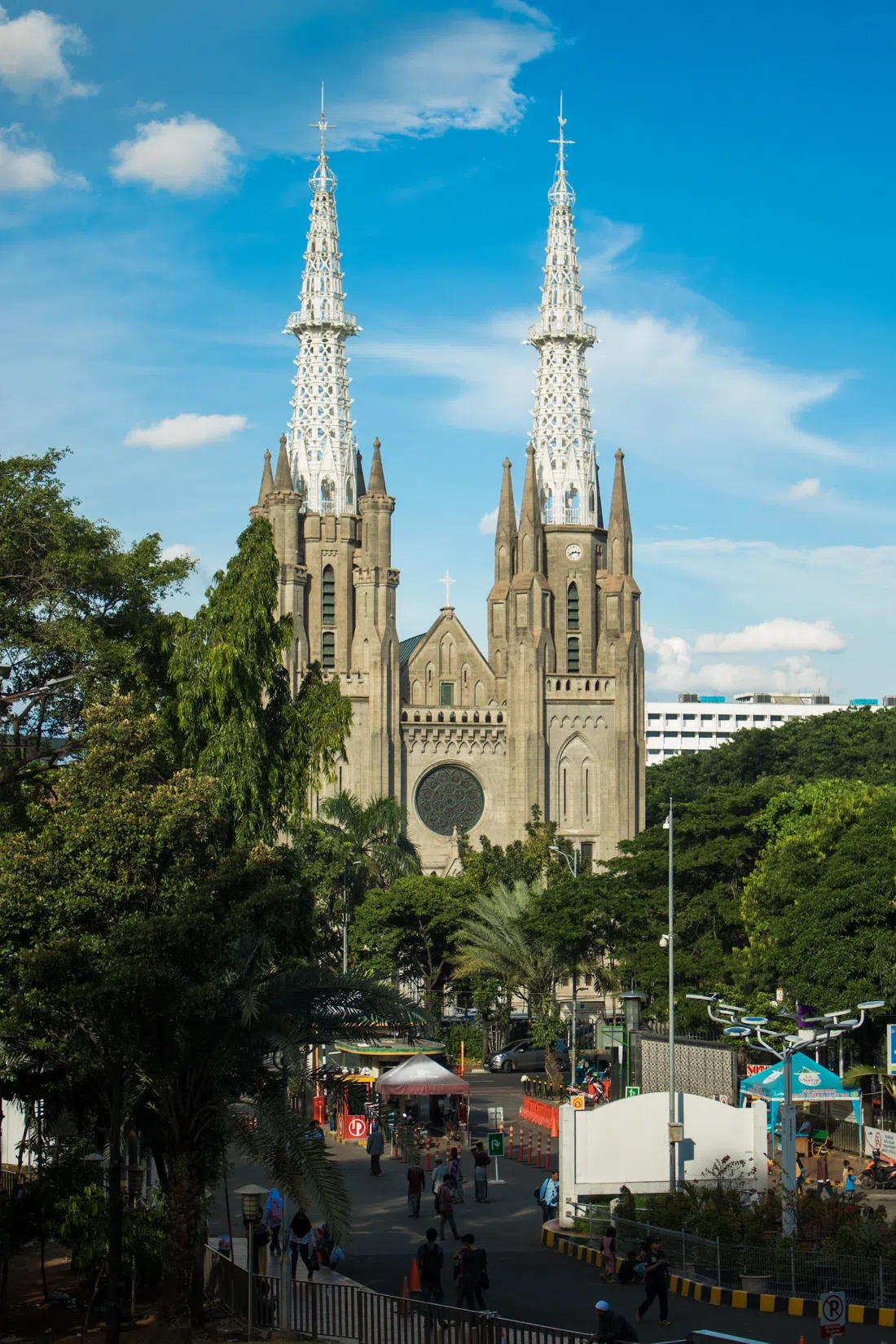
Jakarta Cathedral (Gambir, facing Istiqlal) stands opposite, and since December 2024 the 28-metre Tunnel of Friendship has connected the two so you no longer cross the road between them. Upstairs there is a small museum of vestments and the original 1899 drawings. Groups are welcome outside Mass; covered shoulders and knees, and quiet. The two buildings looking at each other across one plot of ground are the reason most half-day itineraries pass Monas at all.
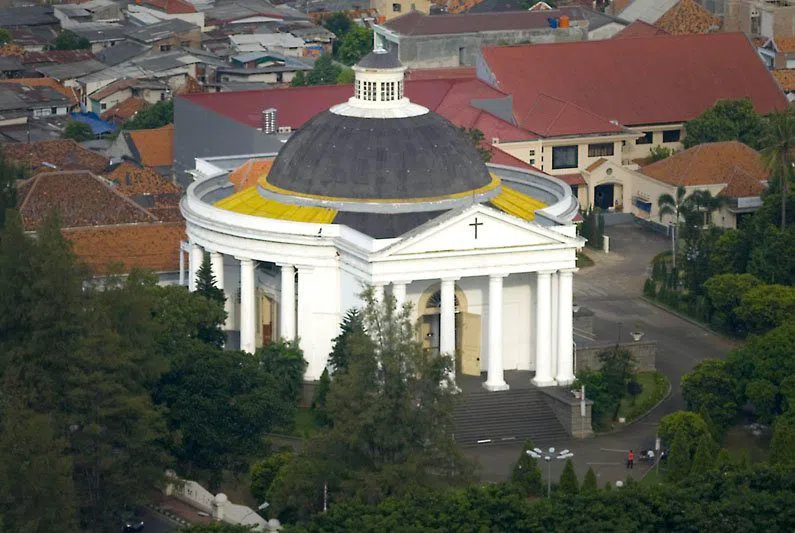
Five minutes from the northeast corner of the grounds, Gereja Immanuel (opposite Gambir Station) is a domed Protestant church from 1839 and a small building, fine for a couple, awkward for a coachload, and best visited outside service times. It is an easy add if you are arriving or leaving by train.
Graves to the west and fountains to the east
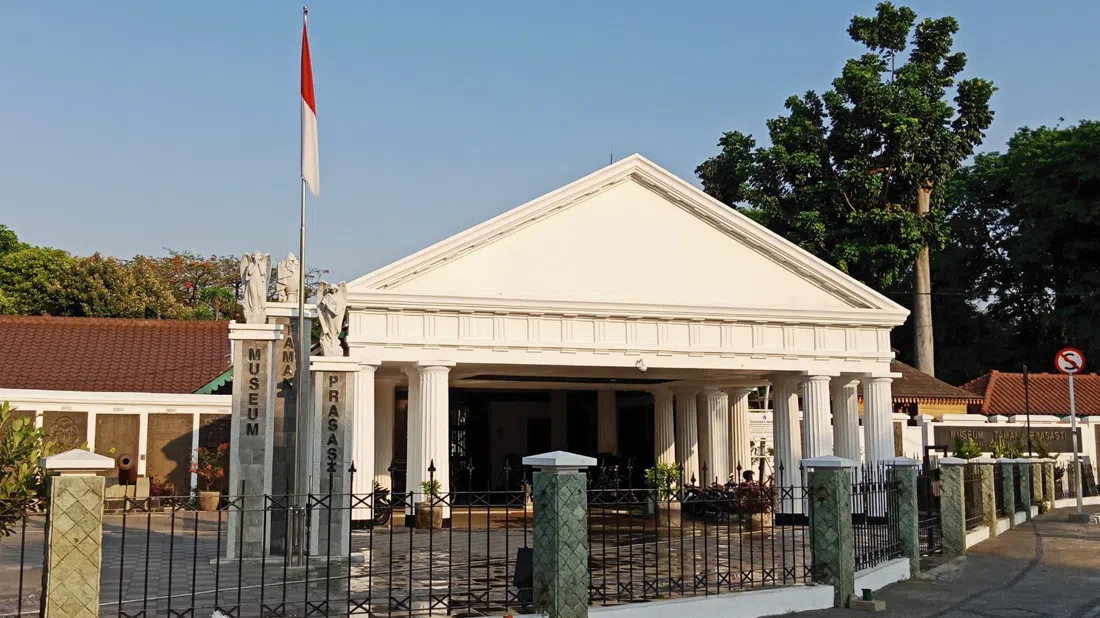
Museum Taman Prasasti (Tanah Abang, just west of the square) is the 1795 colonial burial ground, open-air, Rp5,000 for adults and Rp3,000 for students, with a discounted rate for parties of 30 or more. It is almost always empty, which is exactly why it works, and it is the best value per rupiah in the district. Being entirely outdoors, it is a morning or late-afternoon stop rather than a midday one.
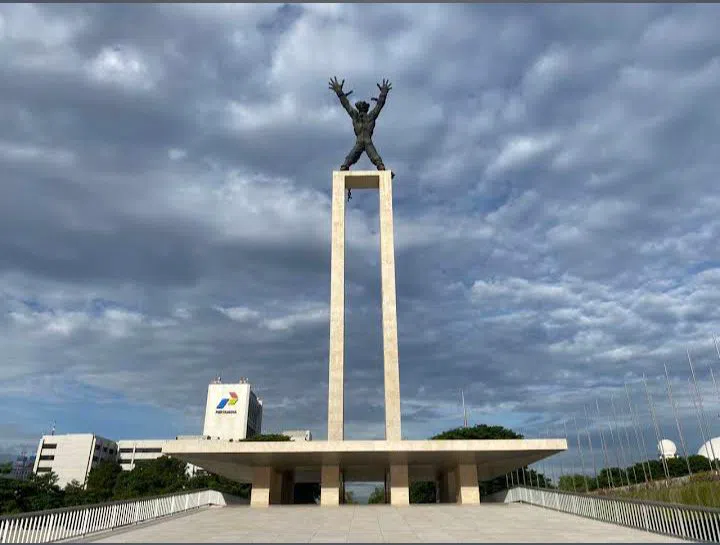
Lapangan Banteng (Gambir, a short walk east) was renovated into one of central Jakarta's genuinely good public spaces, about a kilometre from the monument and flanked by the mosque and the cathedral. Free, no restrictions on groups, and in the evening the fountain-and-light show and the street-food carts make it a sensible place to end an afternoon on your feet.
Eating without leaving the complex
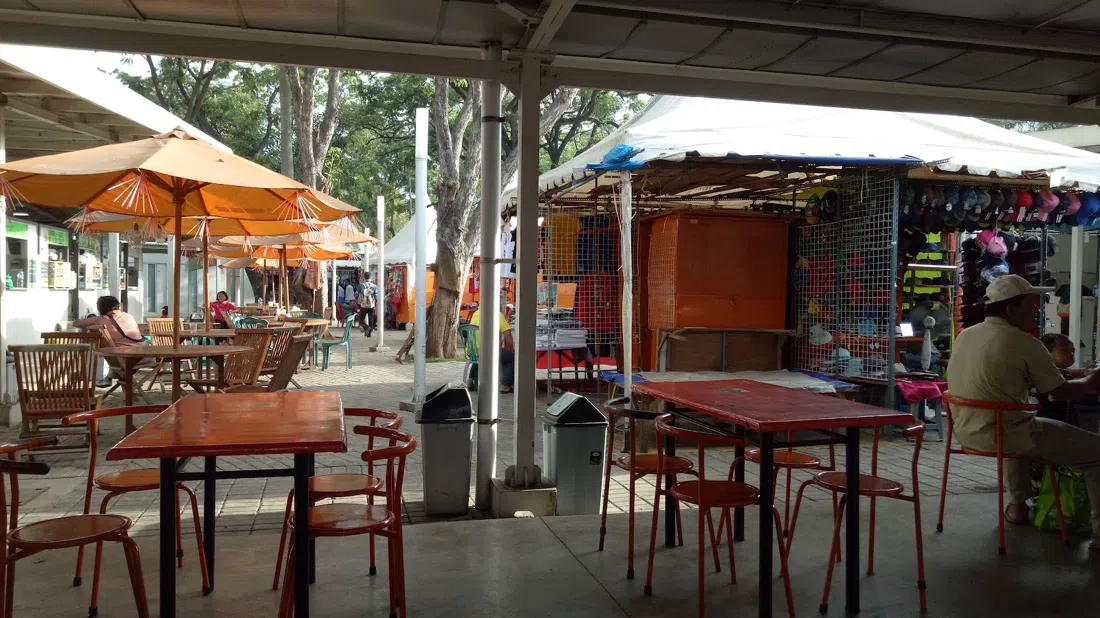
Lenggang Jakarta (inside the Monas complex) is the official relocated-hawker food hall, open Tuesday to Sunday from around 08:00 until late, dishes roughly Rp20,000 to 50,000 with prices posted so there is no haggling. It is built for volume and handles coach groups easily, though seating tightens at weekend lunchtime. It is the only lunch that does not require leaving the square.
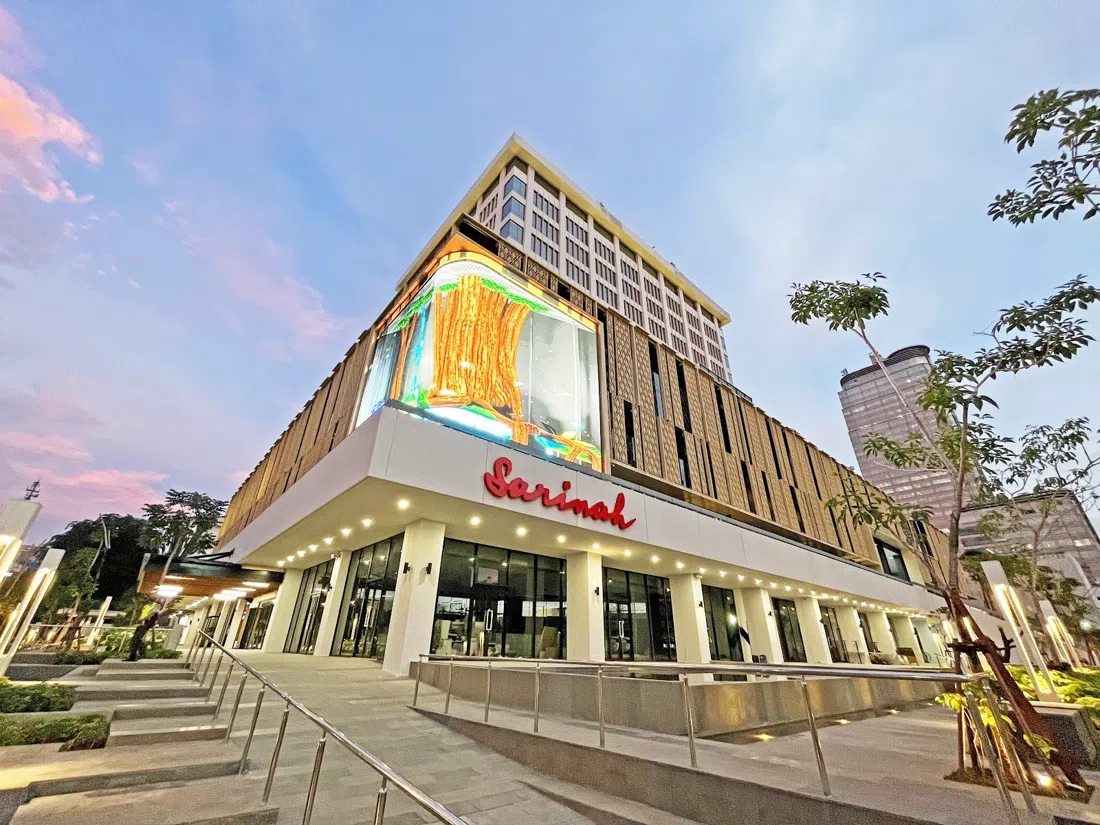
Sarinah (Thamrin, a kilometre south) is Indonesia's first department store, restored as a craft-and-batik destination, free to enter, with a food hall in the Rp40,000 to 120,000 range and a rooftop amphitheatre that hosts live sets from around 16:00. The sky deck is a free alternative to a view while the monument's own deck is shut.
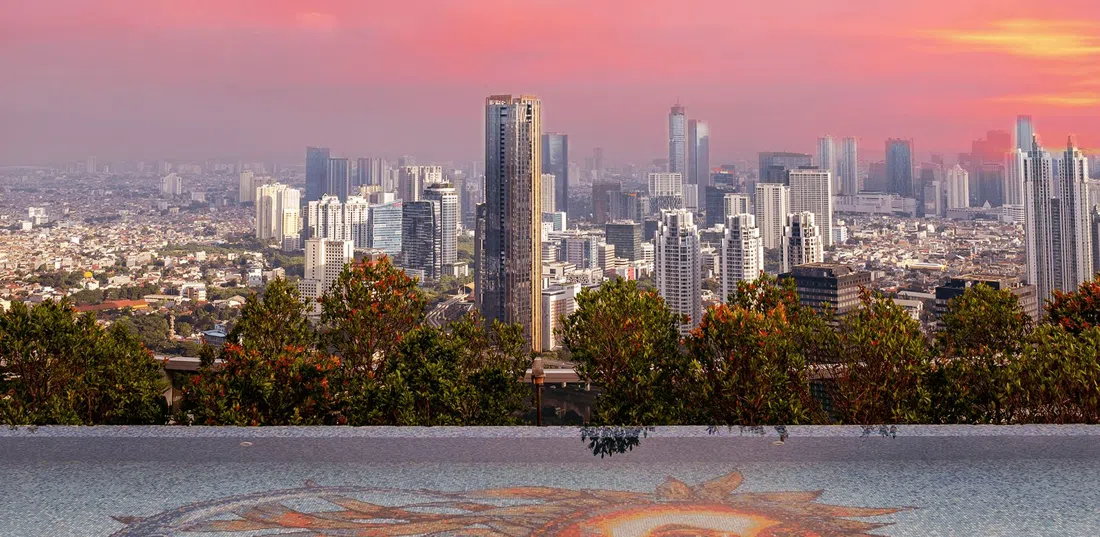
SKYE Rooftop Dining & Lounge (Thamrin) is the city's original rooftop, reopened in late 2025 after a year-long refit, and currently the most reliable way to look down on Monas rather than out from it. Prices are top-end Jakarta, the dress code is smart-casual, and reservations are strongly advised; large groups should book rather than walk up.
North to the old town and the working harbour
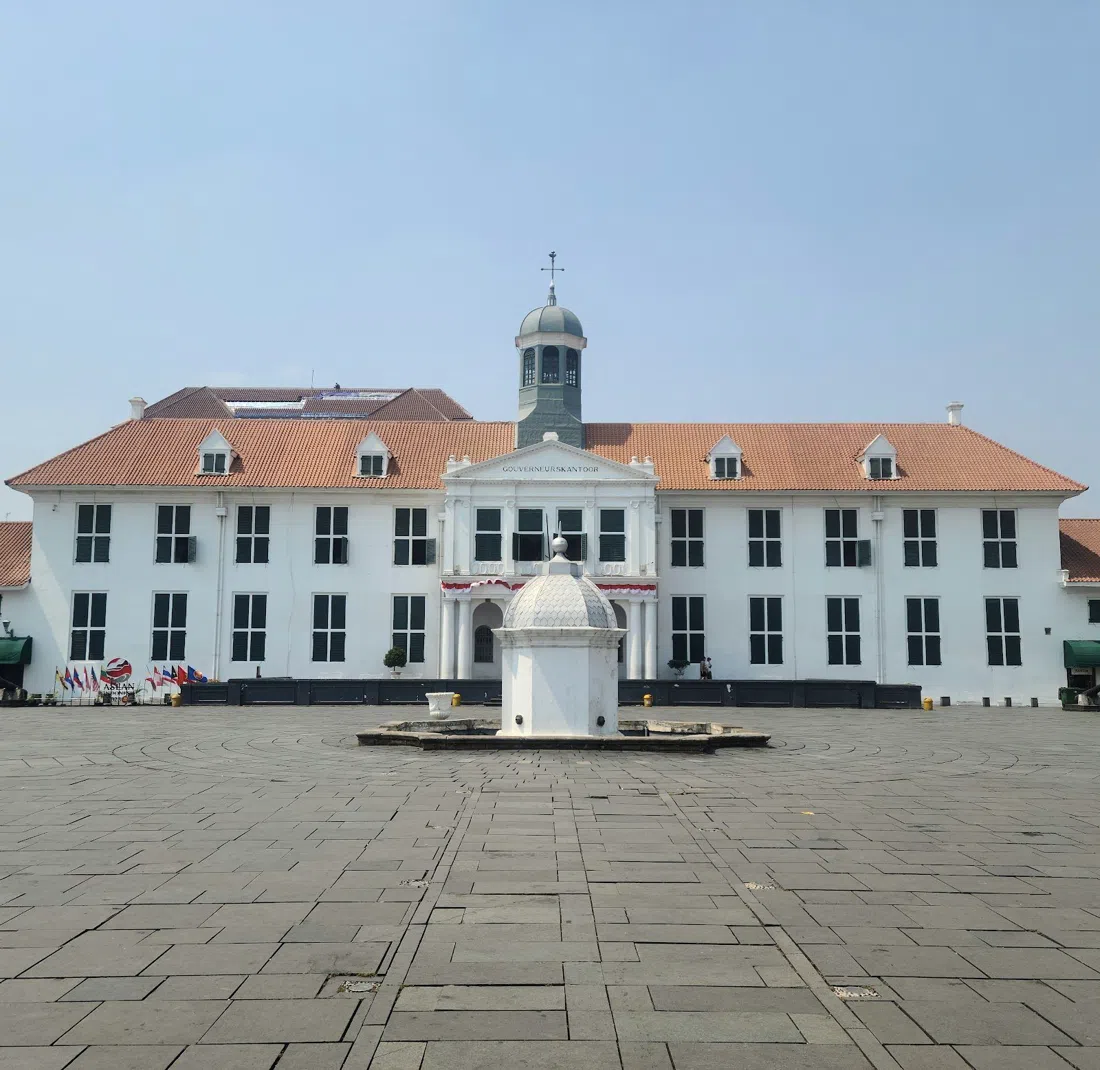
Taman Fatahillah, Kota Tua (Kota Tua, North Jakarta) is the standard second half of a Monas day, 15 to 30 minutes north by car depending on the hour. The square is free, designed for crowds and busiest at weekends; the city has flagged a Kota Tua revitalisation programme starting in mid-2026, so expect hoardings in some corners.
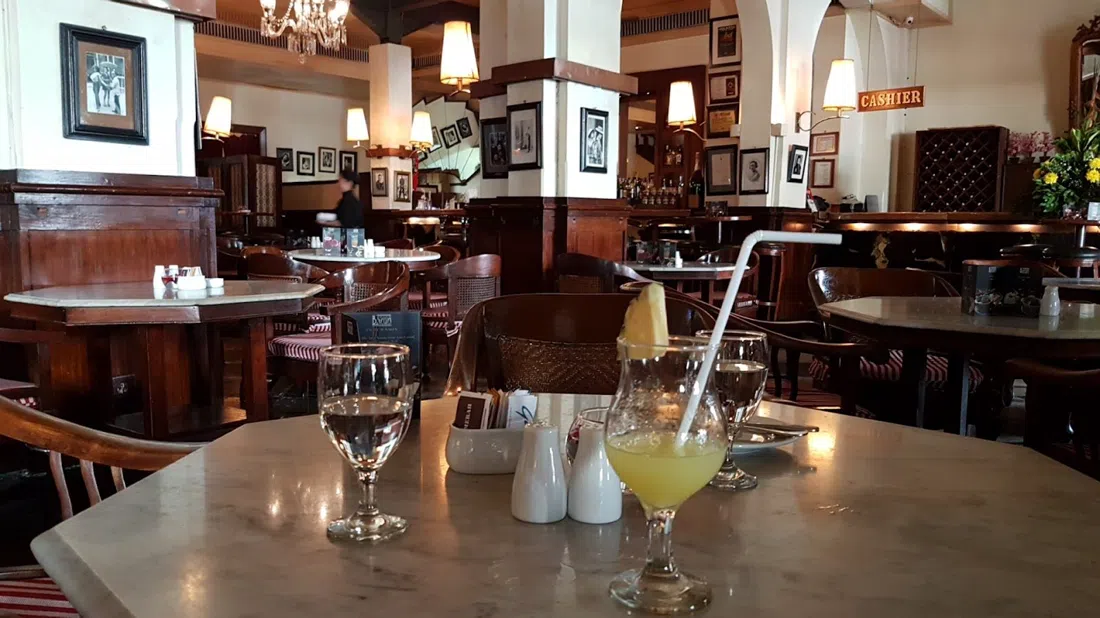
Museum Bank Indonesia (Kota Tua) is the best-presented and coldest museum in the old town, Tuesday to Sunday 08:00 to 15:30, around Rp5,000 and free for students with ID and for registered groups. Entry runs in fixed sessions (08:00 to 10:00, 10:00 to 12:00, 13:00 to 15:00), so a party needs a slot booked. After a morning on the open Monas grounds, the air conditioning alone justifies it. Café Batavia (Kota Tua, on Fatahillah Square) is the one sit-down room up here with a real view over the square, open from 09:00 and 07:00 at weekends, mains roughly Rp150,000 to 300,000, with an upstairs room for larger parties; reserve if you want a window.
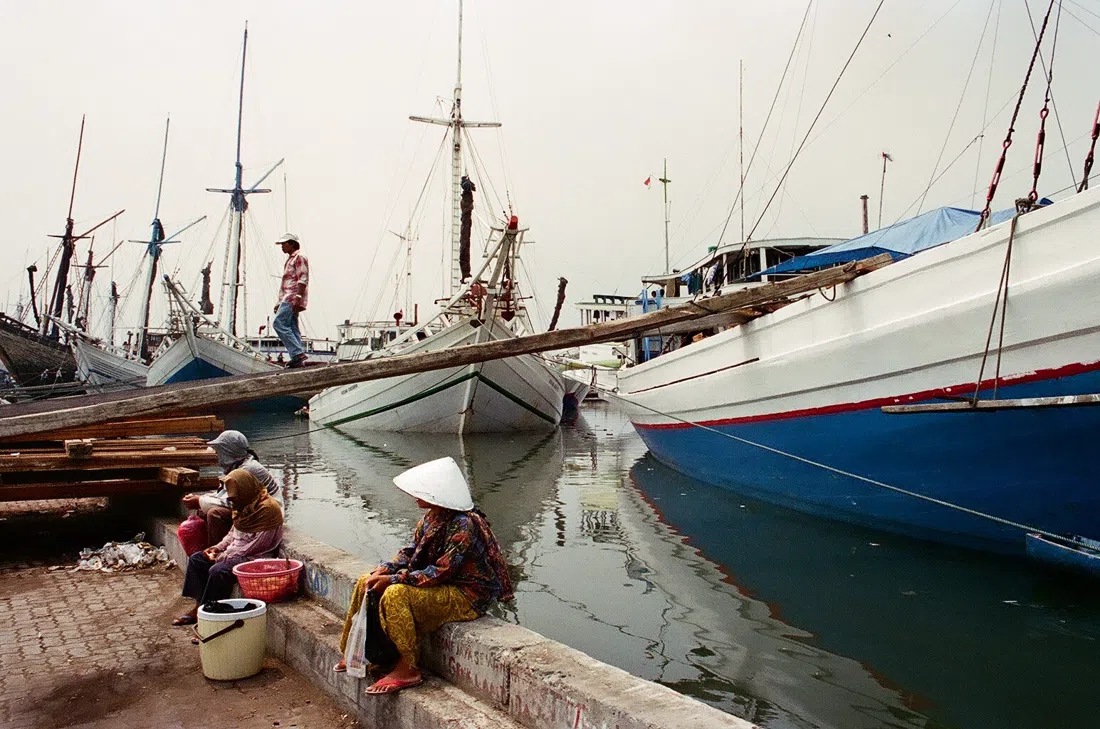
Sunda Kelapa Old Harbour (Penjaringan, a kilometre north of Kota Tua) is where the city started and is still loading inter-island timber by hand. Go in the morning when it is actually working. It is free to enter, boatmen charge a small informal fee to step aboard a schooner, and there is no shade, no railings and a fair amount of hustle. Not for young children; excellent for anyone who likes watching work get done.
Arriving by ship
Tanjung Priok Cruise Terminal (North Jakarta) is 15 to 20 kilometres northeast of the monument and a 30 to 90 minute drive depending on traffic. That spread decides whether a port call can include Monas, the old town, or both. Coach excursions and pre-booked private cars form up inside the port gate and independent walk-outs are discouraged. If your call is short, take the monument and one national collection and skip the north; if it is a full day, reverse the usual order and do Kota Tua first, before the square bakes.

Is it worth it
Yes, with a caveat. As a piece of architecture and a statement of intent, standing on the plaza directly under the flame is worth the walk. It is the clearest thing the city says about itself, and you can do it for nothing. As a viewpoint it is currently not on offer at all, and even when the lift runs, the queue is long and the view is a brown-grey grid best appreciated from the rooftop of somewhere with a drink in your hand.
It suits first-time visitors, anyone with a historical bent, and anybody using the square as the hinge of a walking half-day. It does not suit travellers who came for a panorama and nothing else, or anyone with two hours and a preference for museums. In that case, go straight across the road to the national collection and see the monument from the gate. For where to base yourself within walking reach, start with the Jakarta hotel search; for how this district fits the rest of the city, see the Jakarta guide.
Best time to go
The square opens at 06:00 and the first two hours are the best of the day by a wide margin: soft light on the flame, air you can breathe, and locals using the park as a park. From roughly 10:00 to 15:00 the open ground is punishing and unshaded, and that window belongs indoors, at the national museum, the gallery, or the bank museum up north.
Late afternoon is the second window. Come back around 17:00, do the mosque tour before the last one leaves at about 16:30 if that is your priority, then let the evening take over: the gallery stays open until 20:00 on Friday to Sunday, and the free fountain show at the monument runs at 19:30 and 20:30 on those same nights. That combination is the strongest version of a Monas visit right now.
Mondays are out, because the grounds, the national museum and the gallery all close. Weekdays are quieter than weekends everywhere in the district. This is a wet-season city from roughly November to March, when rain arrives hard in the afternoon and clears, which is another argument for an early start. Ramadan and the days around Idul Fitri change mosque access and crowd patterns significantly, so plan around them rather than through them.
Practical notes
Gambir Station sits on the northeast corner of the grounds but handles intercity trains only, so commuter-line passengers should use Juanda or Gondangdia, both a short walk away. TransJakarta's north-south corridor stops on Medan Merdeka, and the nearest MRT station is Bundaran HI, about a kilometre south past Sarinah. Ride-hailing cars and motorbikes are cheap, universal and the default way locals cross this city; a motorbike will beat a car by a wide margin in the afternoon.
Park entry is free, and so are the gallery, the mosque, the cathedral and Lapangan Banteng. Budget around Rp15,000 for the national museum, Rp5,000 each for the burial ground and the bank museum, and Rp20,000 to 50,000 for a dish at the food hall inside the complex. QRIS payments work almost everywhere, but carry small rupiah notes for the cheap entries and the boatmen at the old harbour.
On timing, allow one hour for the grounds, four for a walking half-day around the square, and six if you are adding the old town. Nothing here needs booking except a rooftop table and a group slot at the bank museum.
One warning: the monument's interior closure has no confirmed end date. Build your day around the grounds, the collections across the road, and the evening fountains, and treat the lift as a bonus if it happens to be running when you arrive.