The Jakarta issue
How Jakarta Eats on the Street
A morning-to-2am map of the warungs, carts and Chinatown alleys where Jakarta does its real cooking — what to order, what it costs, and which places suit a crowd.

By Ratna HalimJudge the soto by its broth, not its garnish
By seven in the morning the pavements of Jakarta already smell of coconut rice steaming in banana leaf, and by two the next morning a wok the size of a bicycle wheel is still throwing sparks over mutton fried rice. This is a city that eats standing up, perched on plastic stools, leaning against a car bonnet — a place where the best cooking rarely happens behind a door. What follows is not a bucket list ticked off in one hungry afternoon; it is a route I have walked and re-walked, because no single visit ever settles which stall is best.
One thing before we start: I don't use the word 'authentic'. It flatters the writer more than the cook, and the cooks here don't need it. What they need is for you to turn up, order the right dish, and pay a fair price — so that is what this guide is for. I've grouped the stalls by the hour you're most likely to want them, because Jakarta's street food runs on a strict internal clock, and turning up at the wrong time is the surest way to miss the food entirely.
Begin with rice: the morning coconut plate

Jakarta wakes up hungry for coconut rice, and the dish to understand first is nasi uduk — rice steamed with coconut milk, pandan and lemongrass until each grain turns glossy and faintly sweet. The place to understand it is Nasi Uduk Kebon Kacang (Kebon Kacang, Central Jakarta), a warung that has been ladling it out since the 1960s. Go to the original street stall on Jl. Kebon Kacang Raya rather than the mall food-court branches that borrow the name — the difference is the whole point. A plate built up with a piece of ayam goreng, a bergedel potato cake and a skewer of semur runs about IDR 25,000–60,000 (US$1.60–4), depending on how high you stack the sides. Long communal benches and a shared spread make it a natural fit for a group of four to six, though the breakfast peak brings short waits and there are no reservations: you queue, you shuffle in, you share. It has earned its standing over sixty years, and I'd rather you judged it the way I have — across several mornings — than on one rushed plate.
Plan your Jakarta trip
Live prices from our booking partners.
Free cancellation on many rooms. We may earn a commission when you book.
Betawi soul: the soup and the charcoal omelette
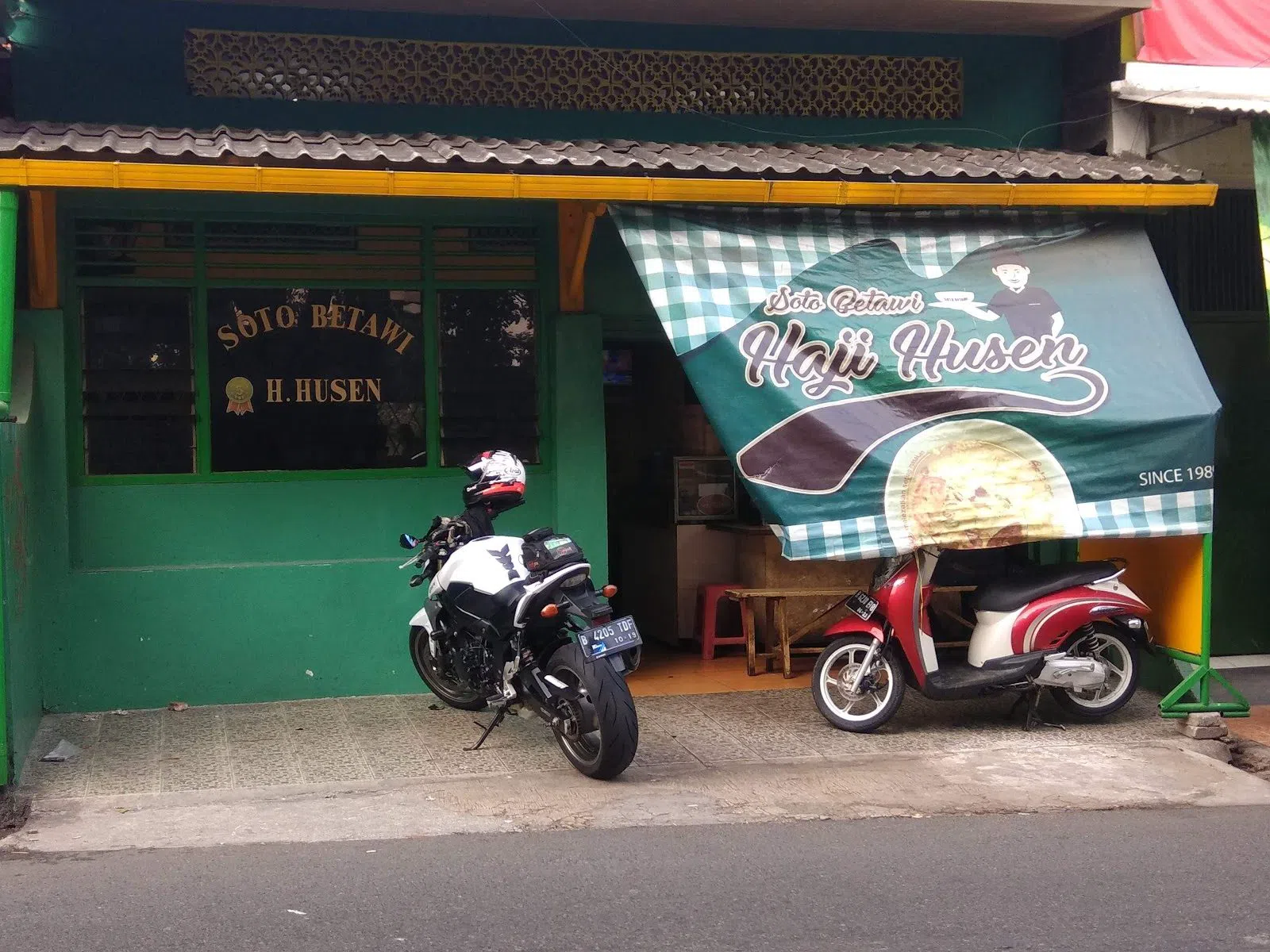
The Betawi are Jakarta's own people, and their cooking is the city's deepest street tradition. Start with soto Betawi, a beef soup made rich with coconut milk, at Soto Betawi H. Husein (Manggarai, South Jakarta). This is the creamy, fragrant bowl that food travellers carried out into the world; a bowl with your choice of cuts and a mound of rice sits around IDR 40,000–70,000 (US$2.60–4.60). The room seats roughly eighty and heaves at weekends, and here timing is not a suggestion — it routinely sells out by mid-afternoon. Come early if you're a group, and if you'd rather keep it to clean beef, simply say so and skip the offal. I've had bowls here that were faultless and one that was merely good, which is exactly why I never grade a kitchen on a single sitting.
The harder Betawi dish to find is kerak telor, a glutinous-rice omelette cooked over charcoal with duck or chicken egg, dried shrimp and toasted grated coconut. It has all but vanished from ordinary streets, which is why I send people to the Kerak Telor carts at Setu Babakan Betawi Village (Srengseng Sawah, South Jakarta), the heritage village that keeps the tradition alive. Each omelette is cooked to order for about IDR 20,000–35,000 (US$1.30–2.30), so allow a little wait, and enjoy it for what it is: an open-air cultural park with several carts and lakeside space, easy and genuinely fun for a group. It's a trek from the centre, but it is the most reliable place in Jakarta to eat this dish made properly.
Midday: greens, noodles and the point-and-pick counter
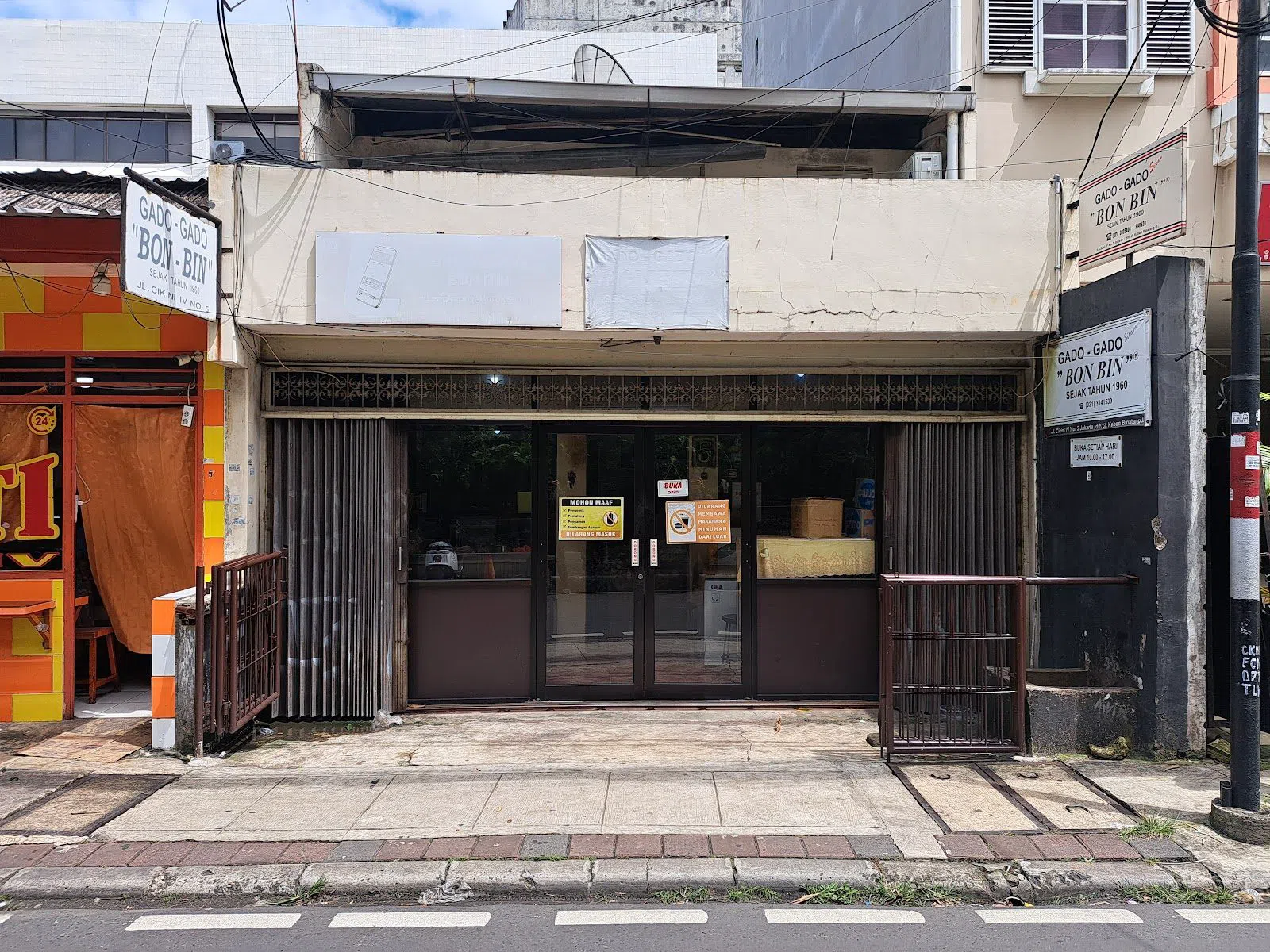
When the heat peaks, Jakarta turns to lighter, sharper plates. The one every mixed-diet traveller should know is at Gado-Gado Bonbin (Cikini, Central Jakarta), a sixty-year-old benchmark for gado-gado — blanched vegetables, tofu, tempeh and egg under a peanut sauce ground fresh every single morning. A plate is roughly IDR 35,000–55,000 (US$2.30–3.60), and because it's naturally vegetarian-friendly it's a rare street stop that suits a whole table with different diets. Be warned on logistics: it's a small room, open only around 11am–2pm, and there's often a queue. It works beautifully for two to four and turns awkward for a larger group, so plan accordingly.
For something more filling, cross Menteng to Mie Ayam Gondangdia (Gondangdia, Central Jakarta), a 1968 legend whose landmark green building is a neighbourhood icon. The mie ayam here — springy noodles under diced chicken cooked down in a mild, Chinese-Indonesian sweet-savoury sauce — is the easy crowd-pleaser of this list, around IDR 30,000–55,000 (US$2–3.60) for a generous bowl. It's roomier than most warungs and open through the day (roughly 8 or 9am until 9pm), which makes it one of the few stops here that's genuinely comfortable for families and larger groups.
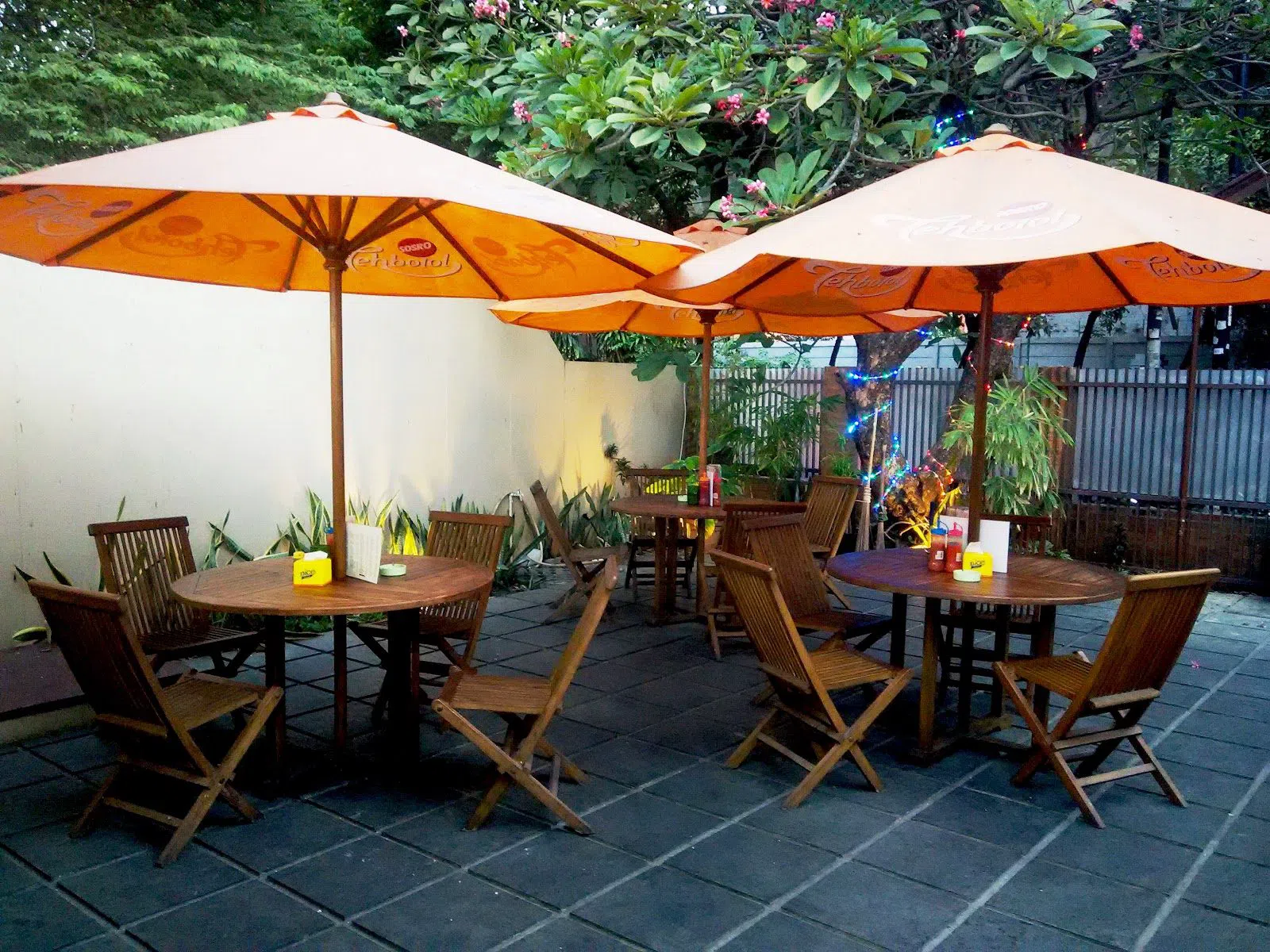
And then there is the warteg, the point-and-pick counter that feeds working Jakarta. The most famous of them is Warteg Warmo (Tebet, South Jakarta), open since 1969 and door-less by design — it simply never closes. You walk up to the glass case, point at what you want over rice — orek tempe, telur balado, a scoop of sayur — and pay somewhere between IDR 15,000 and 40,000 (US$1–2.60). It's the cheapest honest meal in this guide, but the seating is tight; treat it as a quick shared graze rather than a sit-down group dinner, and it will reward you.

Into Glodok: Jakarta's Chinatown table
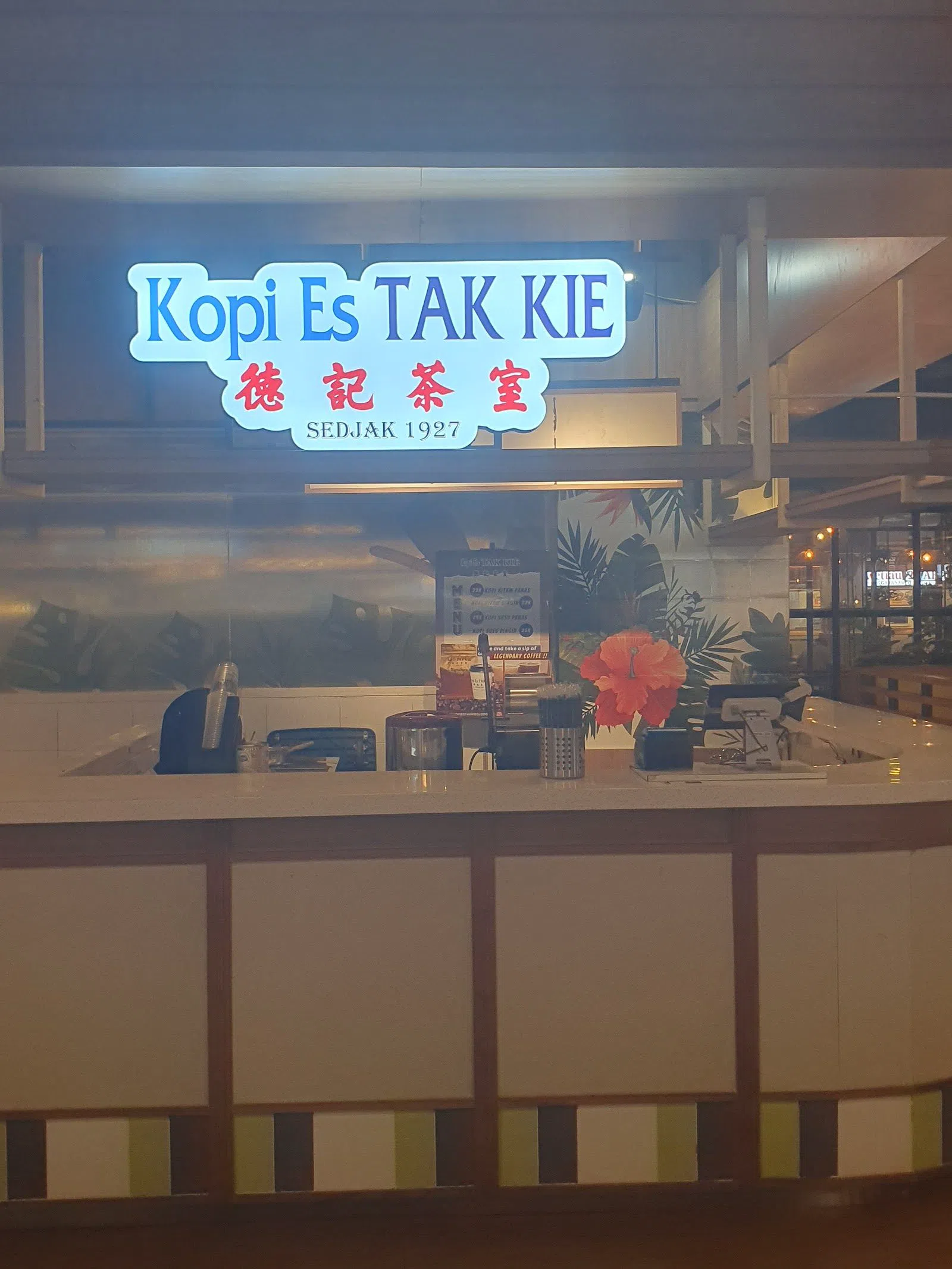
Glodok, the old Chinatown, is a district you eat your way through slowly. The anchor is Kopi Es Tak Kie (Gang Gloria, Glodok), the oldest coffee shop in the city, established in 1927 and tucked into the food alley of Gang Gloria. Order the kopi es — strong iced coffee, served the way it has been for the better part of a century — for around IDR 20,000–40,000 (US$1.30–2.60). It's a tiny historic room, and this is as much a heritage stop as a drink; a couple can settle in happily, but a bigger group is smarter splitting between Tak Kie and the neighbouring Gloria stalls rather than trying to cram in.
A few doors into the district is Kari Lam (Glodok), a 1973 curry shop cooking in the Peranakan and Medan style. The kari — chicken or beef in a deeply spiced, coconut-thickened broth you can take with rice or noodles — runs about IDR 35,000–65,000 (US$2.30–4.30). It's richly aromatic rather than searingly hot, which makes it a fine contrast to the fierier Betawi and Sumatran plates elsewhere on this route. It's a small daytime shop, open roughly 10am to 6pm, comfortable for two to five, and busy enough at lunch that you should plan around a short queue.

One strip, every Sumatran dish
When I'm feeding a big, indecisive group, I take them to the Nasi Kapau row at Food Street Kramat (Jl. Kramat Raya, Senen, Central Jakarta) — the city's most famous cluster of nasi kapau, the West Sumatran cousin of nasi Padang. It's a whole strip of adjacent stalls with shared seating, which makes it one of the easiest places in Jakarta to feed a large, mixed crowd: everyone points at a different tiered dish and it all lands on the table. Pick a busy stall, and don't leave without the signature gulai nangka, a young-jackfruit curry that is the dish this style is known for. Expect roughly IDR 35,000–75,000 (US$2.30–5) a head, more if the rendang tempts you, which it will.
After dark: the wok, the grill and the martabak boxes
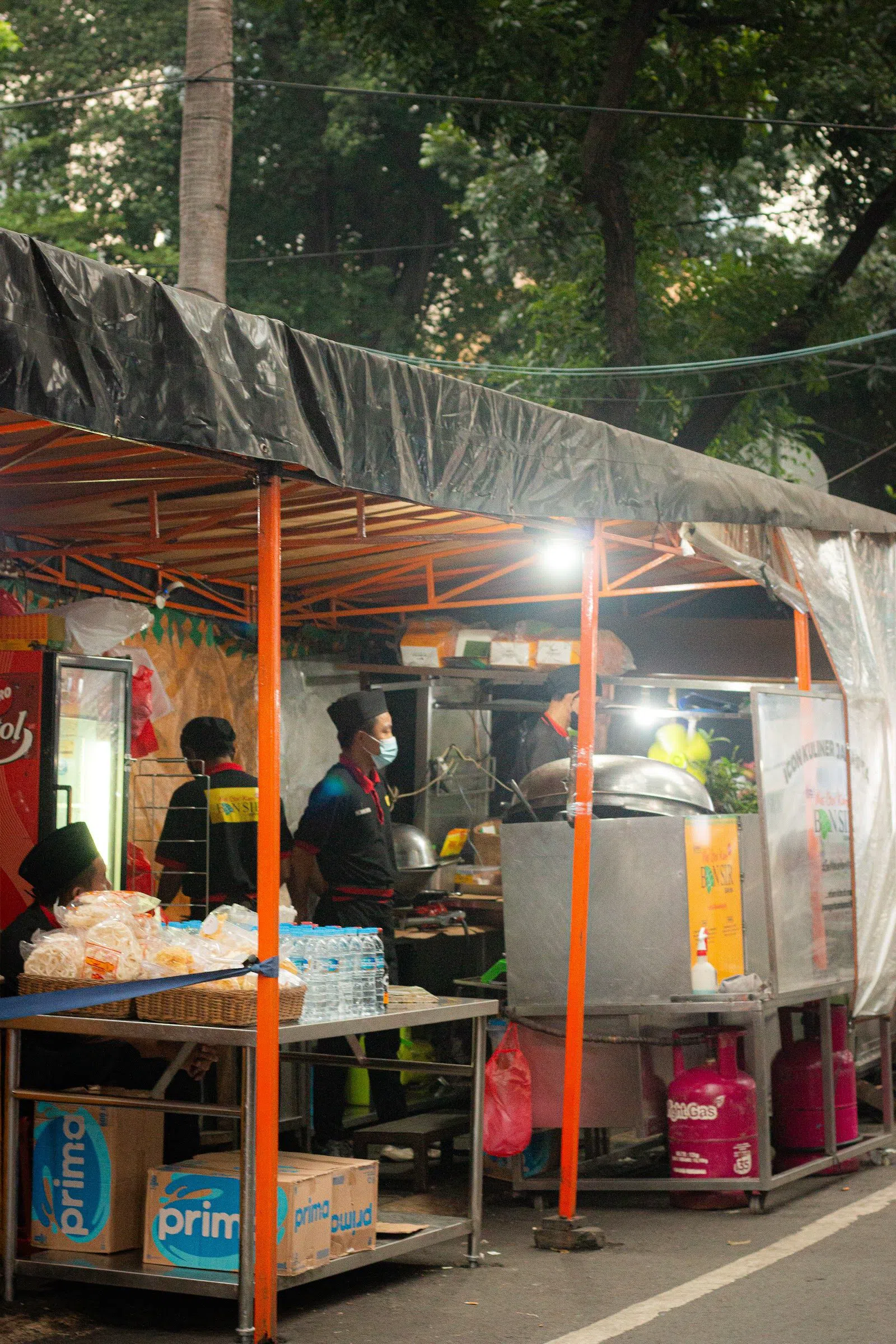
Jakarta's night food is its theatre. The headline act is Nasi Goreng Kambing Kebon Sirih (Kebon Sirih, Central Jakarta), a 1958 institution where the draw is half the flavour and half the spectacle: mutton fried rice tossed in a single giant wok over a roaring flame. A plate is about IDR 45,000–80,000 (US$3–5), and the kitchen runs from 5pm until 2am, absorbing the late crowd spilling out across the city. Street-side tables handle groups well — stick to the original Kebon Sirih pitch, not the imitators.
For a more modern kind of night snack, head to Sate Taichan 87 Bang Ocit (Senayan, South Jakarta), the stall that popularised sate taichan — chicken skewers grilled with nothing but salt, no sweet soy, served with a punchy sambal on the side. Order by the dozen; a proper feed lands around IDR 30,000–90,000 (US$2–6) depending on your appetite and your nerve with the chilli, which I'd go easy on. It's a late-night favourite with plenty of open-air tables, so it's an easy one for a group.
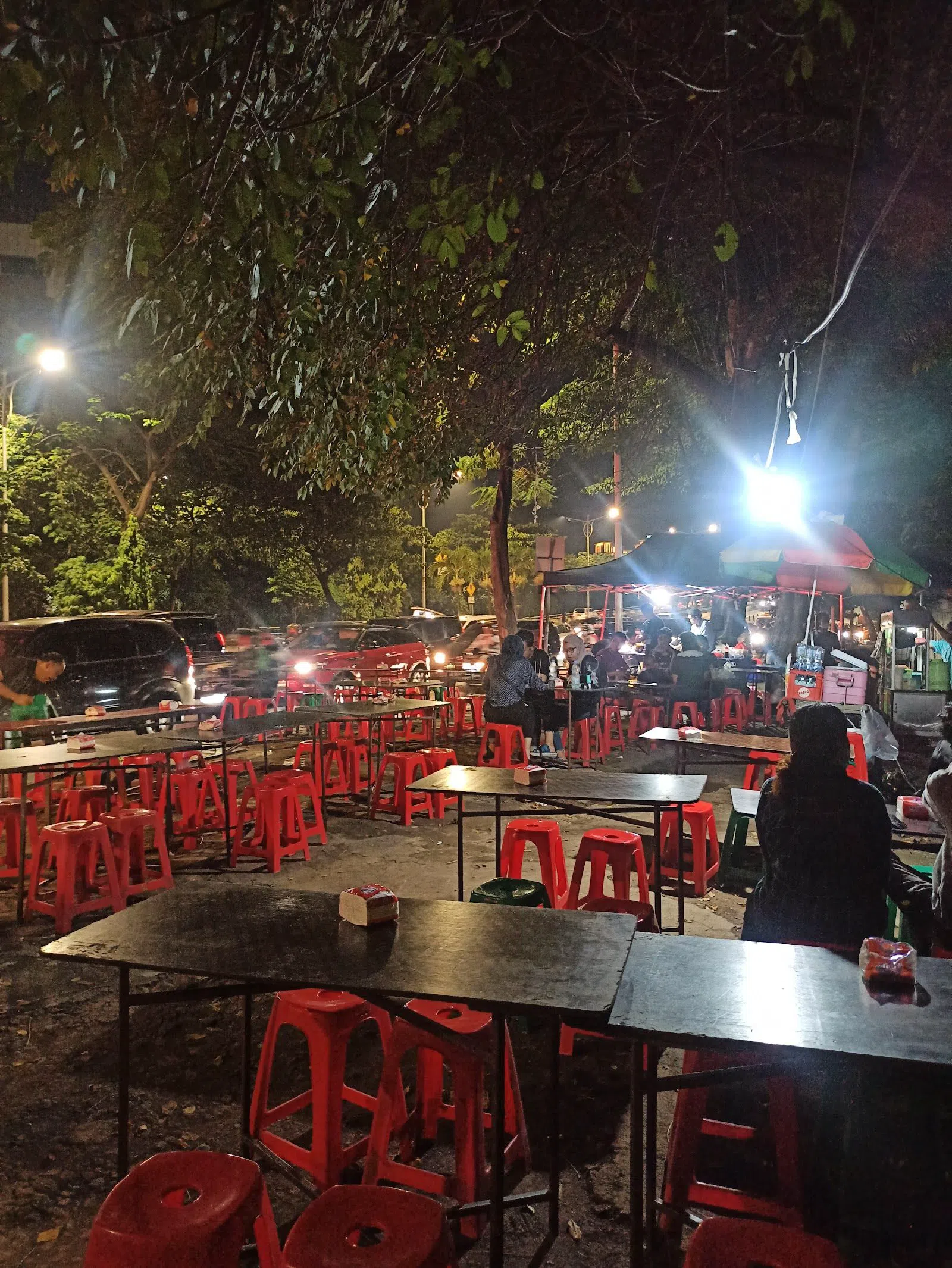

Congee-lovers should note that South Jakarta's cult bowl now keeps night hours too. Bubur Ayam Barito (Gandaria, South Jakarta) opens around 4pm and runs to midnight, serving chicken congee whose trademark is a scattering of crunchy cheese sticks — a bowl is roughly IDR 30,000–55,000 (US$2–3.60). One honest caveat: since a site clearance in late 2025 it serves takeaway and eat-in-your-car only, so treat it as a grab-and-go rather than a sit-down, and check it's operating before a long trip across town. It's still worth the detour; just go in knowing the situation.
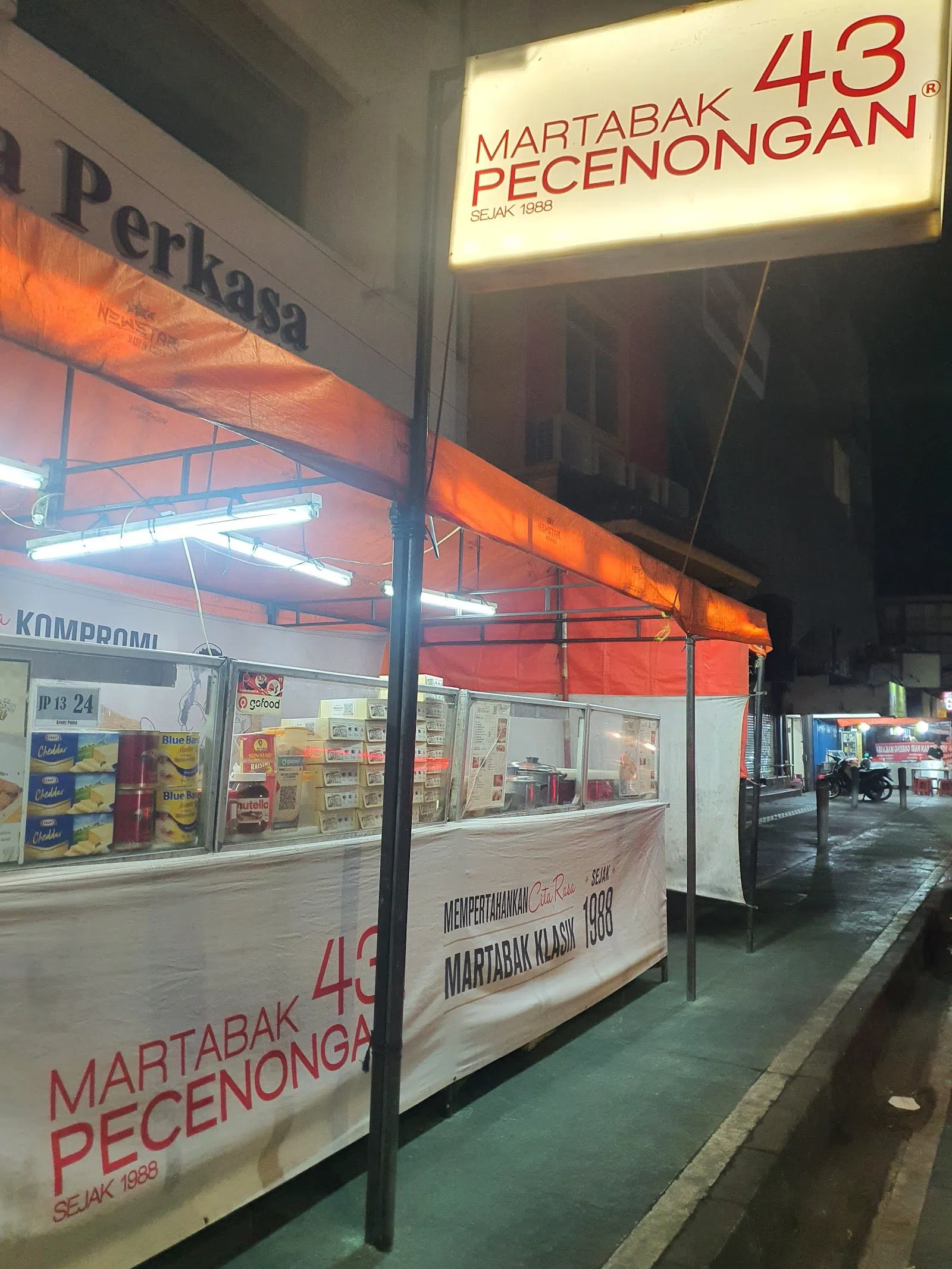
End the night the way Jakarta does, with martabak. Martabak Pecenongan 43 (Pecenongan, Central Jakarta) has been the definitive night-market martabak since the 1980s, and it's built for exactly this moment: 24 hours, mostly takeaway boxes, limited seating. Order one martabak manis — the thick, sweet folded pancake stuffed with chocolate, cheese or peanut — and one savoury martabak telur, and split them across the group. A whole martabak runs IDR 60,000–200,000 (US$4–13) and comfortably feeds two to four. It's a fun late-night stop rather than a meal in itself, which is precisely the right note to close on.
Practical notes for eating your way through Jakarta
Timing is everything. Read the hours above as promises, not suggestions. Soto Betawi sells out by mid-afternoon; Gado-Gado Bonbin closes by 2pm; Glodok's shops are daytime affairs; the wok, the grill and the martabak carts are for after dark. Build your day around these windows and you'll eat well; ignore them and you'll arrive to shutters.
Carry cash. Small rupiah notes are the currency of the street here — most warungs and carts don't take cards, and few things are more deflating than watching your nasi uduk get handed to the next person because you can't pay for it. Keep a fold of 20,000 and 50,000 notes on you.
Getting around. Central stops like Kebon Kacang, Kebon Sirih, Gondangdia and Cikini are close enough to string together, and the MRT plus a ride-hail app (Gojek or Grab) will cover the longer hops to Manggarai, Gandaria and Senayan. Setu Babakan, out at the southern edge, is a dedicated half-day trip — pair it with nothing and go for the village itself.
Budget. Street eating here is gloriously cheap: most plates land between IDR 15,000 and 80,000 (US$1–5), and even a shared late-night martabak tops out around IDR 200,000. A full day of grazing across four or five stalls rarely climbs past IDR 250,000 a head.
Groups vs couples. For a crowd, aim for the strips and open-air stalls — Nasi Kapau row, Sate Taichan, the nasi uduk benches, the Betawi village. For two, the tight historic rooms — Tak Kie, Gado-Gado Bonbin, Kari Lam — are the ones to savour slowly.
For somewhere to sleep between meals, start with a Jakarta hotel search, and for everything beyond the food — neighbourhoods, timing, getting around — see the full Jakarta guide. Then go hungry, go often, and don't decide your favourite on the first bowl. I never do.
Before you go
What is the most famous street food in Jakarta?
Several dishes compete for the title, but the icons are nasi uduk (coconut rice), best at Nasi Uduk Kebon Kacang since the 1960s; soto Betawi, the coconut-rich beef soup at Soto Betawi H. Husein; and nasi goreng kambing (mutton fried rice) at the 1958 stall on Kebon Sirih. Expect to pay roughly IDR 25,000–80,000 a plate.
Is Jakarta street food expensive?
No — it's one of the cheapest great-eating cities anywhere. Most plates cost between IDR 15,000 and 80,000 (about US$1–5), a warteg meal at Warteg Warmo starts around IDR 15,000, and a whole shared martabak tops out near IDR 200,000. A full day of grazing rarely passes IDR 250,000 per person.
Where can I try kerak telor in Jakarta?
Kerak telor — the charcoal-cooked Betawi rice omelette with dried shrimp and toasted coconut — has nearly disappeared from ordinary streets. The most reliable place to eat it made properly is the cart cluster at Setu Babakan Betawi Village in South Jakarta, where each one is cooked to order for about IDR 20,000–35,000.
What should I eat in Jakarta late at night?
Jakarta's night food is a highlight. Head to Nasi Goreng Kambing Kebon Sirih (open until 2am) for wok-fired mutton fried rice, Sate Taichan 87 in Senayan for salt-grilled satay, and Martabak Pecenongan 43 for a 24-hour sweet-and-savoury martabak to split. Bubur Ayam Barito serves chicken congee from about 4pm to midnight, though currently takeaway only.
Is Jakarta good for vegetarians eating street food?
It's manageable if you choose carefully. The strongest pick is Gado-Gado Bonbin in Cikini, a naturally vegetarian salad of vegetables, tofu and tempeh under freshly ground peanut sauce, around IDR 35,000–55,000. A warteg like Warteg Warmo also lets you point only at vegetable and tempeh dishes over rice.