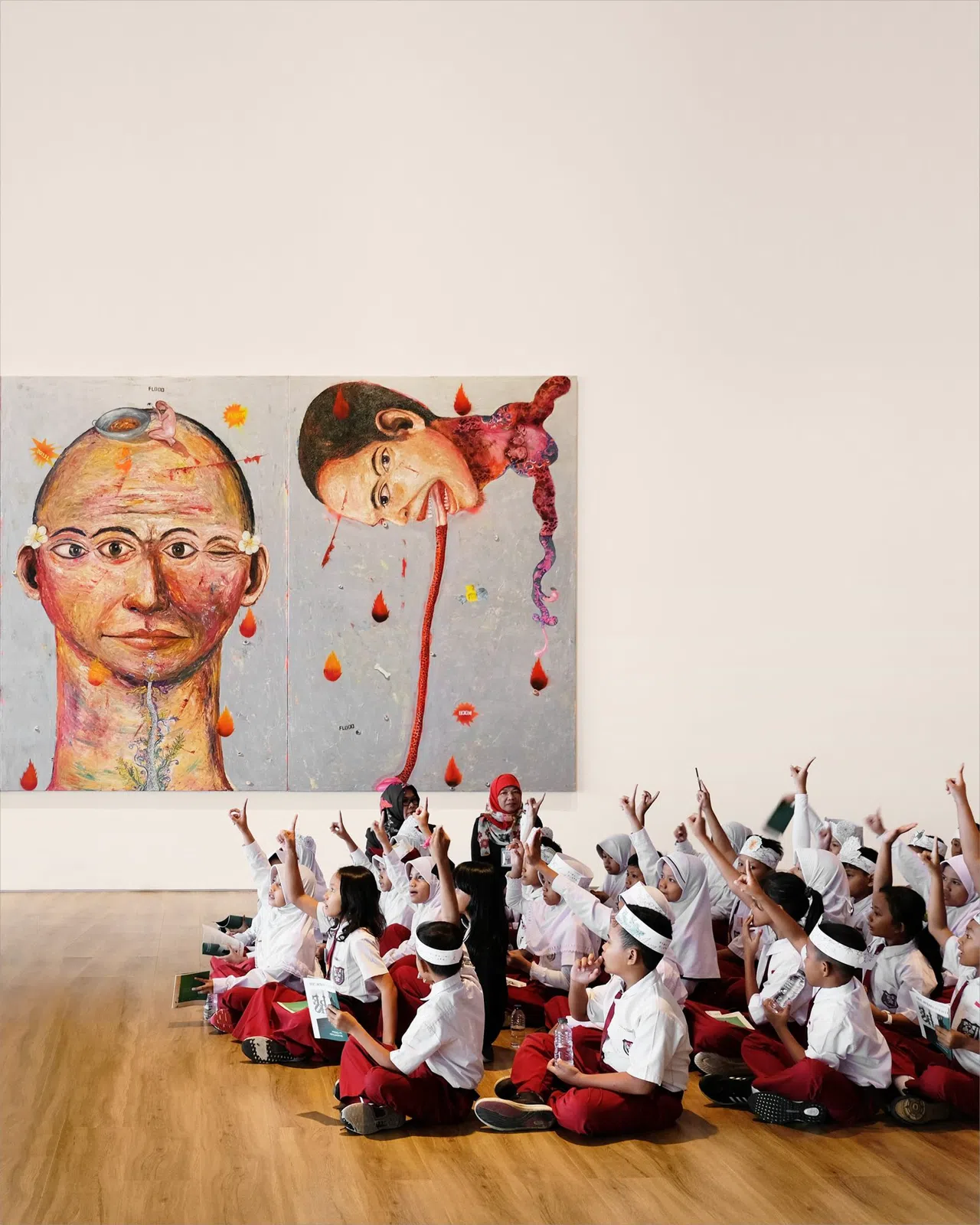
Jakarta doesn't hand its art scene to visitors on a single walkable mile; it scatters it across ring roads, converted warehouses, a colonial-era gallery row and, improbably, a finance-district tower, so finding it means moving the way the city itself moves — by car, by favour, by word of mouth. What ties the addresses together isn't polish but appetite: this is the capital that produced the collective curating Documenta 15, that is actively rewriting its own art history through 2026 survey shows, and that still keeps most of its best rooms free to walk into. Give it three or four days and you leave with a working map of where Southeast Asian contemporary art is actually being made, not a photograph of one museum lobby.
Some of that appetite has roots worth naming rather than skating past. Indonesian contemporary practice found its current voice in the years after 1998, when the end of a long authoritarian period opened space for artists to work more directly, more collectively and more critically than the decades before had allowed — and a lot of what a visitor sees on these gallery walls in 2026 is still, in one way or another, an inheritance of that opening. It shows up as a preference for collective structures over solo-genius mythmaking, a comfort with installation and social practice alongside painting, and a market that has had thirty years to mature rather than a sudden decade of speculative heat. None of that needs to be recited at each doorway, but it's the current running under almost everything below.
The benchmark: Museum MACAN
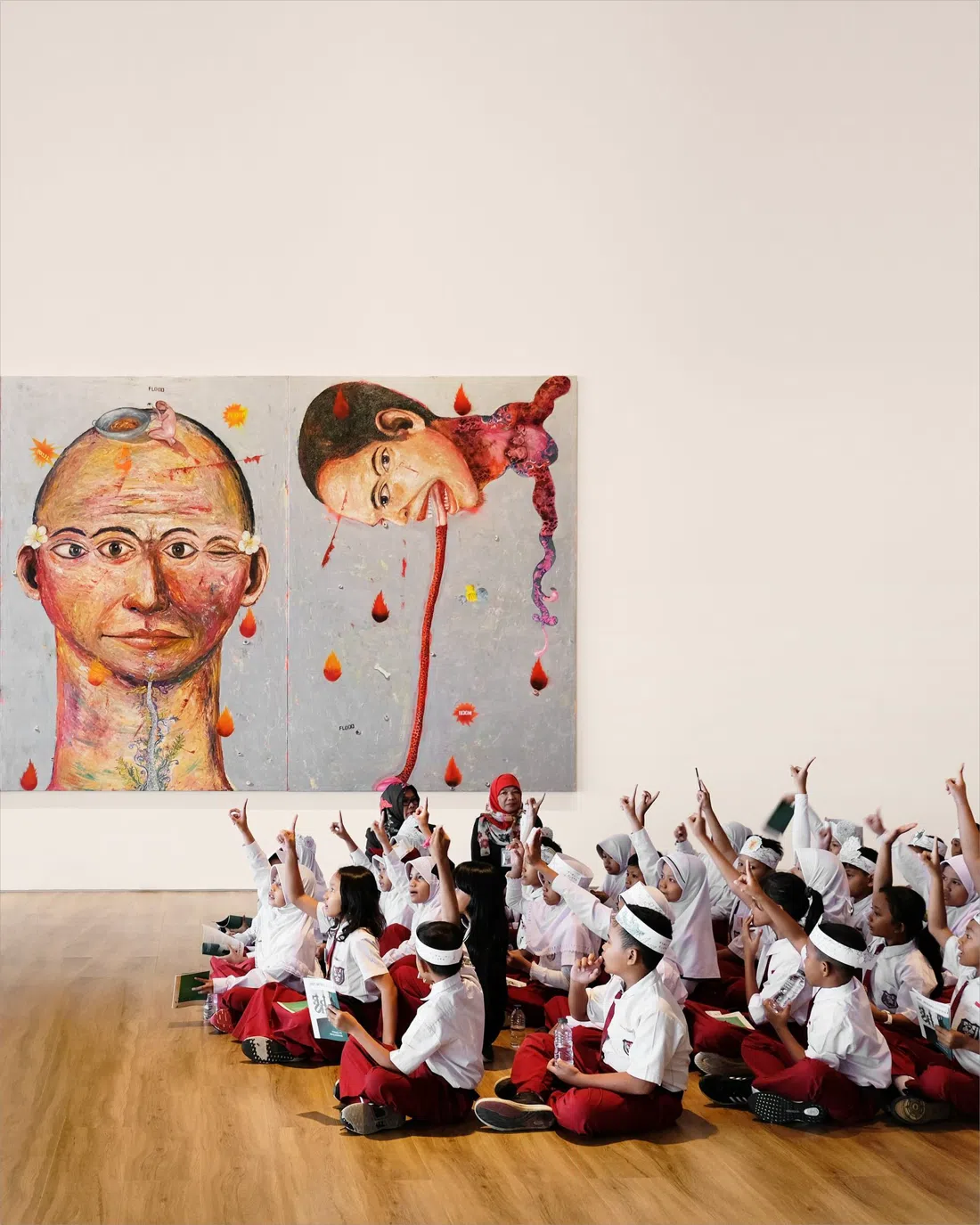
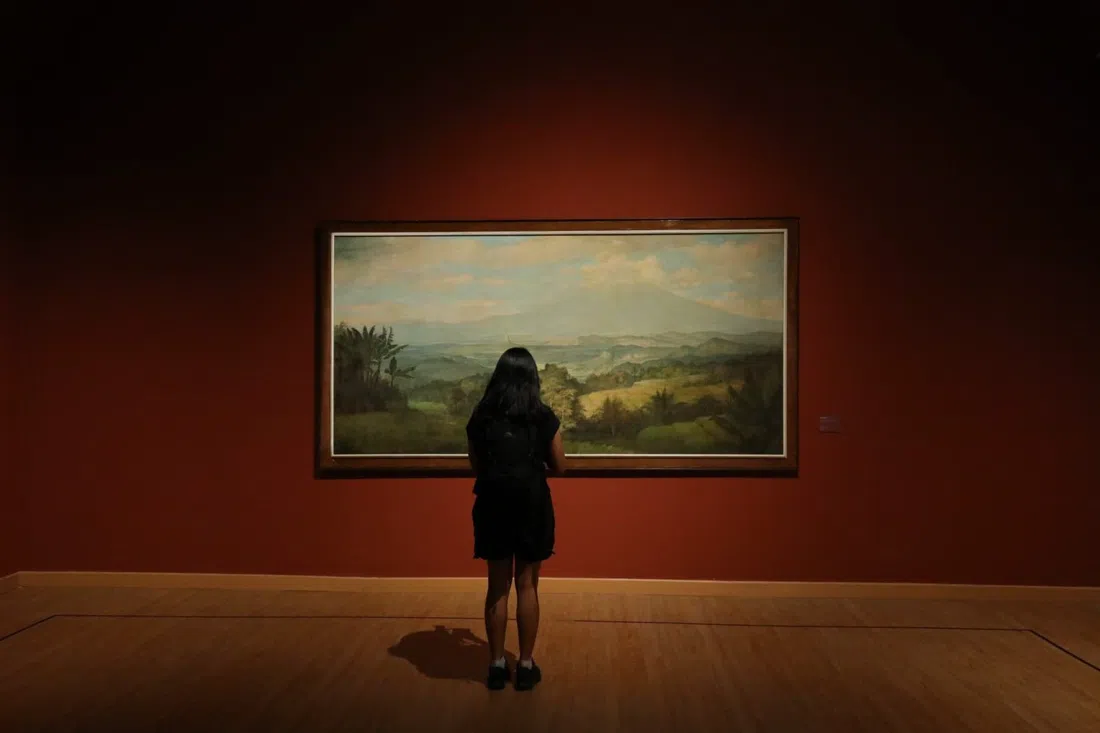
Most serious visits start at Museum MACAN (Kebon Jeruk, West Jakarta), and there's a reason it keeps that role rather than ceding it to somewhere flashier. It's Indonesia's benchmark contemporary museum, the kind of institution other cities in the region measure themselves against, and its 2026 opening chapter pairs Southeast Asian artists Riar Rizaldi and Marcos Kueh against the permanent collection rather than sidelining new work into a side room. Tickets run roughly IDR 100,000–150,000 (about $6–9) per adult, sold online, and the museum is genuinely set up for groups — school parties and tour groups are welcomed with an advance reservation, which is worth making a few days out if you're travelling with more than four or five people. Go on a weekday morning if you can; it's the one venue on this list busy enough that timing actually matters.
The collective that rewrote the rules: Gudskul
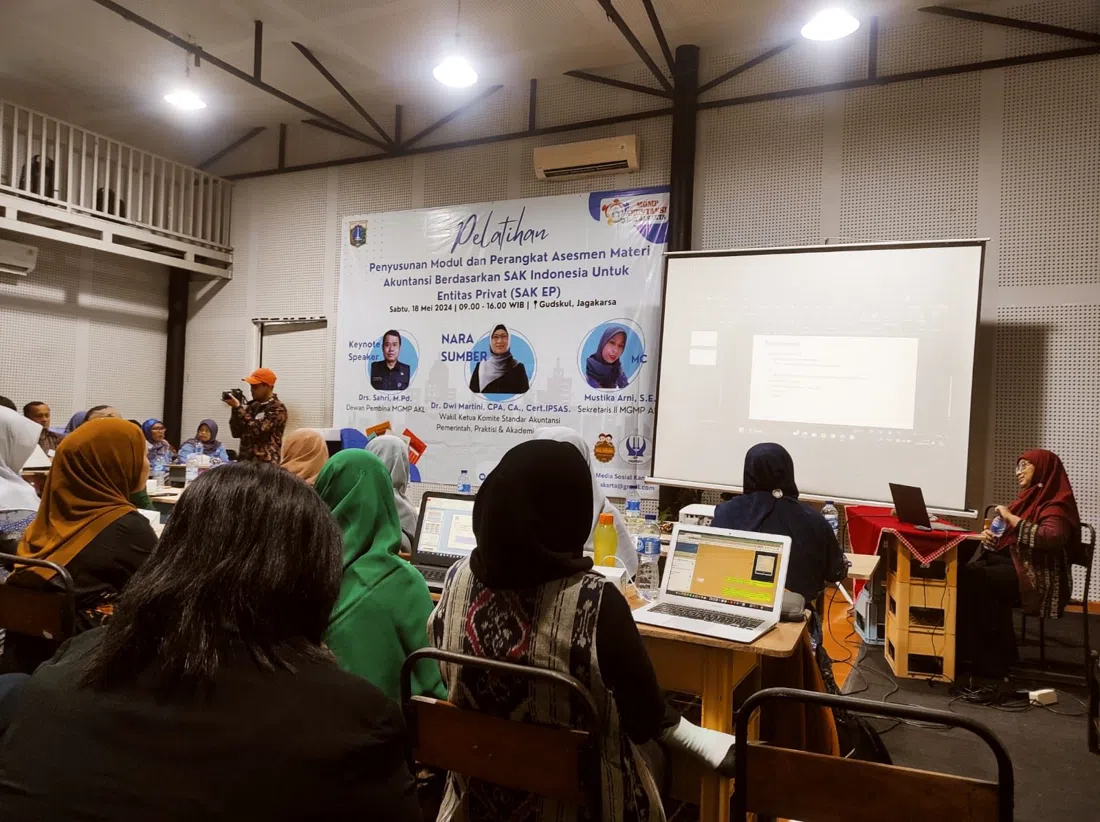
If MACAN is where you learn what Indonesian contemporary art looks like, Gudskul (South Jakarta) is where you learn how it got made. This is the collective-run ecosystem behind ruangrupa, the artist group that curated Documenta 15 — arguably the single most consequential thing to happen to Southeast Asian art's international standing in the last decade — and visiting it changes how the rest of the trip reads. Gudskul isn't a gallery with white walls and a price list; it's a working collective and learning space, with public programs and open studio days that welcome visiting groups. The catch, gently put, is that it isn't a shop: larger delegations should request a session in advance rather than turning up expecting a guided tour on demand. Entry is free. Come with a genuine question about how the space runs rather than a checklist to tick, and staff tend to be generous with their time.
Where the state keeps its own collection: Galeri Nasional Indonesia and Komunitas Salihara
Galeri Nasional Indonesia (Gambir, Central Jakarta) is the state's own contemporary and modern collection, and it has by far the biggest temporary-exhibition floorplate in the city — useful to know if MACAN's rooms feel compact by comparison. Entry is free, large tour groups are routinely accommodated, and while most shows need nothing more than walking in, some special exhibitions ask for simple registration at the door, so budget a few extra minutes rather than assuming you'll breeze straight through. The 2026 program is worth timing a visit around: a women-artists survey sits alongside the Ireland's Eye cross-cultural show, a pairing that says something about where the gallery is trying to take its own programming.
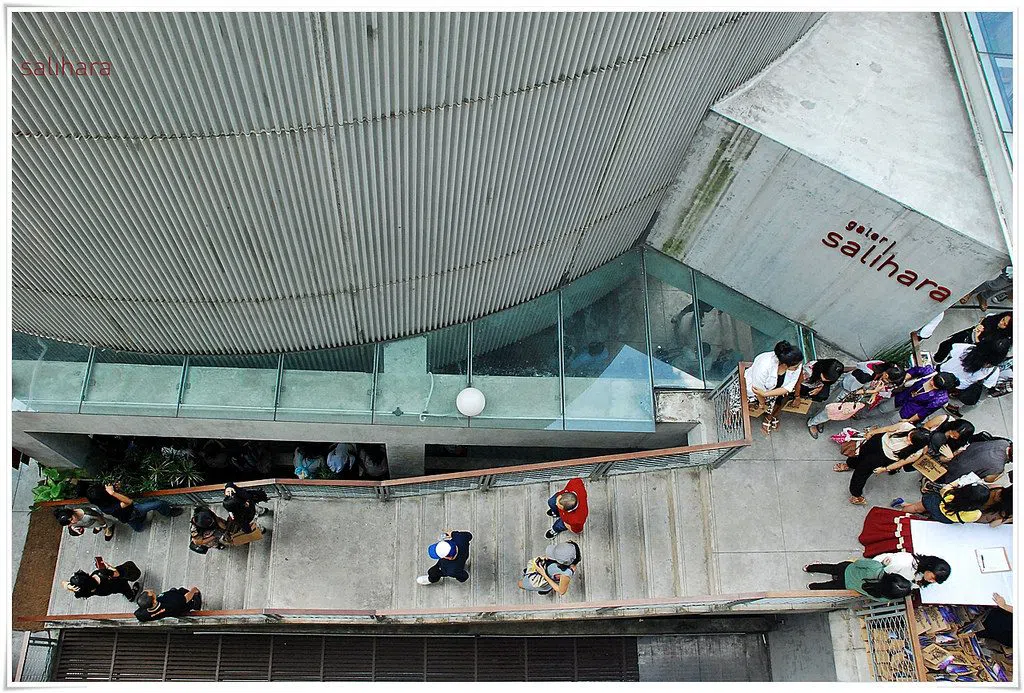
A short drive south, Komunitas Salihara Arts Center (Pasar Minggu, South Jakarta) is the closest thing Jakarta has to a genuine multidisciplinary kunsthalle — visual art sharing a building with theatre, dance and its own performing-arts festival rather than being cordoned off as the "art wing." The gallery itself is free and group-friendly, with no real door policy to navigate. Theatre and festival events are a different matter: they're ticketed, and if you're travelling as a group and want an evening performance rather than just the daytime gallery, book ahead — those sell in a way the gallery shows don't.
The gallery row that built the market
A cluster of longer-running commercial galleries is where Jakarta's contemporary art market actually gets made and priced, and each one handles groups a little differently, so it's worth knowing the door policy before turning up with six people in tow.
ROH Projects (South Jakarta) is the gallery most credited with pushing Indonesian contemporary art into international dialogue, and it wears that reputation lightly — entry is free, walk-ins are fine for small groups, and you only need to email ahead if you want a guided visit or you're bringing a larger party. Its 2026 program runs from a January group show, "New Paintings," into a spring collaboration with Komunitas Salihara, a useful excuse to loop both venues into one day.
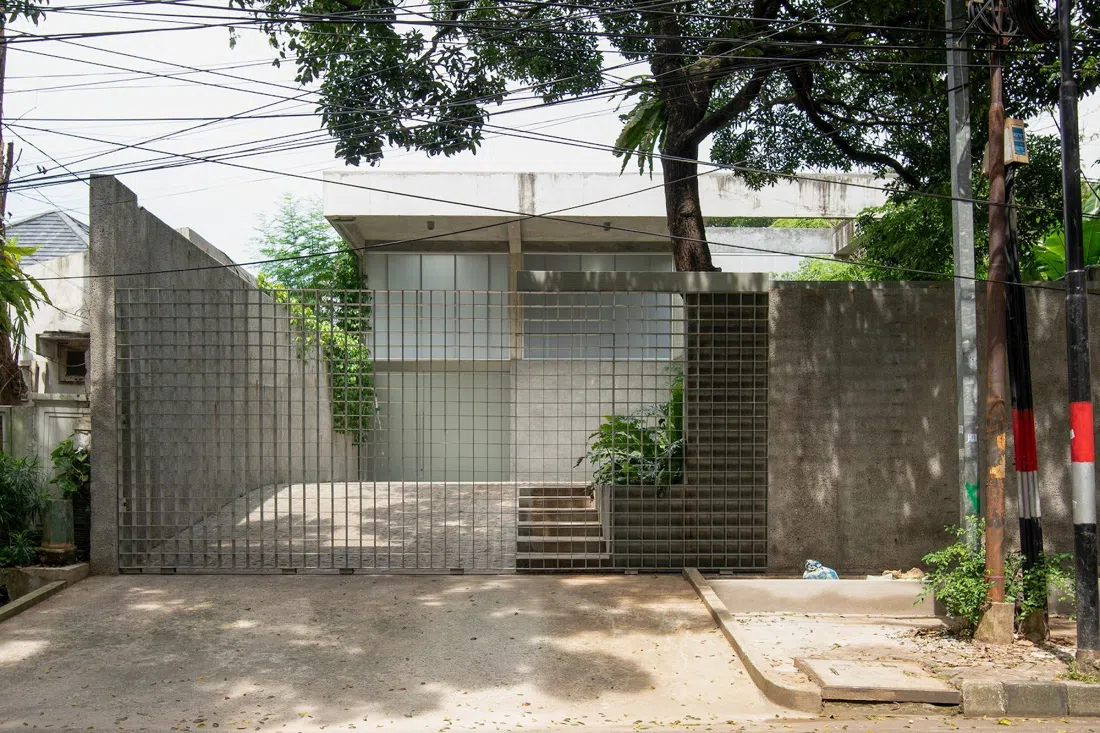
Nadi Gallery (Puri Indah, West Jakarta) is one of the longer-running pillars of the scene, and its 2026 program — a "Tropical Aliens" show plus a presence at Art Jakarta Papers — shows it still sets the market for blue-chip Indonesian contemporary names. Small groups are fine without notice; given the gallery's modest footprint, call ahead if you're arriving as a larger party so staff can actually accommodate you in the space.
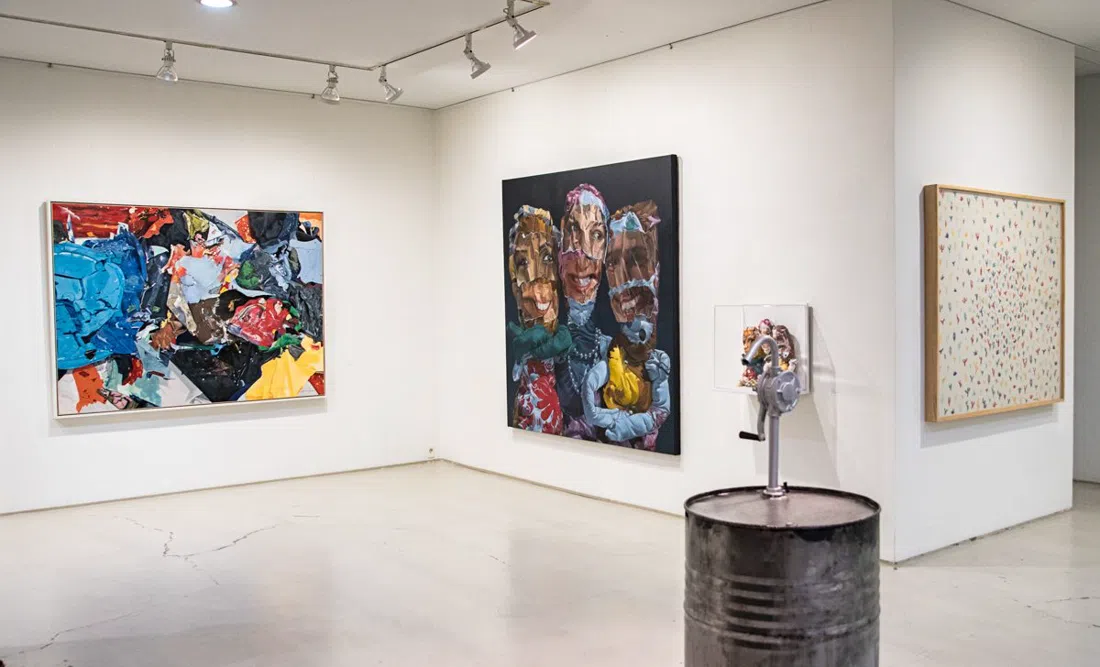
Gajah Gallery Jakarta (South Jakarta) is the local outpost of a wider Southeast Asian gallery network, currently running "Critically Bali," a sharp reframing of Balinese art history through dissent and reinvention rather than the postcard version. It's free, walk-in friendly, and groups are welcome — staff will pull catalogs and offer consultation if you're seriously looking rather than just browsing.
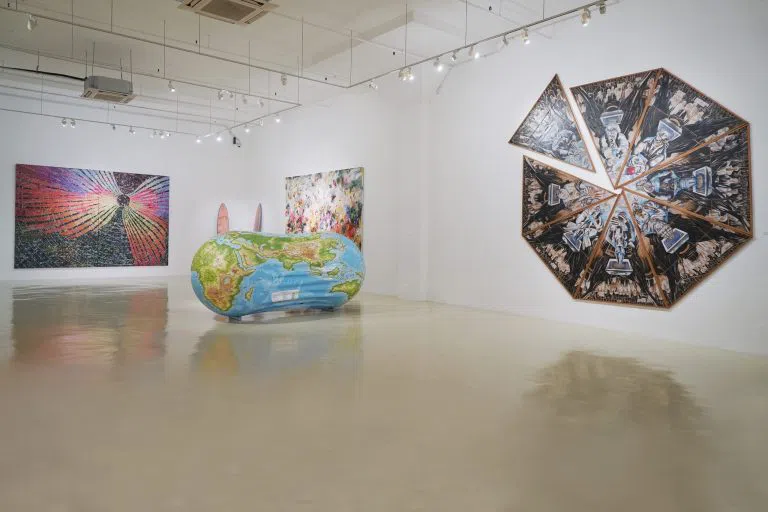
Edwin's Gallery (Kemang, South Jakarta) needs the most planning of the four, and it's worth the planning: operating since the early 1990s, this is Jakarta's institutional memory for contemporary Indonesian art, the gallery that watched several generations of names become the market. It is appointment-only — there is no walking in off the street — so groups need to call ahead to schedule a visit. Skip it if you're short on time and can't arrange the appointment; don't skip it if you can, because the depth of what's on the walls, and what staff can tell you about it, is hard to replicate elsewhere.
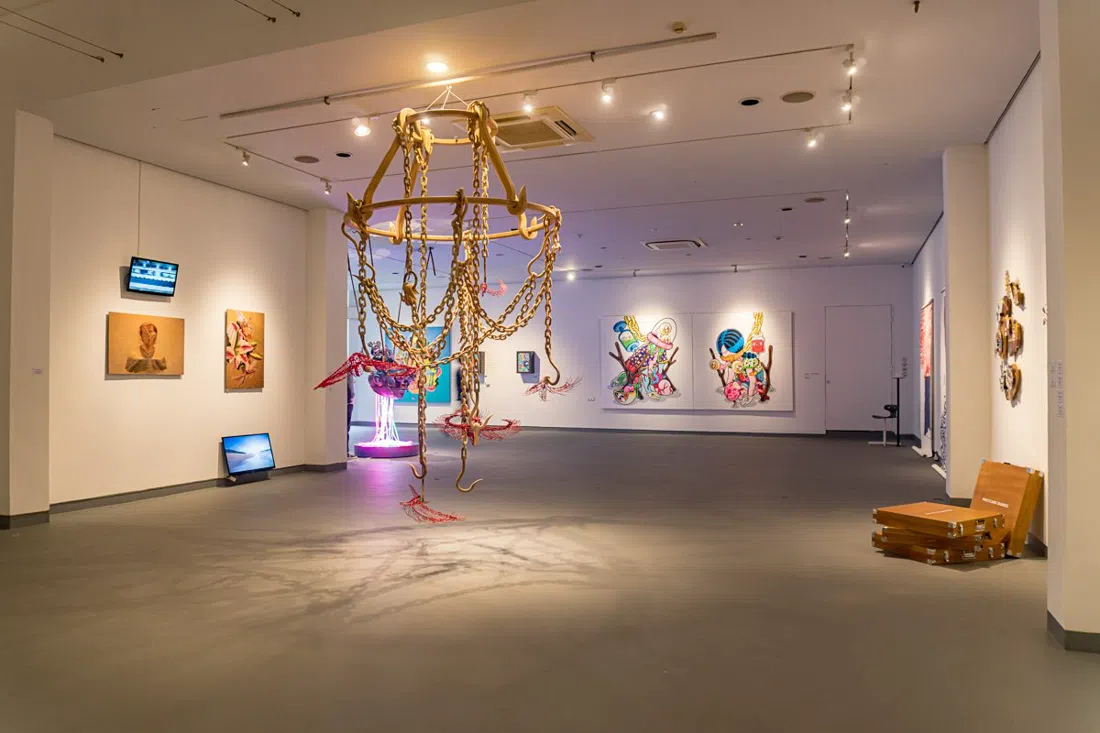
New voices setting the pace
Jakarta's older gallery guard is male-dominated by history rather than design, and a newer set of spaces is actively working against that — not through manifestos so much as through who gets the walls and the fair booths this year.
ISA Art and Design (South Jakarta) focuses on women, diaspora and emerging Asian voices, a deliberate counterweight to the scene's older establishment, and 2026 has it running a packed fair calendar — Art Central, Art Jakarta Gardens, Art Moment Jakarta among them. It keeps genuine walk-in hours, Tuesday to Saturday, 11am to 6pm, free entry, groups welcome; if you want more than a browse, private tours can be arranged by appointment.
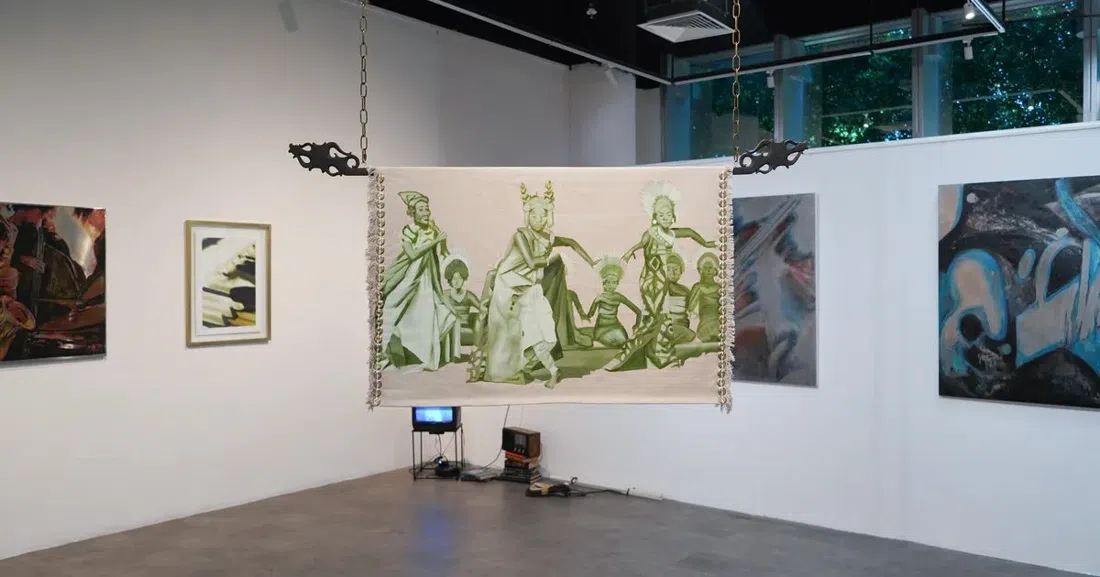
Ruci Art Space (Kemang, South Jakarta) is a low-key showcase for emerging Indonesian artists, sitting in one of South Jakarta's most walkable gallery-and-café strips — the kind of place you find by wandering rather than by appointment. It's free, informal, and easy for groups to drop into without planning ahead, which makes it a good palate-cleanser after a more formal museum visit.
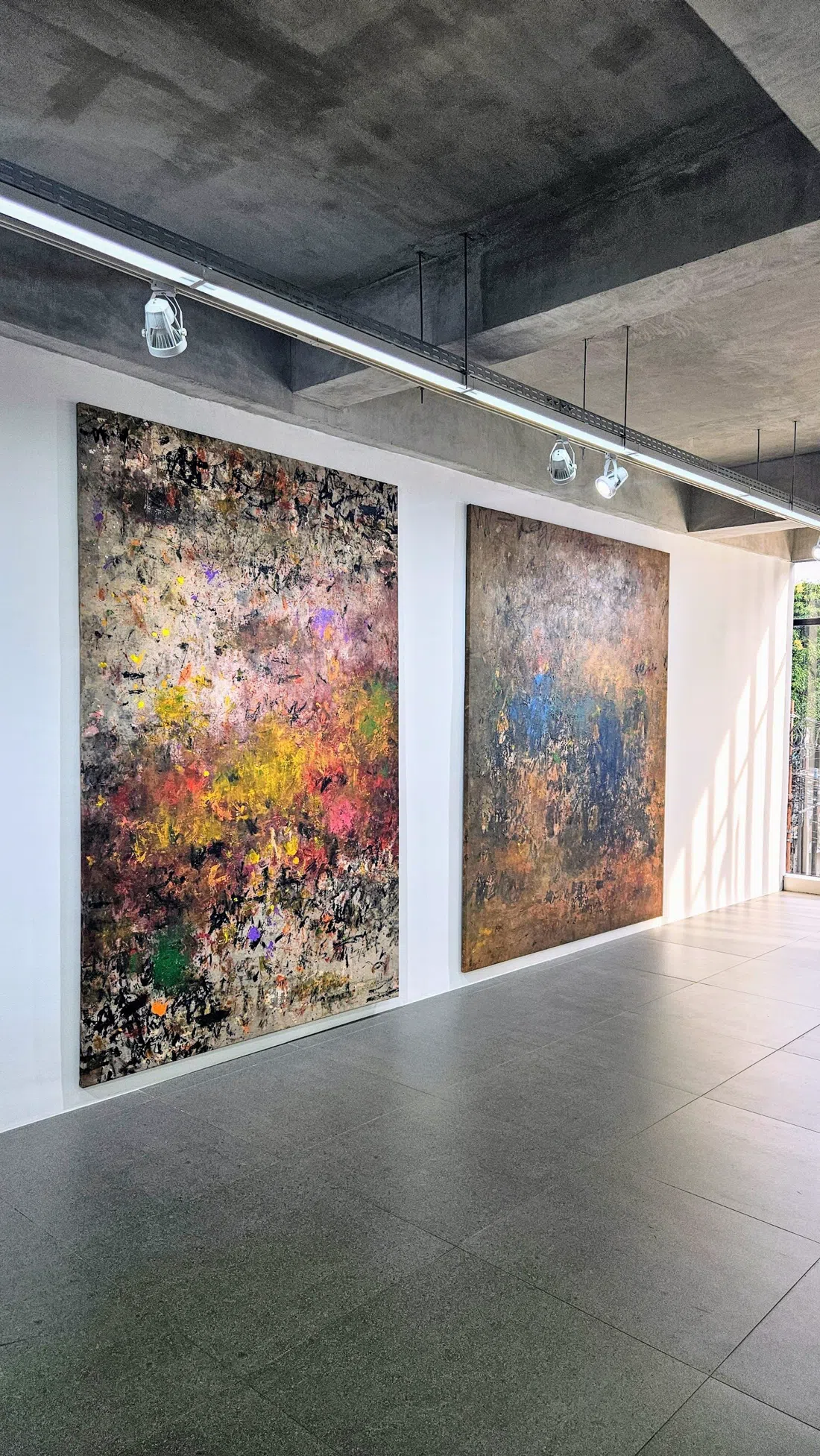
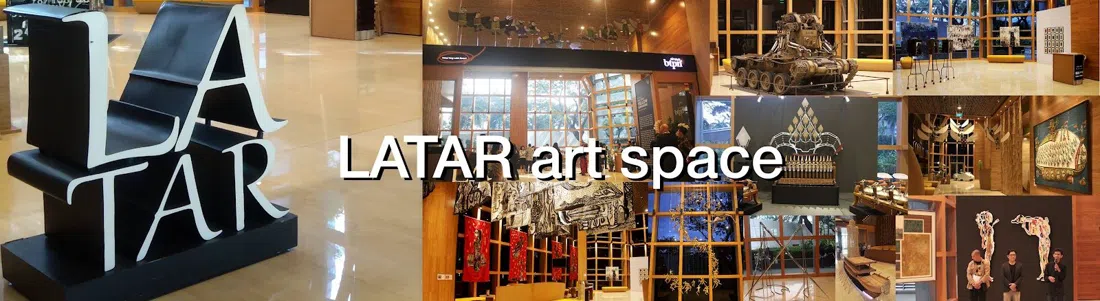
LATAR Art Space thrives on an incongruity: contemporary installation work inside a finance-district office tower rather than a converted warehouse or shophouse. It's an emerging-artist space and a good stop for readers wanting something off the classic gallery-row track, but the setting has real practical consequences — because it sits inside a bank office tower, groups should expect basic building security and ID checks at reception on the way in. Entry to the space itself is free.
A slower stop: Dia.Lo.Gue Artspace
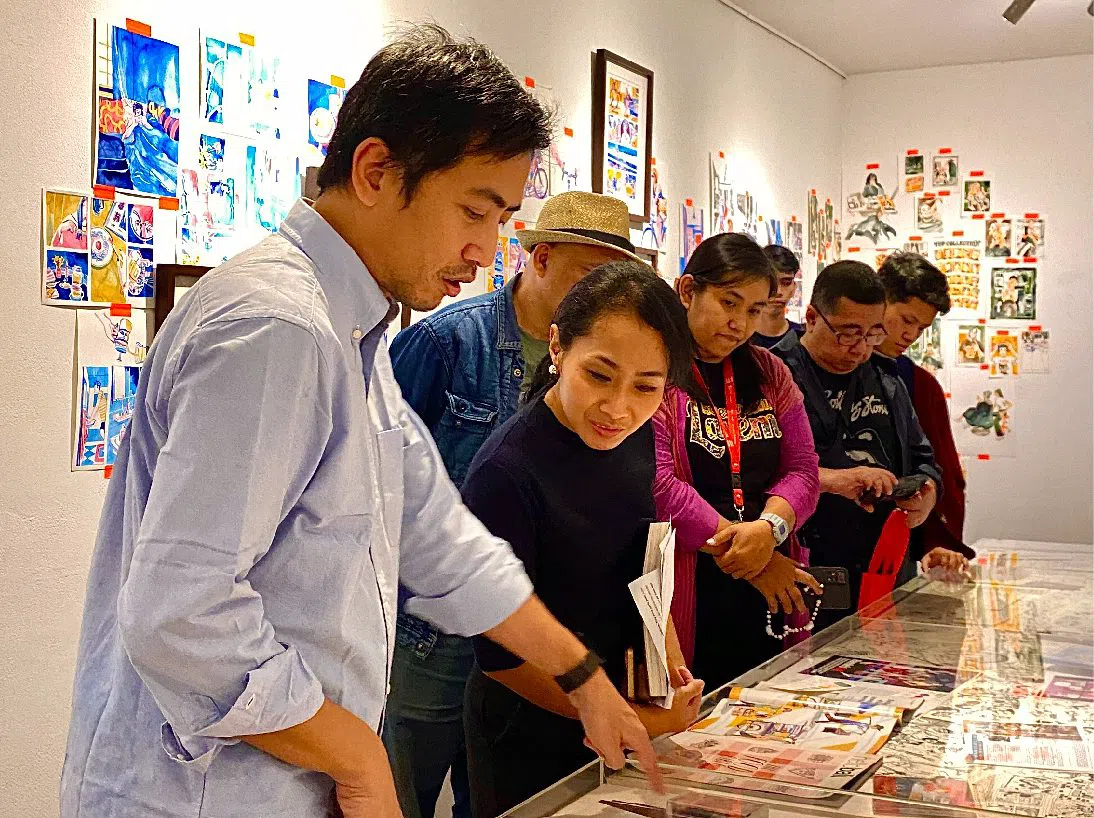
Not every stop needs to be a gallery in the strict sense. Dia.Lo.Gue Artspace (Kemang, South Jakarta) is part gallery, part design showroom, part living room for Jakarta's creative crowd, with a café on site that makes it easy to turn a quick look into a longer visit. Entry is free (the café is separate), it's casual and comfortable for groups, and it's a sensible place to end a day of gallery-hopping rather than start one — order a coffee, sit with what you've seen, and let the day settle before heading back into traffic.
Planning the route
None of this is walkable end to end — Jakarta's geography and its traffic both argue against that plan — so treat the venues above as three or four loose clusters: Kebon Jeruk and Puri Indah in the west; Kemang and the Pasar Minggu corridor in the south; Gambir in the central city; the finance district for LATAR. Build a day around whichever cluster matches your interests rather than trying to string all of them into one continuous route. If you're mapping out where to base yourself for a few days of gallery-hopping, start with a Jakarta guide for the wider city picture, and check Jakarta hotel search for something central enough that no single day's drive gets out of hand.
Transport, cash and timing
Jakarta traffic is the real variable in any art itinerary here, not opening hours — a cross-town trip between, say, Kemang and Gambir can take anywhere from twenty minutes to over an hour depending on time of day, so build slack into any plan that covers more than two clusters in a day. Ride-hailing apps are the practical default for gallery-hopping; the city's busway network and metro line cover some of the route between the central city and the south but won't get you door-to-door at most of these addresses.
Cash isn't really necessary for entry — every venue on this list except Museum MACAN is free, and MACAN tickets are sold online in advance — but it's worth carrying some for a café tip at Dia.Lo.Gue or Ruci, or for parking, which is usually cash-only at smaller galleries. Most spaces keep roughly Tuesday-to-Sunday hours with a Monday closure, standard across the scene, so check individual hours before building a Monday into the plan. For groups of any size at Gudskul, Edwin's Gallery or LATAR Art Space, call or email a few days ahead rather than the morning of — these three have real door policies, while the rest are comfortable with walk-ins.
Budget for the trip is modest: the only real cost is the one Museum MACAN ticket, at roughly IDR 150,000 ($9) at the top end, plus whatever gets spent on ride-hailing and coffee along the way. It's entirely possible to spend a full, rich day moving through Jakarta's contemporary art scene and pay for almost nothing but transport.
One last practical note: dress for the climate, not for the art. Jakarta is hot and humid year-round, galleries are air-conditioned but the walk between the car and the door isn't, and open studio visits at somewhere like Gudskul may involve standing outside for a stretch. Light, breathable clothing and a bottle of water do more for the day than anything else on this list.