Speciale Jakarta
Walk Jakarta's Glodok Chinatown before the lanes close
Glodok is a morning, and it winds down by mid-afternoon. The order to walk it in, which temple to pick if you only want one, and where the coffee runs out early.
Di Tomé SoaresThe city read on foot, one kampung at a time

By 06:00 the stalls on Jalan Kemenangan are wet and loud, and a stock pot of soto Betawi is on the gas in Gang Gloria. The market lanes shut at 15:30, and the alley's famous coffee shop often sells out before 13:00. That makes Glodok a morning walk.
Breakfast in Gang Gloria
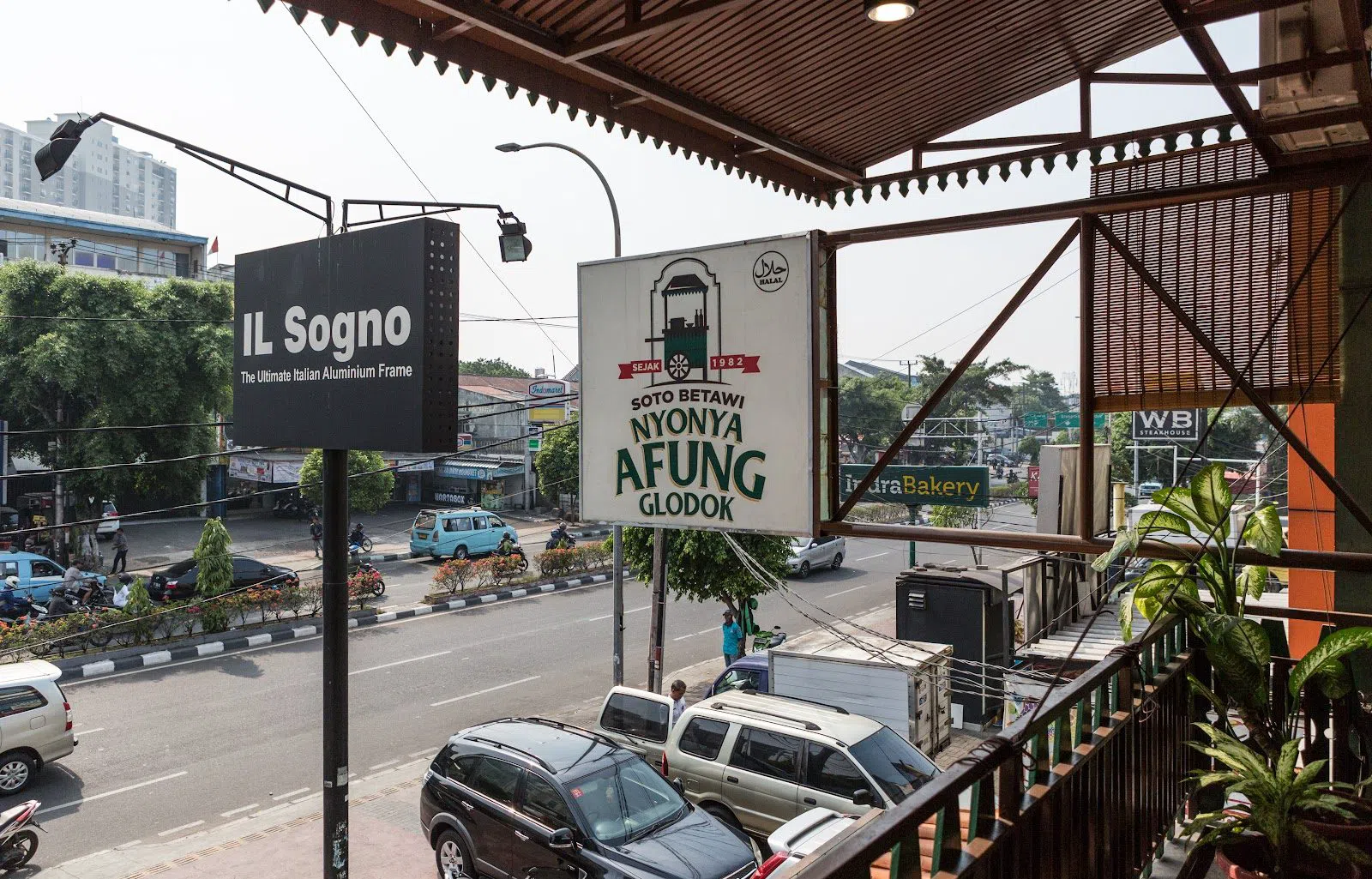
Start at Soto Betawi Ny. Afung, a warung in Gang Gloria that opens at 06:00 and runs to 16:00. Soto Betawi is a beef soup in coconut milk. The bowl can come with tendon, tripe and lung, so ask for plain beef if offal puts you off. A bowl is around Rp 50.000, but the price moves, so check at the counter. There are only a few small tables, so you may wait for one.
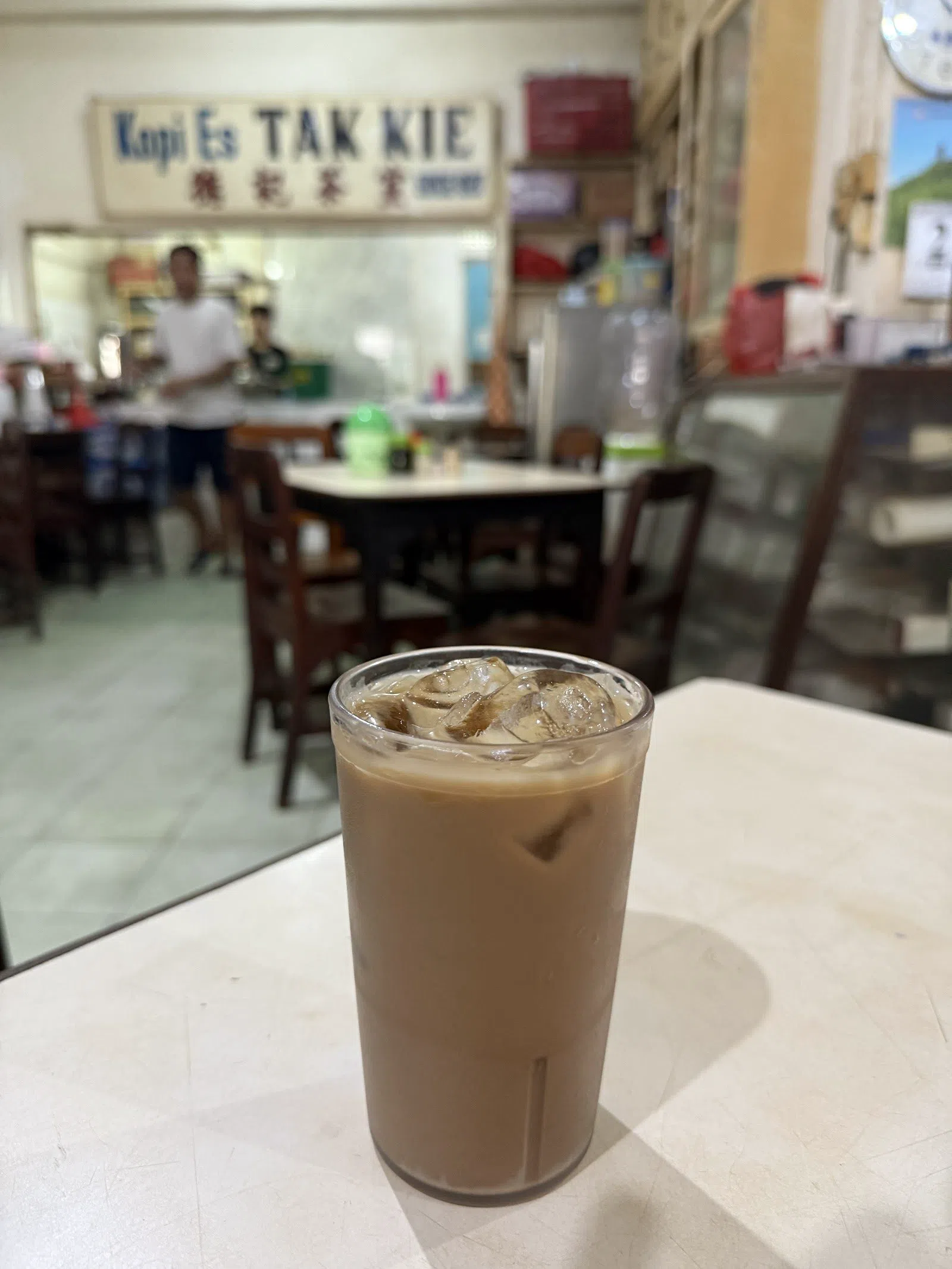
A few doors along, Kopi Es Tak Kie has been pouring coffee in the same alley since 1927. Get the es kopi susu, iced coffee with condensed milk, for Rp 20.000. It opens at 07:00 and closes at 16:00, but it often sells out and shuts early, so arrive before 13:00. It's one narrow room with wooden tables and old black-and-white family photographs on the walls.
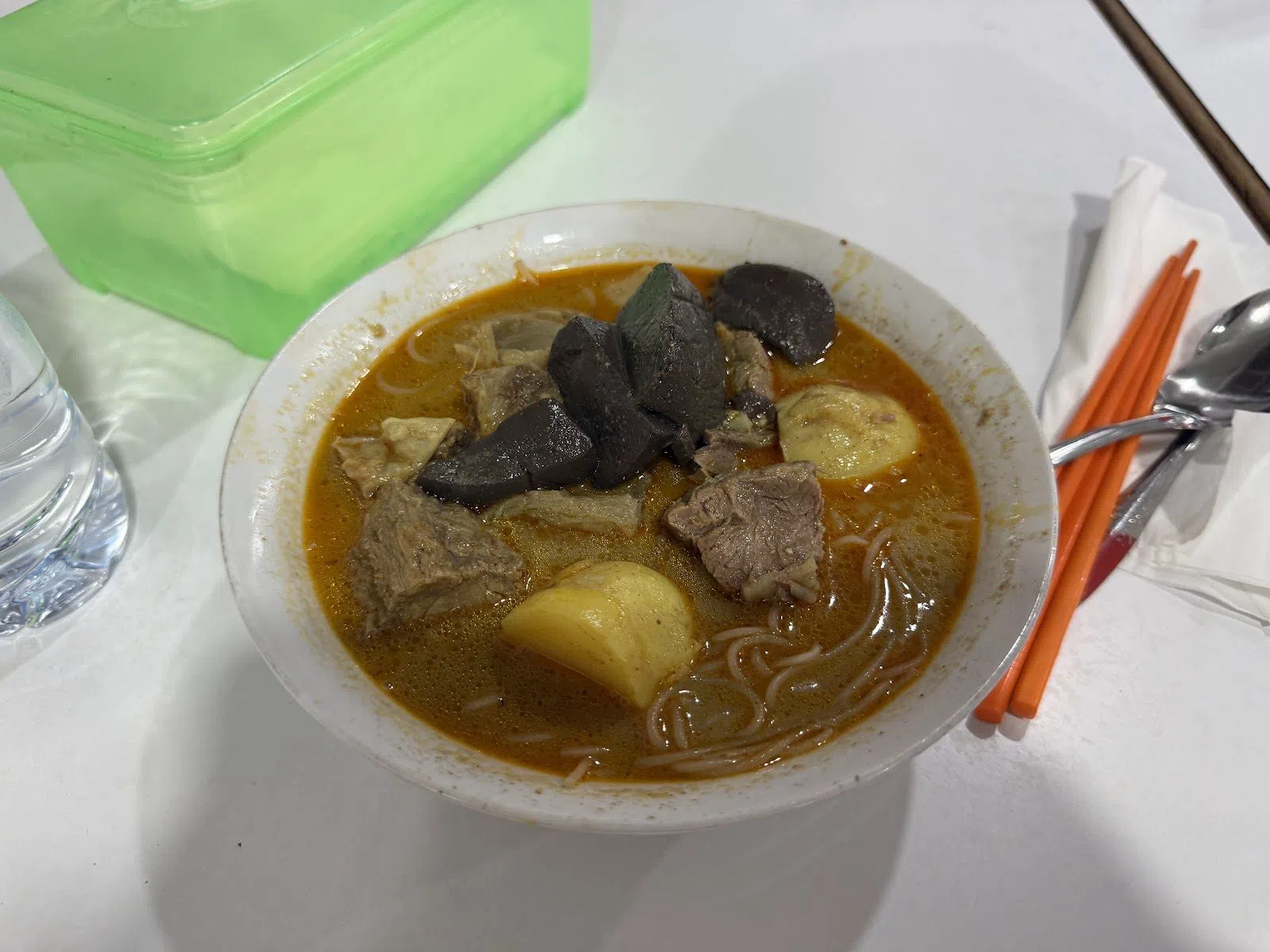
Two doors from your coffee, Kari Lam does lunch. The choice is chicken or beef curry in a coconut-milk broth, with rice or bihun noodles. A portion is Rp 40.000 to Rp 47.000. It's open from 09:00 to 15:30, and the pots run down through the day, so go before 13:00 if you want a choice of meat. Half an hour covers it.
Organizza il tuo viaggio a Jakarta
Prezzi in tempo reale dai nostri partner di prenotazione.
Cancellazione gratuita su molte camere. Potremmo ricevere una commissione quando prenoti.
Temples on Jalan Kemenangan
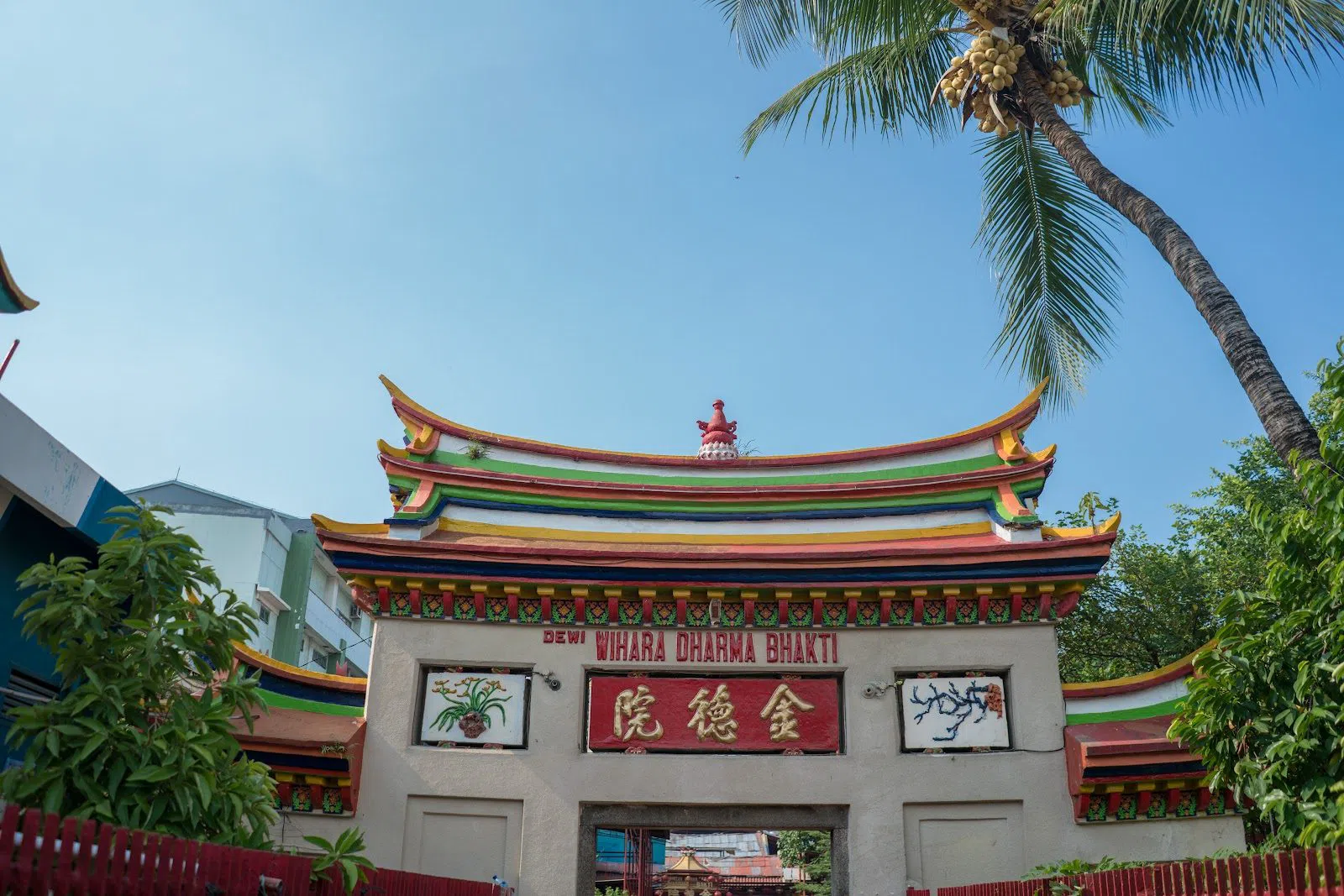
Vihara Dharma Bhakti is the oldest Chinese temple in Jakarta, dating from 1650 and dedicated to the goddess Kwan Im. You come in off a market alley to a red and gold courtyard. Tall incense sticks stand in urns of sand, and a joss-paper furnace smokes by the gate. It's free, with a donation box, and open from 06:00 to 16:00. Go between 08:00 and 10:00, before the heat and the crowds. It's a working place of worship, and the smoke is thick enough to matter if you have asthma.
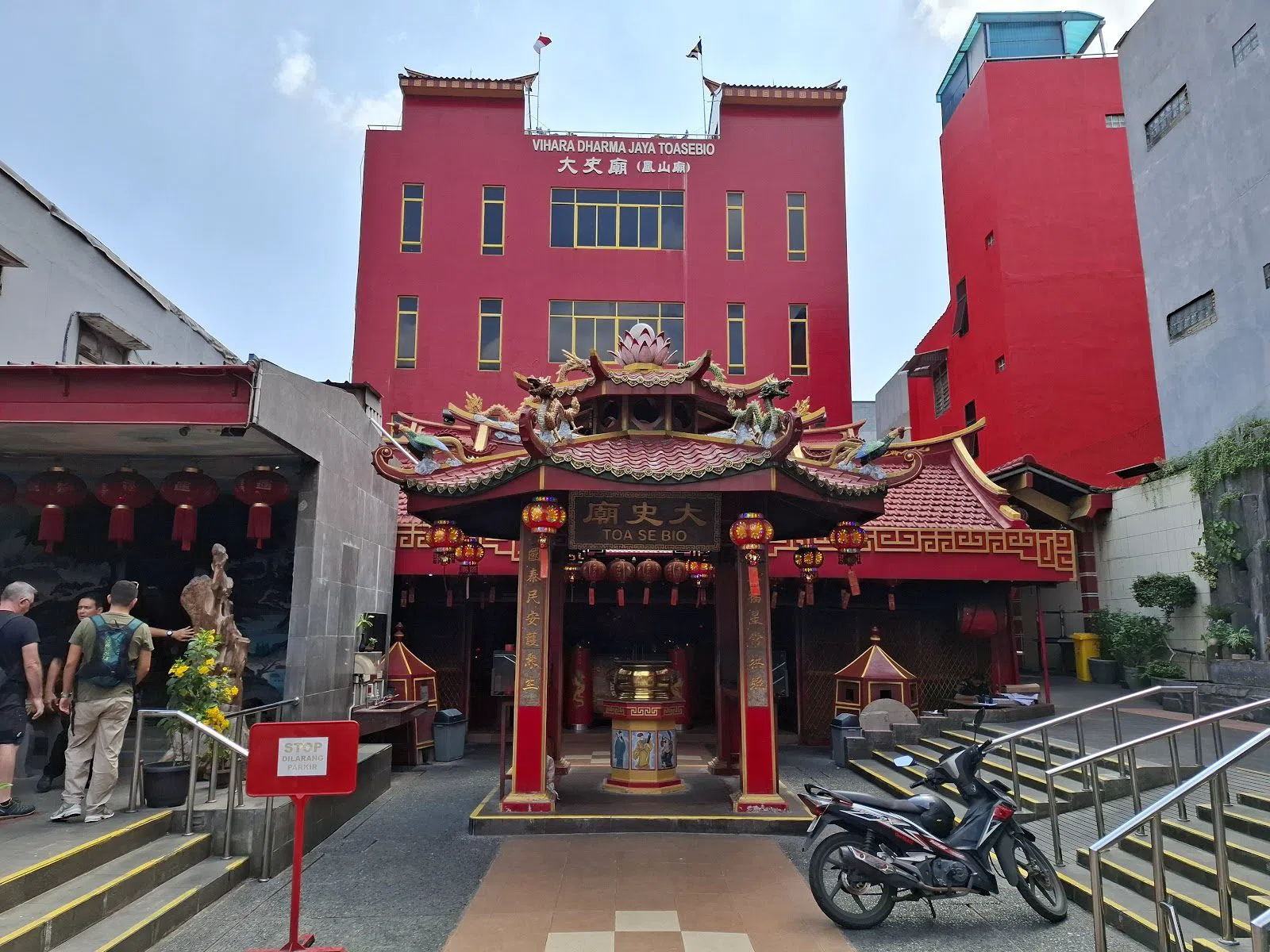
Five minutes' walk away, Vihara Dharma Jaya Toasebio has the same incense and far fewer people. Numbered altars line the walls of one deep red hall, squeezed in between shophouses. It's free and open from 06:00 to 19:00, and 15 to 20 minutes is enough unless you want to watch the offerings being made.
Directly across the street, Gereja Santa Maria de Fatima is a Catholic church that looks like a Chinese mansion. Stone lions sit at the main door, the roof ridges curve up, and Chinese characters run across the front. It's free and open from 06:00 to 18:00, with Mass in Mandarin at 16:00 on Sunday. The gate is sometimes locked outside service times, so you may only see it from the forecourt.

Petak Sembilan market
Pasar Petak Sembilan runs under tarpaulin and corrugated roofing. The stalls sell sea cucumber and live frogs in tubs. Incense and gold joss paper are stacked beside the vegetable crates. It's free to walk, snacks start at Rp 8.000, and bargaining is expected. Trading is from 06:00 to 15:30. Allow 45 minutes, as the lanes are crowded and motorbikes still nudge past you. The narrow stretches are single file. If fish, frogs and butchered meat in the open air will put you off your breakfast, walk Jalan Pancoran instead.
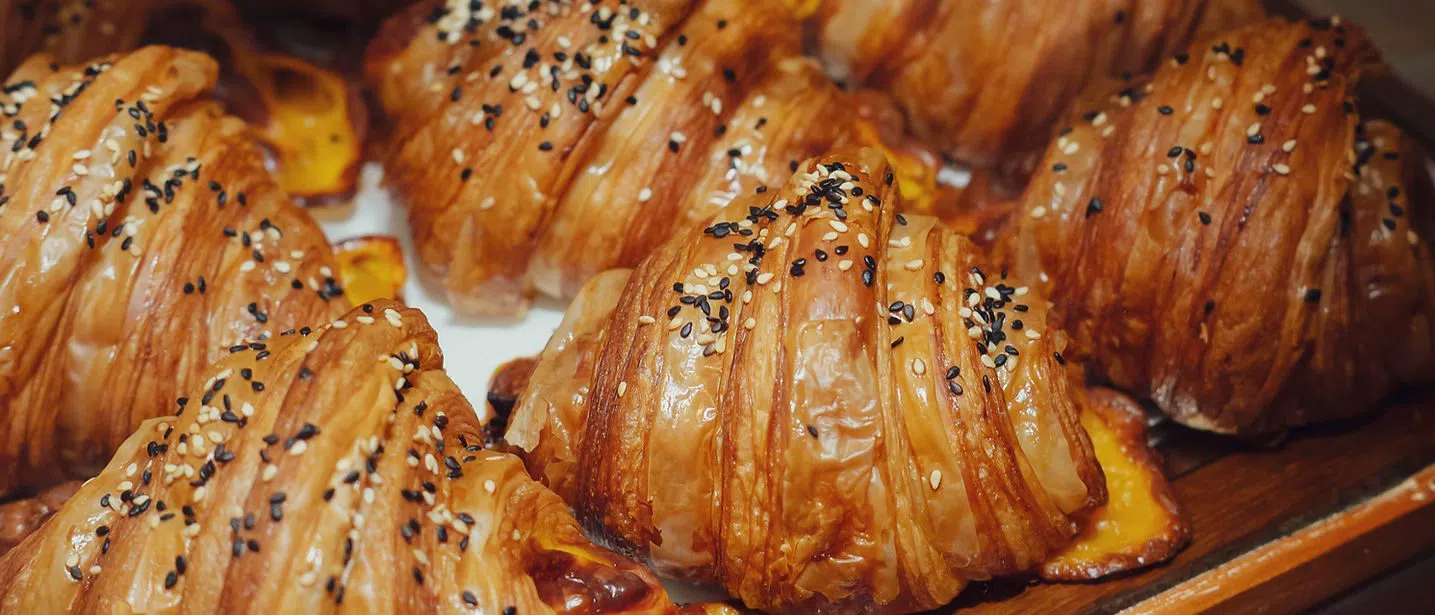
Walk through a narrow market alley past the produce stalls and you reach LIT Bakehouse on Jalan Pancoran V. It's a small white and timber room full of croissants and brioche. A butter croissant is Rp 27.000 and an almond one Rp 45.000. It opens at 08:30 on weekdays and 08:00 at weekends, until 17:00, though it's sometimes shut on Monday. The room is tiny, so you may end up taking the pastries away.
A blue temple down an alley
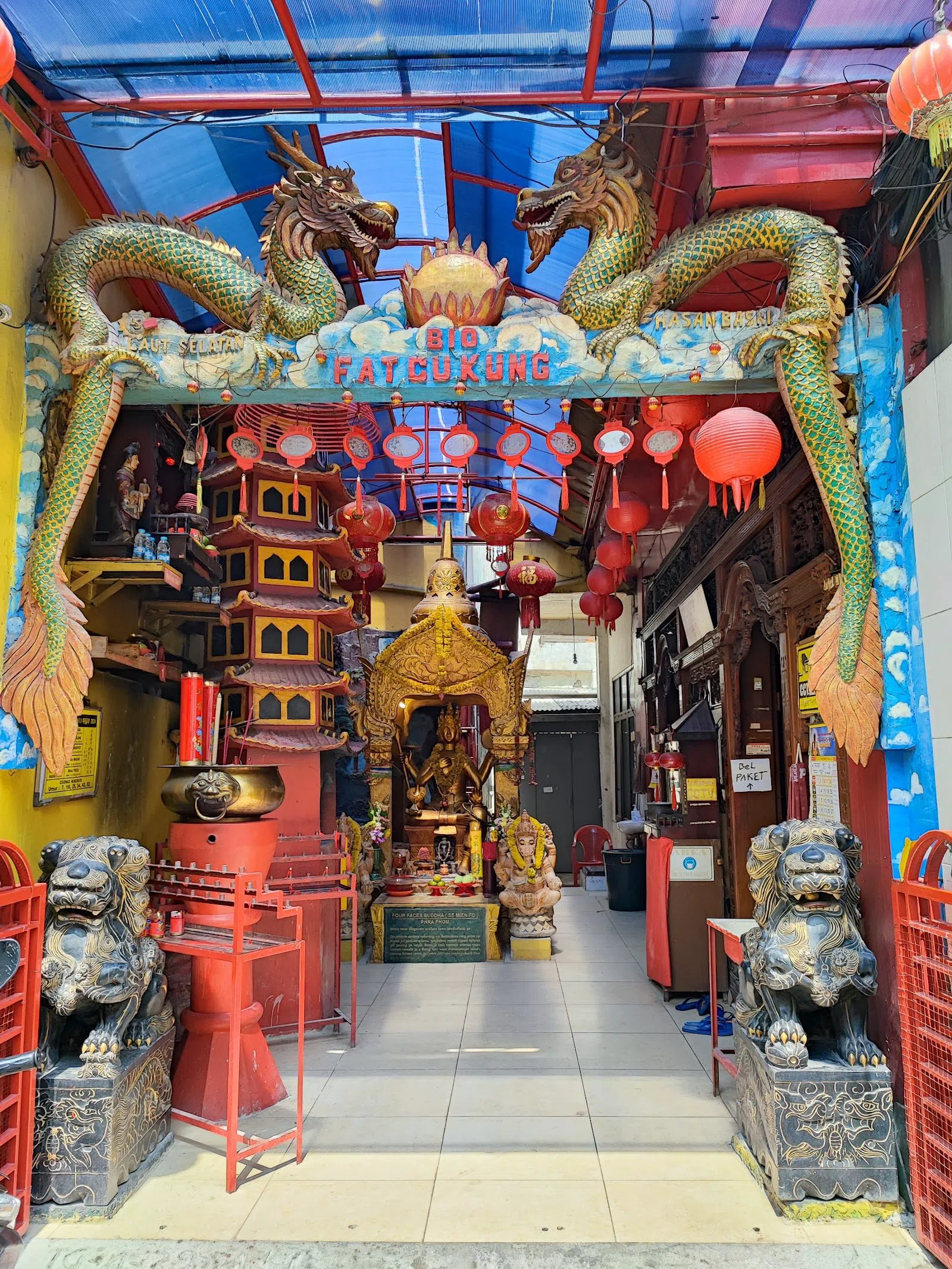
Fat Cu Kung Bio sits at the dead end of a very narrow alley off Kemenangan, about 300 metres from Dharma Bhakti. It's a bright blue family temple, with altars crowded wall to wall and gods and goddesses from several traditions standing together. Fat Cu Kung is venerated as a god of fortune by Buddhist, Taoist and Confucian worshippers, and the kitchen goddess has her shrine in the far left corner. Go in the morning, as the hours get unreliable later in the day. You'll need a map app to find the alley mouth. The approach is long, narrow and uneven, so give it a miss if rough ground is a problem.
Herb shops on Jalan Pancoran
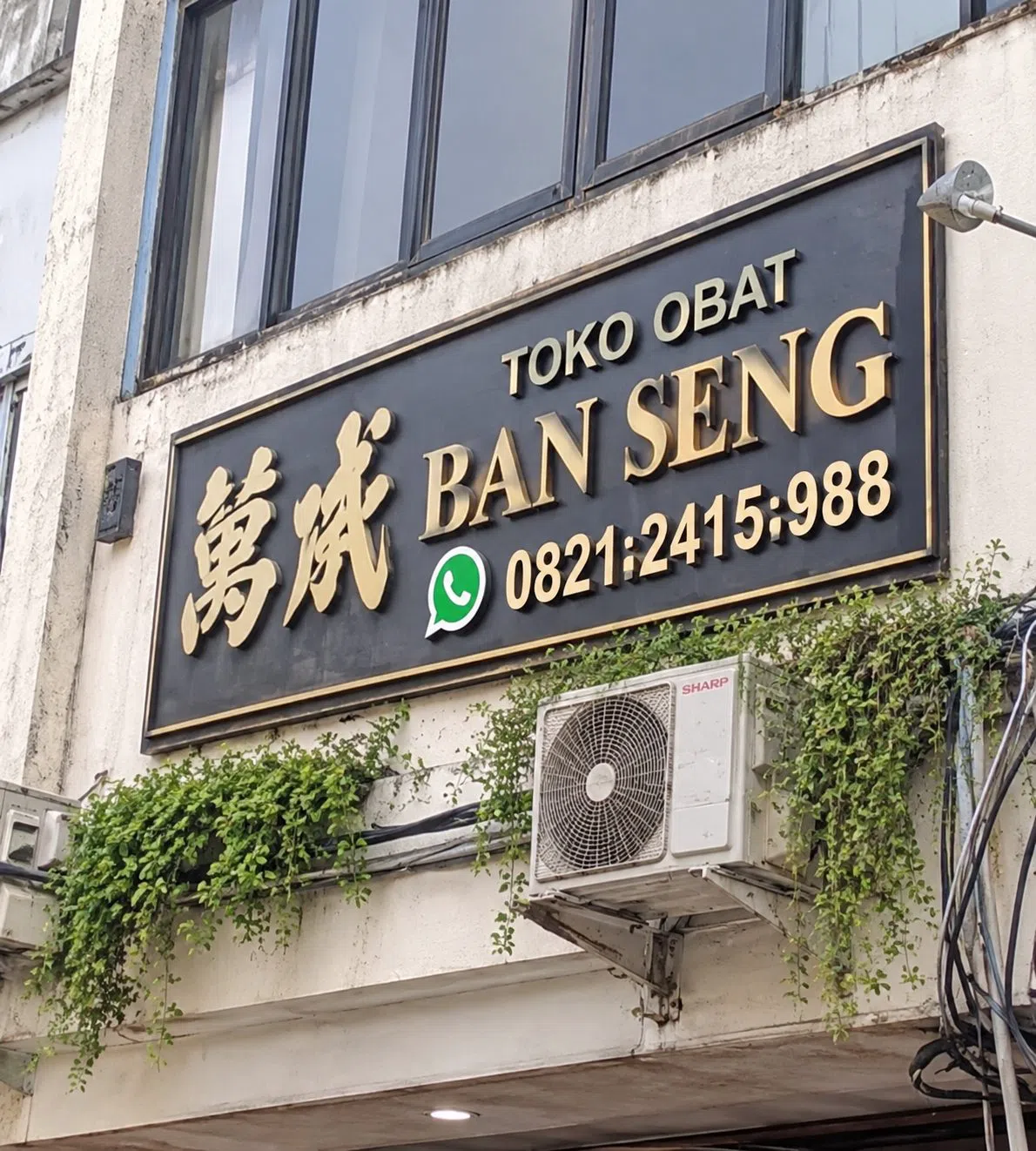
Jalan Pancoran Raya is lined with family-run Chinese medicine shops, and Toko Obat Ban Seng is the one to walk into. It opened in 1933 and the fourth generation runs it now. Behind the antique glass jars and the wall of little drawers, they weigh dried roots and bark and fold them into paper packets. Medicines are made to prescription, and two sinshe, traditional doctors, consult on site for Rp 150.000 to Rp 250.000. It's open Monday to Saturday from 09:00 to 16:30, and closed on Sundays and public holidays.
The gate and the tea house
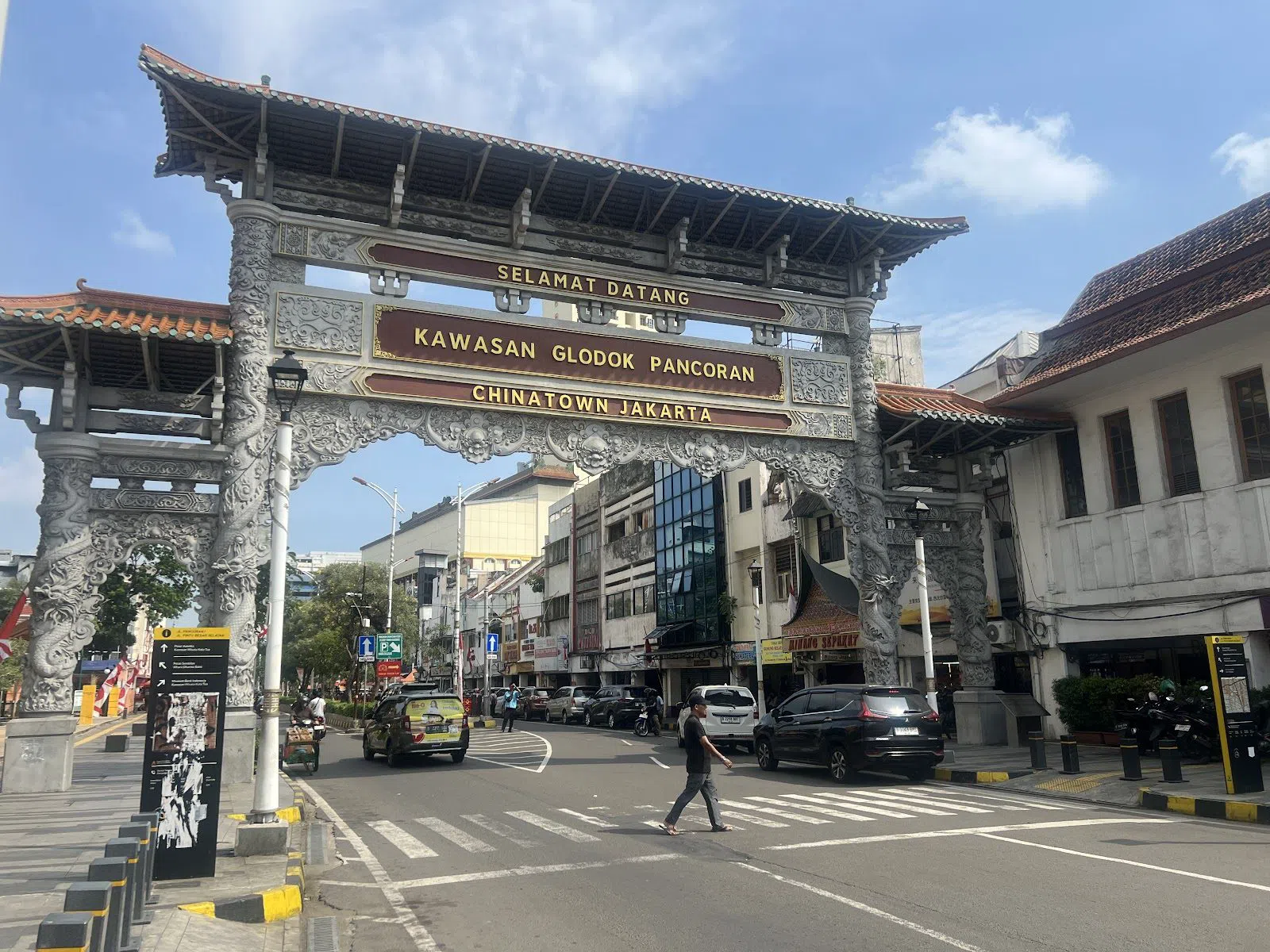
Gapura Chinatown Glodok is the plain grey gate with carved dragons at the Pancoran entrance, and it's the one landmark to name to a driver. Walking routes start and finish here, and the full loop takes about three hours.
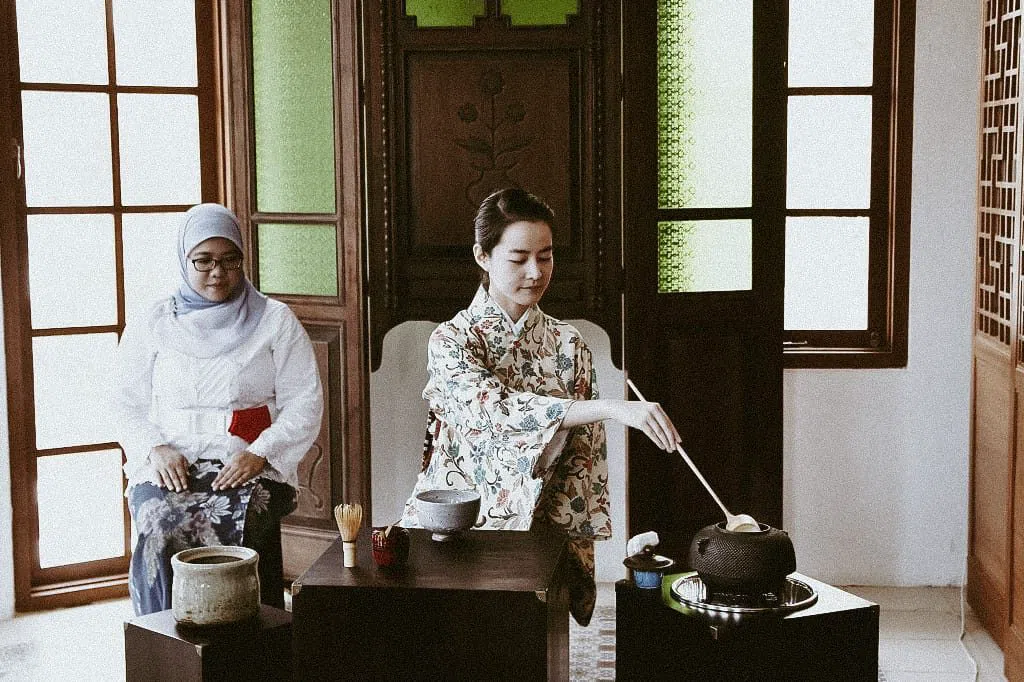
On the corner beside it, Pantjoran Tea House fills a restored 1928 pharmacy. Tall porcelain teapots stand out on the pavement with free tea for passers-by, a local custom called Patekoan, from 08:00 to 18:00. The ground floor sells tea, and the restaurant upstairs does dim sum and Peranakan dishes at Rp 25.000 to Rp 100.000 a head. Weekdays it's open 11:00 to 20:00, weekends and public holidays 07:00 to 21:00. You can't get an early weekday breakfast here, so use it as a cool finish.
When the lanes shut
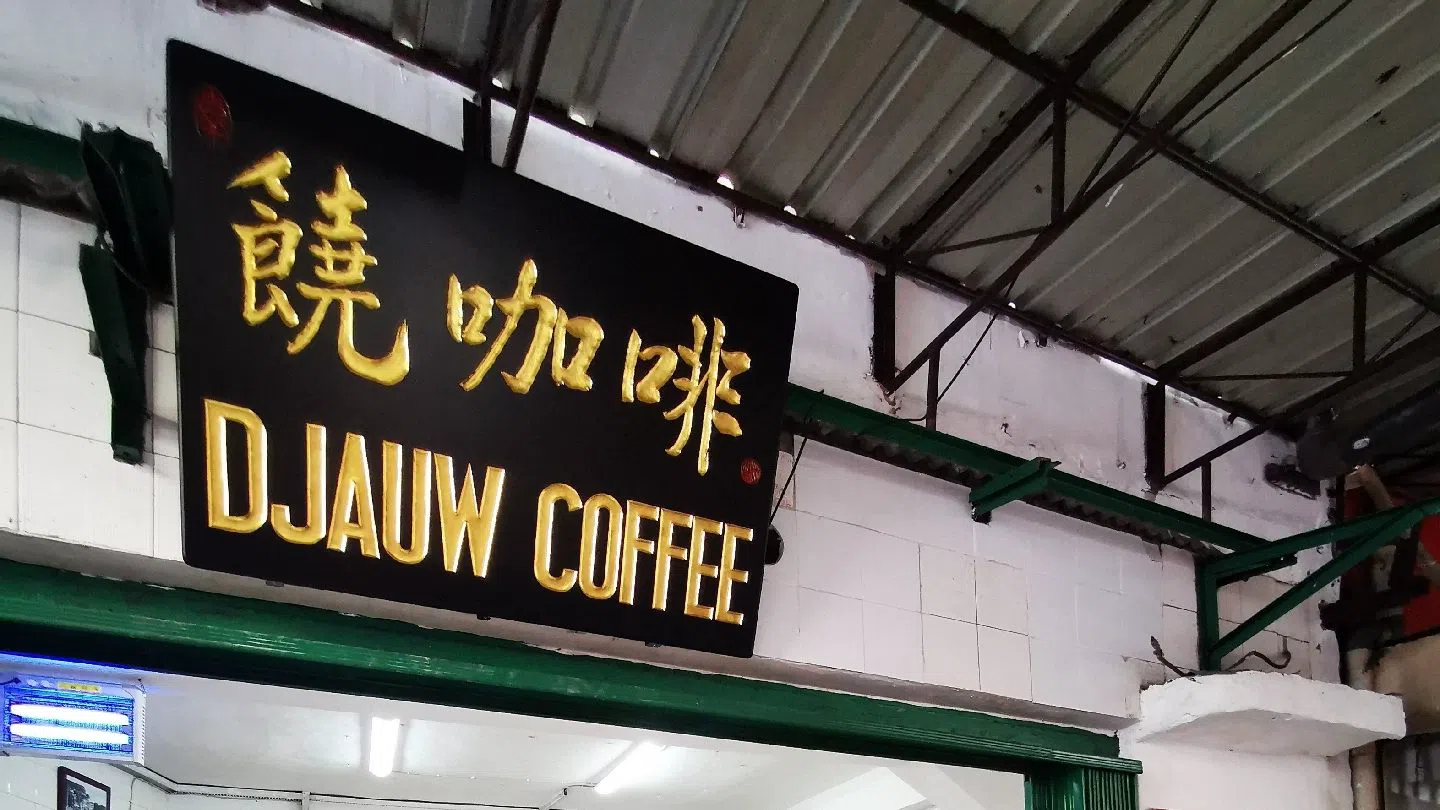
Coffee is still on at Djauw Coffee, down a small alley on Jalan Kemenangan Raya, from 07:00 to 17:30. The coffee is brewed Turkish style, swirled in a brass pot in a tray of hot sand until it boils, which you won't see elsewhere in Jakarta. Drinks and plates start at Rp 16.000, and the kitchen does lontong sayur and steamed pandan-kaya bread.
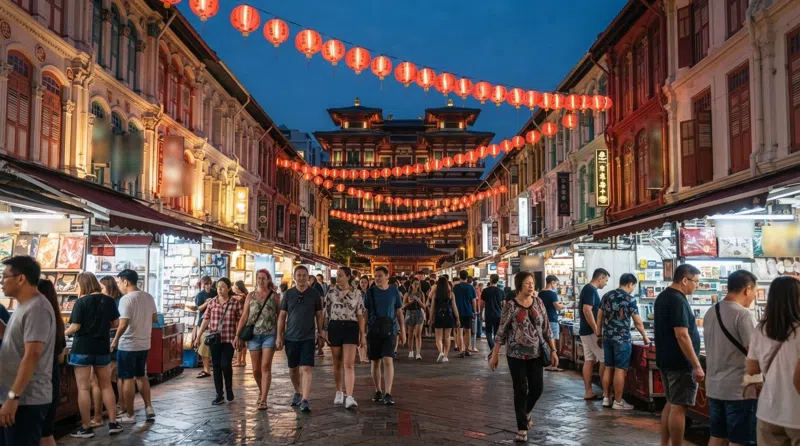
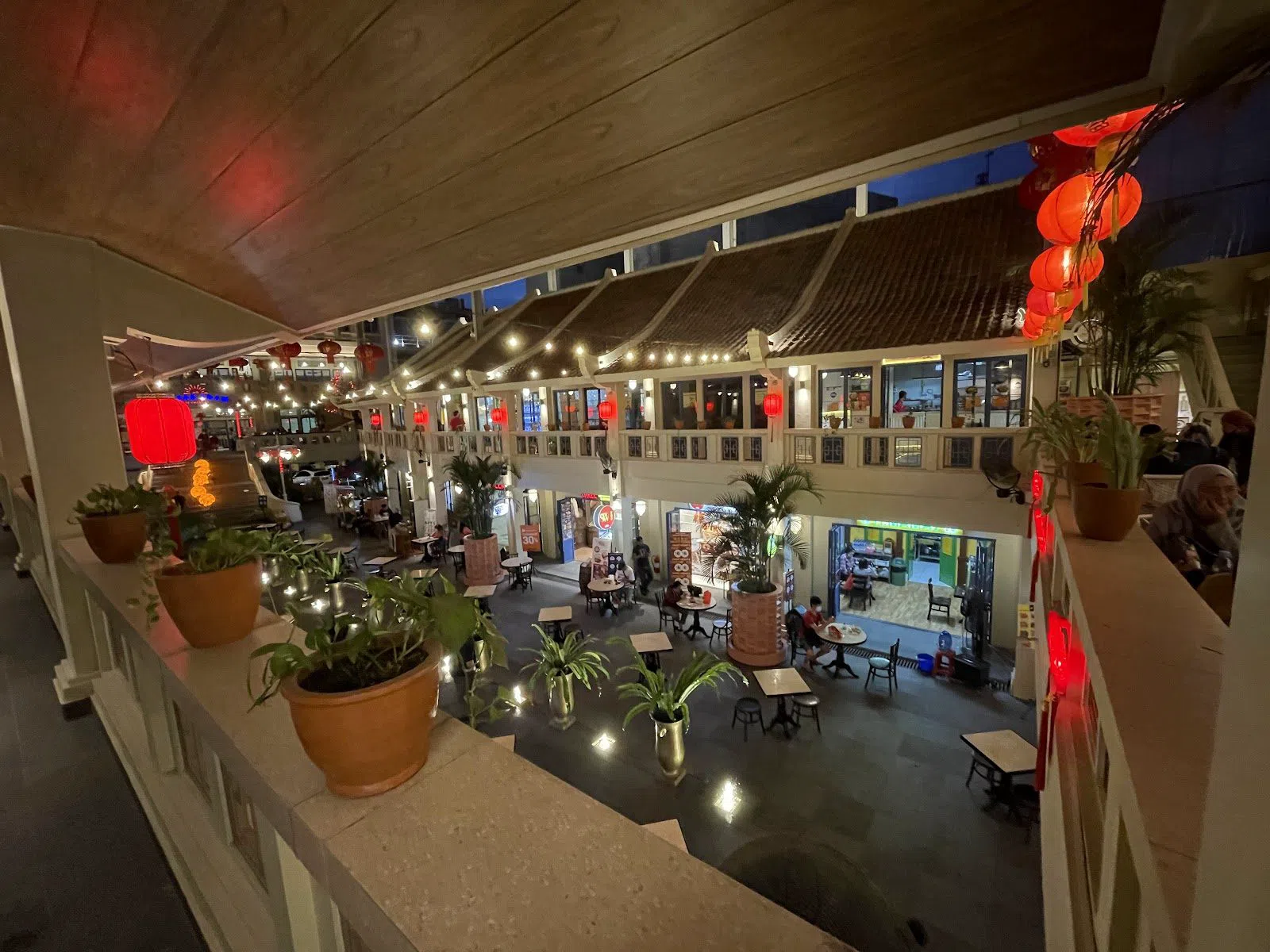
Petak Enam di Chandra is the fallback once the warungs have shut. It's a food hall in the old Chandra department store on Jalan Pancoran, with red and gold lanterns strung through the corridors. Stalls on both floors are marked halal and non-halal. Snacks run Rp 7.000 to Rp 35.000 and mains Rp 20.000 to Rp 55.000. It opens at 09:30 on weekdays and 08:30 at weekends, to 21:00, though individual stalls close well before the hall does.

Candra Naya and Kota Tua
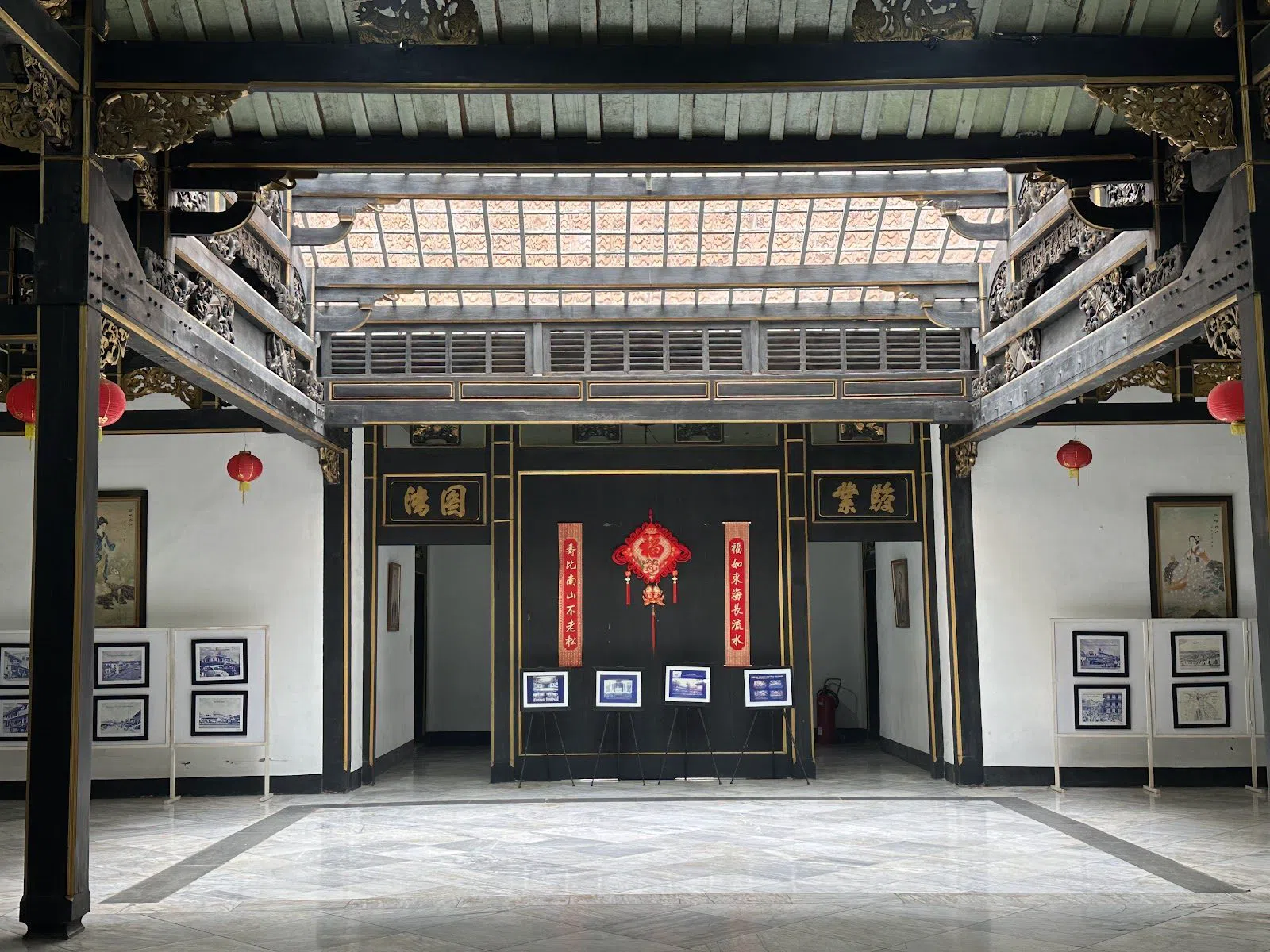
Gedung Candra Naya is a 19th-century Chinese mansion in a courtyard at the foot of glass hotel towers on Jalan Gajah Mada. It was the home of Khouw Kim An, the last Chinese Major of Batavia, and it's a small museum now, with a koi pond behind the house. Entry is free and 20 to 30 minutes is plenty. High-resolution cameras may not be allowed, so ask at the desk first. It's a 10-minute walk west of the gate, away from the market lanes.
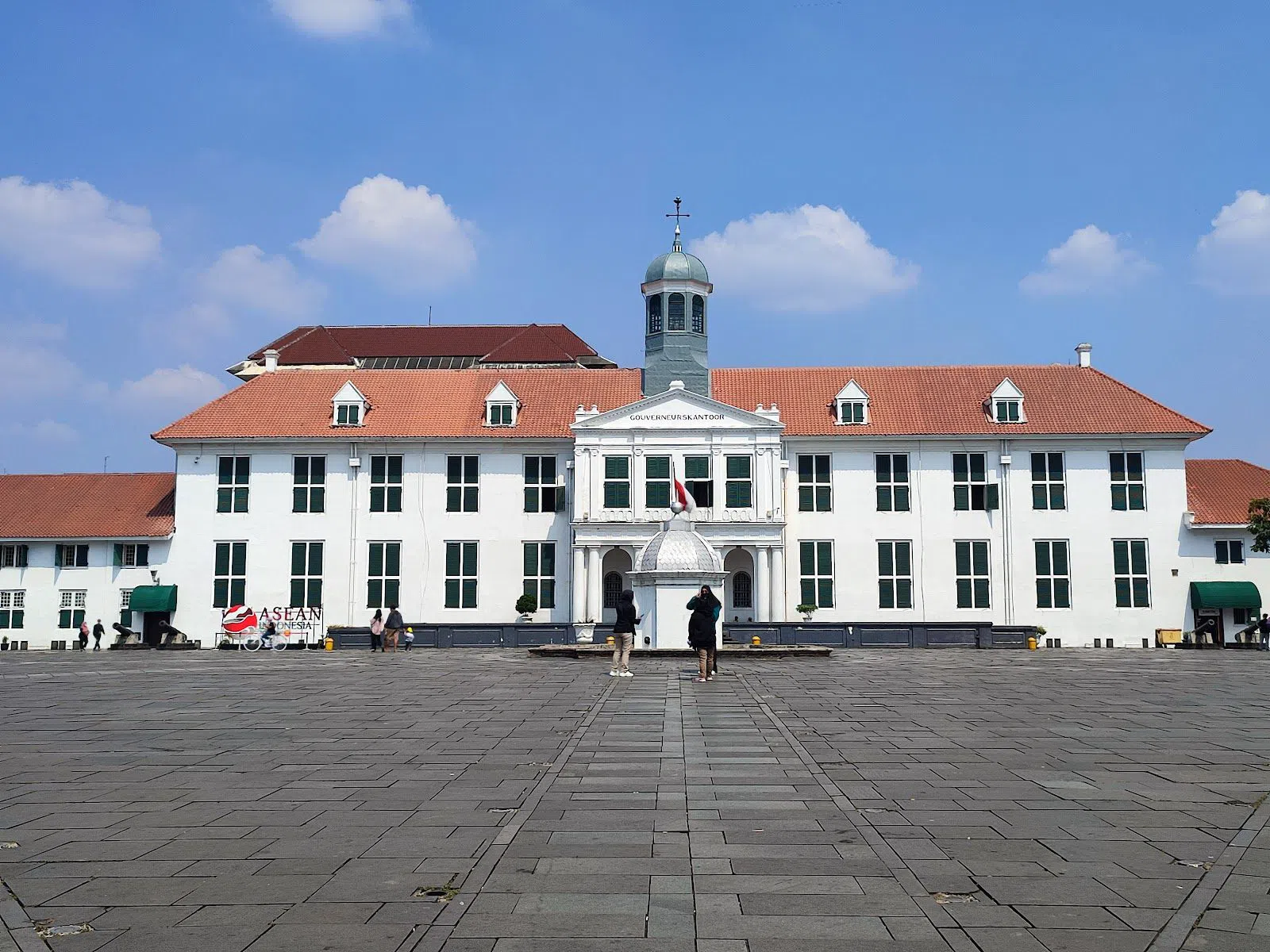
For indoor history, Museum Sejarah Jakarta is about 15 minutes' walk north in Kota Tua, in the old Batavia city hall on Fatahillah Square. Inside there's heavy teak VOC furniture, cannon, and the prison cells down in the cellar. It's open Tuesday to Sunday from 09:00 to 15:00, and foreign visitors pay Rp 50.000. Tickets aren't sold for cash, so you'll need a JakCard prepaid card, which takes a few minutes to buy.
Busy days and guided walks
Dharma Bhakti is busiest on the first and fifteenth days of the lunar month, and at Lunar New Year, which falls on Saturday 6 February 2027. During Imlek in February 2026 it stayed open around the clock. Private guided tours of old Jakarta run every day of the week, and you book those ahead.
Monday closures and tickets
Monday is the weak day, with the Kota Tua museums closed and the bakery sometimes shut, and Sunday takes out the herb shop. Carry a prepaid card for museum tickets, and book a guide before you arrive. See the Jakarta guide and the Jakarta hotel search.
Prima di partire
How long do you need in Glodok?
A full loop from the Chinatown gate and back takes about three hours on foot. The market alone deserves 45 minutes, the main temple an hour with the walk in, and the quieter temple 15 to 20 minutes. Add half an hour for lunch in Gang Gloria.
What time of day should you go?
Early. The market trades from 06:00 to 15:30, the soto warung opens at 06:00, and Vihara Dharma Bhakti is at its most comfortable between 08:00 and 10:00. Kopi Es Tak Kie often sells out before 13:00, and Kari Lam runs low on one of its curries by then.
Does it cost anything to visit?
The market, the temples, the church, the Chinatown gate and Gedung Candra Naya are all free, with a donation box at Dharma Bhakti. You only pay for food and drink, from Rp 8.000 for a market snack. Museum Sejarah Jakarta charges foreign visitors Rp 50.000.
Can you do this walk on a Monday?
The temples, the market and the church are open daily, so the walk still works. The Kota Tua museums close on Mondays, LIT Bakehouse is sometimes shut, and Gedung Candra Naya is unreliable that day. Save the indoor history for another morning.
Is Glodok workable for a group?
Up to about five, yes. Six people walking together will block the market lane, so split the party and go single file where it narrows. The alley warungs and the bakery seat very few people, so a larger group is better off at the Petak Enam food hall.