Die Jakarta-Ausgabe
Jakarta's Taman Mini Indonesia Indah on Foot in October
The park is car-free now, which changes how you plan a day there: below are the route, the ticket maths and the October weather window.

Von Tomé SoaresThe city read on foot, one kampung at a time
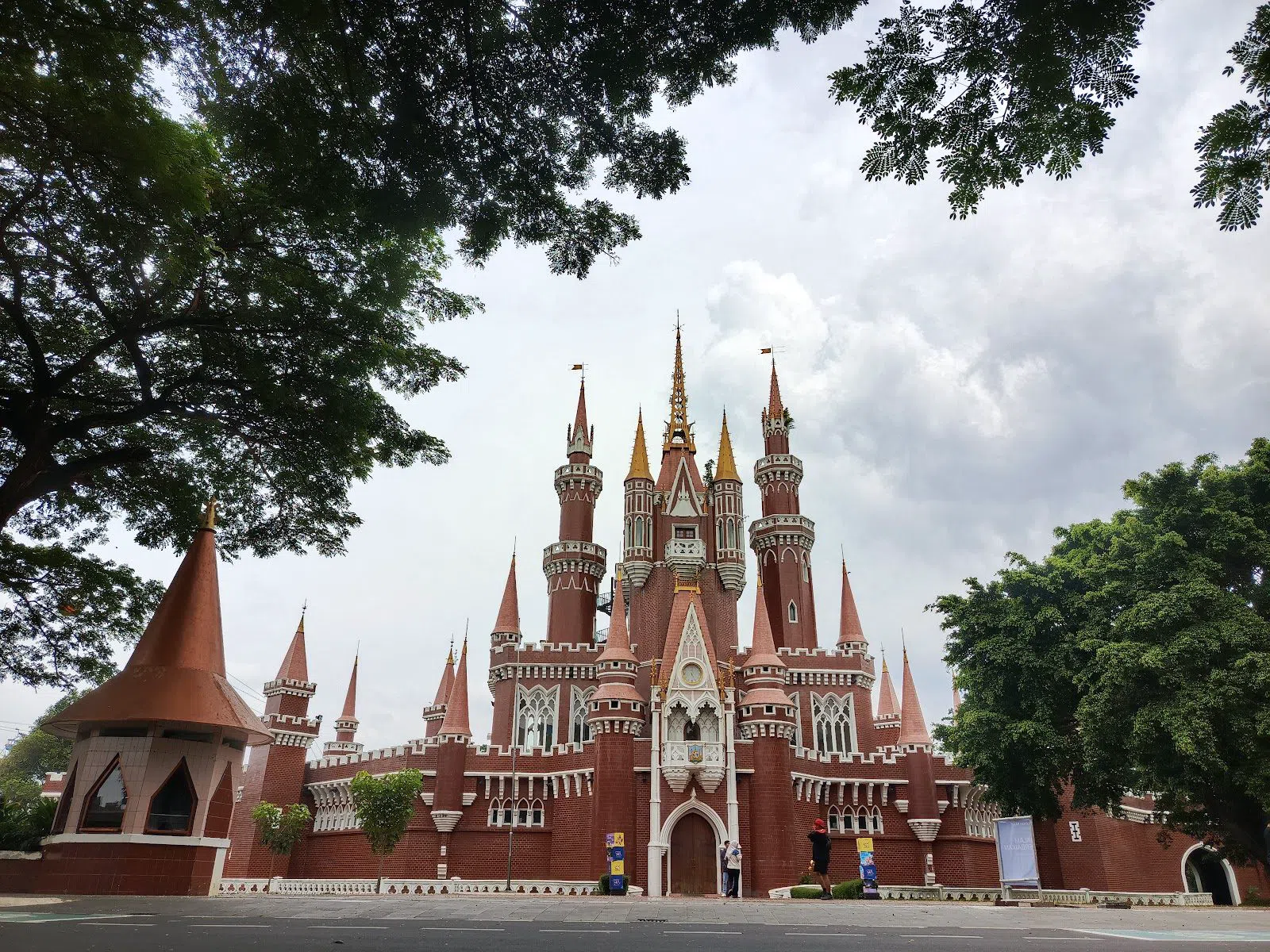
The first thing Taman Mini Indonesia Indah does is take your engine away. You leave the car, the motorbike or the taxi in a lot on the perimeter, walk through the gate, and 150 hectares open up with nothing louder on them than a free electric shuttle rolling past a carved provincial roofline. In October, when the rain starts gathering over East Jakarta most afternoons, that car-free quiet is both the best thing about the place and the one real logistical problem to plan around.
A green zone you cross on foot
Taman Mini Indonesia Indah (TMII) sits in Ceger, East Jakarta, and was built as a walk-through model of the country: a province-by-province set of pavilions arranged around a lake, each in its own regional architecture. Since the revitalisation the entire 150-hectare site is a green zone. Petrol cars and motorbikes park at the edge and stay there. Only electric vehicles drive inside, weekdays 08:00 to 19:30, and the free electric shuttles will absorb a whole coachload at once. Otherwise you cycle or you walk.
Entry is Rp25,000 a person on weekdays, Rp35,000 at weekends. Your vehicle pays separately at the gate (Rp35,000 for a car, Rp20,000 for a motorbike, Rp10,000 for a bicycle, Rp60,000 for a bus), and then every attraction inside charges its own ticket on top. Group (rombongan) rates exist, as does a Rp600,000 annual pass. Car-tour visitors get caught out by the shape of the day rather than the price: the gate fee is only the start of it, and your vehicle is not coming in with you. Budget for walking, and in October budget for walking in heat and then in rain.
Planen Sie Ihre Reise nach Jakarta
Aktuelle Preise unserer Buchungspartner.
Kostenlose Stornierung bei vielen Zimmern. Bei einer Buchung erhalten wir möglicherweise eine Provision.
The cable car shows you the archipelago
Start with the TMII Cable Car (Kereta Gantung), boarding inside the park at one of three stations. Station A sits by the south car park, Station B opposite the Papua pavilion, Station C by the north car park. From the air the park finally explains itself: the lake below is laid out as the archipelago, the islands readable as shapes, and the pavilions stop being a random village of strange roofs and become a geography lesson. It costs Rp50,000 on a weekday and Rp60,000 at the weekend.

Queues are shortest right at the 09:00 opening and at Station B, which most visitors walk straight past on their way to the more obvious boarding points. Cabins hold four to six, so a larger party splits across several: fine for a family, slightly anticlimactic if you came to ride together. Do this first, before the cloud builds; by three in the afternoon in October you may be looking at grey.
One indoor hour that makes the pavilions make sense
If you only go inside one building, make it Museum Indonesia, in the park's western pavilion cluster. Three floors of textiles, masks and a full Balinese ceremonial hall, Rp25,000 on top of park entry, open 08:00 to 17:00 daily. It is the best indoor hour here and the one that explains, in retrospect, everything you walked past outside: the carving, the roof pitches, the weaving. Wide staircases and open galleries mean it takes school parties and tour groups without strain, and small parties need no booking.
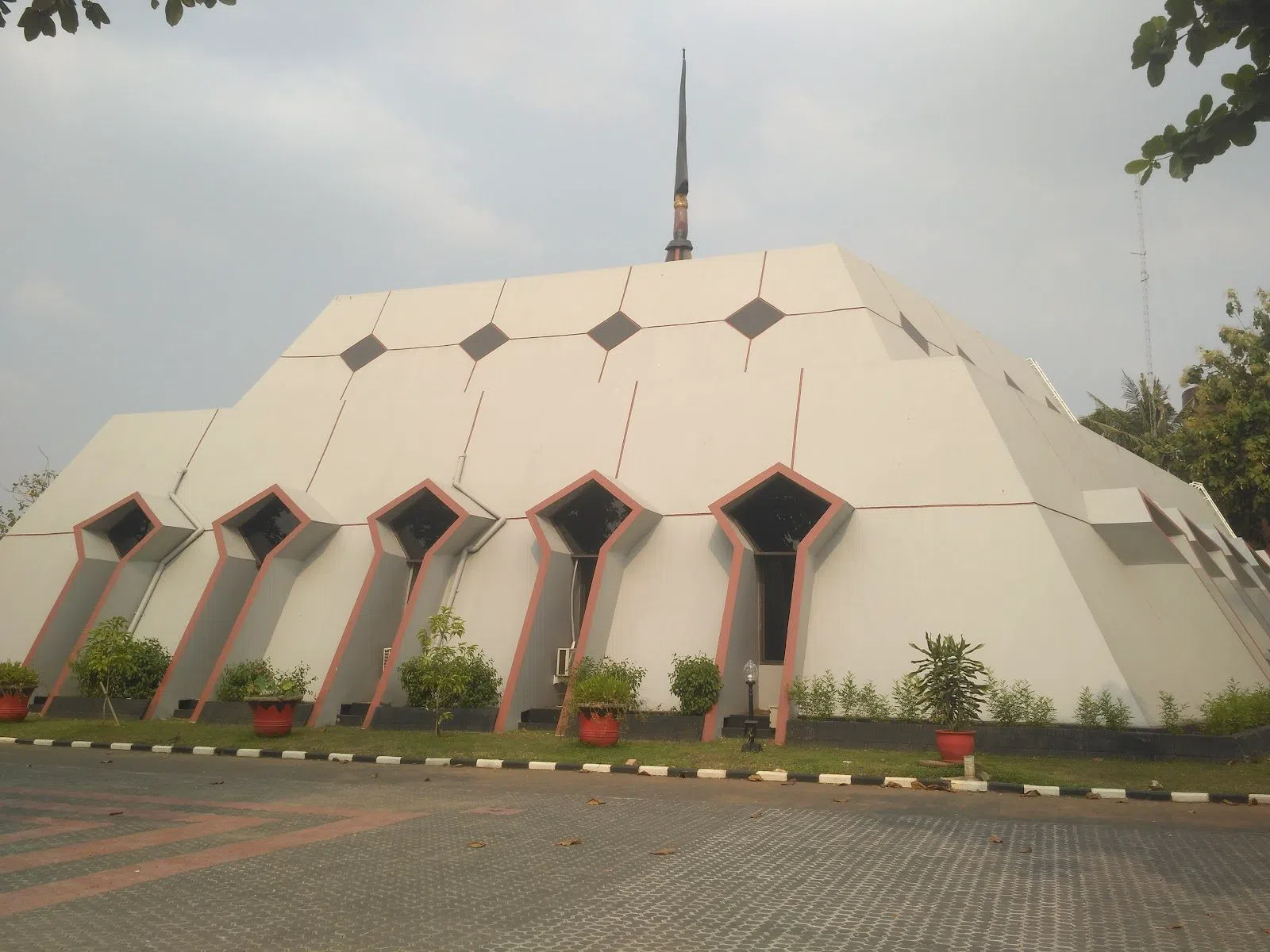
Museum Pusaka, a short walk on in the same museum belt, is free with park entry and probably the best value in Jakarta's east: roughly 6,000 heirloom blades, kris among them dating back to the eighth century, open 08:00 to 17:00 daily. The corridors are narrow, so a group of fifteen should go in waves rather than as a block. Allow twenty minutes if blades leave you cold, an hour if they don't.
Museum Purna Bhakti Pertiwi, set apart in its own grounds near the park's eastern side, is the oddest thing on site: a near-empty museum of the gifts given to President Suharto, costing Rp2,000 for an adult and Rp1,000 for a child. Thirty minutes is enough and the architecture alone earns them. It opens Monday to Saturday 09:00 to 16:00 and Sunday until 18:00, shuts on major national holidays, and because its halls are hired out for weddings a function can occasionally close sections without warning.


The Contemporary Art Gallery TMII, on the promenade side, is the quietest surprise in the park and the nearest thing to a modern art-and-coffee break: Rp25,000 on top of entry, 08:00 to 17:00 daily, rotating exhibitions, no flash photography. The rooms are small, so it works for a couple or a party under ten and not for a coach. Canvas and tote-bag painting workshops can be booked for groups if you want an hour out of the sun with something to do.
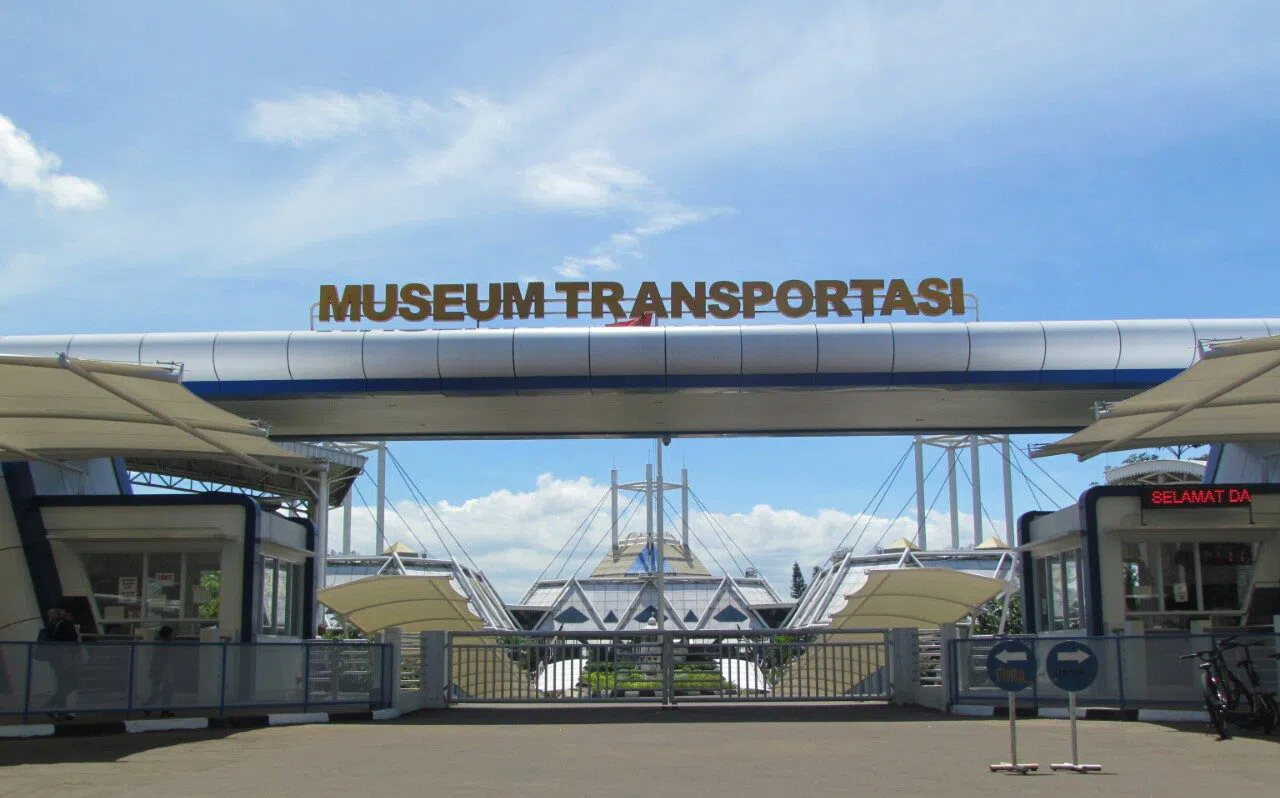
Museum Transportasi TMII occupies a sprawling outdoor site in the north of the park and costs Rp10,000, the cheapest serious museum here and the obvious stop for anyone who cares how a country of islands actually moves. Add-ons are trivial: Rp5,000 for the plane ride, Rp10,000 for the circuit train. It closes on Mondays and opens Tuesday to Sunday, 08:00 to 16:00. Because it is mostly open air, it is the first thing to write off if the sky breaks.
Screens, a planetarium and the Friday catch
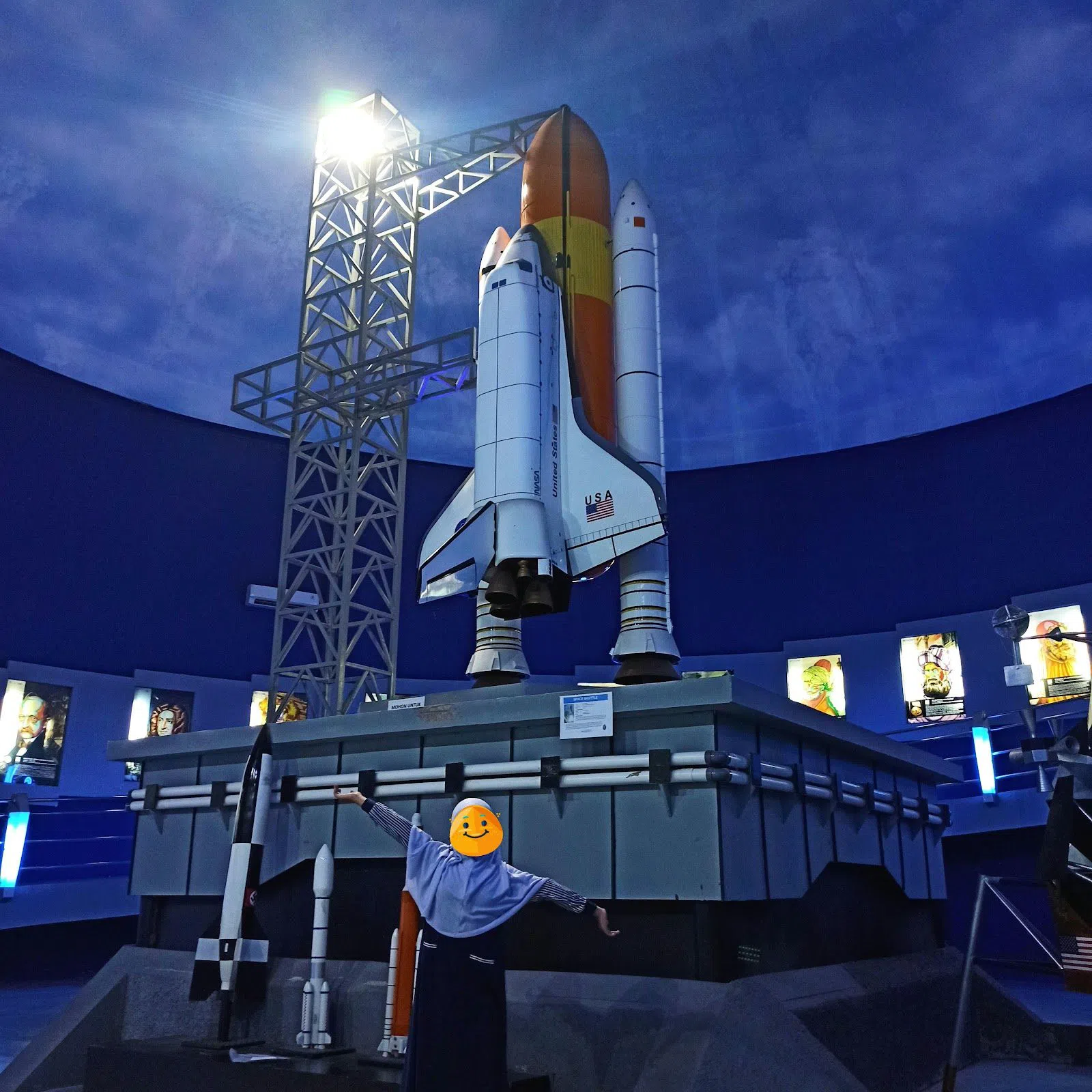
Skyworld Indonesia, in the park's southern zone, is the best wet-weather fallback on site: 20,000 square metres of indoor science centre and planetarium for Rp90,000, with children over 80cm paying full price. It handles groups comfortably and sits in the same zone as the main food court. The catch is that it closes every Friday. Weekday hours are 09:00 to 17:00, weekends from 08:00. If your one free day in Jakarta is a Friday and your rain plan is Skyworld, you need a different rain plan.

Teater Keong Emas, the golden-snail dome near the park's centre, still runs fixed daily shows from 10:00 to 16:00 on its giant screen: Indonesian culture and nature films, Rp50,000 regular, Rp75,000 balcony or VIP, Rp100,000 VVIP, bought at the box office on the day. With 836 seats it is the easiest venue in the park to absorb a coach party on a wet afternoon. It no longer trades as an active commercial giant-screen release house, so arriving expecting a current blockbuster will disappoint.
Teater Tanah Airku, a short walk from the promenade, is the country's first fully multimedia-equipped theatre and still stages dance-dramas such as Malin Kundang. Group and school bookings are its core business, some park-programmed shows are free, and others are priced by production. It only opens for scheduled performances, so check TMII's monthly cultural agenda before you build a day around it. An empty theatre is just a locked building.

Birds early, dinosaurs only if you have children
Taman Burung TMII, the flagship of the Jagat Satwa Nusantara wildlife cluster in the park's north-east, holds around 175 Indonesian bird species with several open walk-in zones, and costs Rp75,000 to 85,000. It opens 09:00 and closes 17:00. Go first thing, when the birds are actually vocal; by midday a walk-through aviary in October humidity is a quiet, hot cage. Combined Jagat Satwa tickets, sold at the gate at a heavy discount, add the Komodo Museum, Dunia Air Tawar, Dunia Serangga and Farmhouse, and are worth buying only if you genuinely intend to see three or four of them. The Bantimurung restaurant next door seats groups.

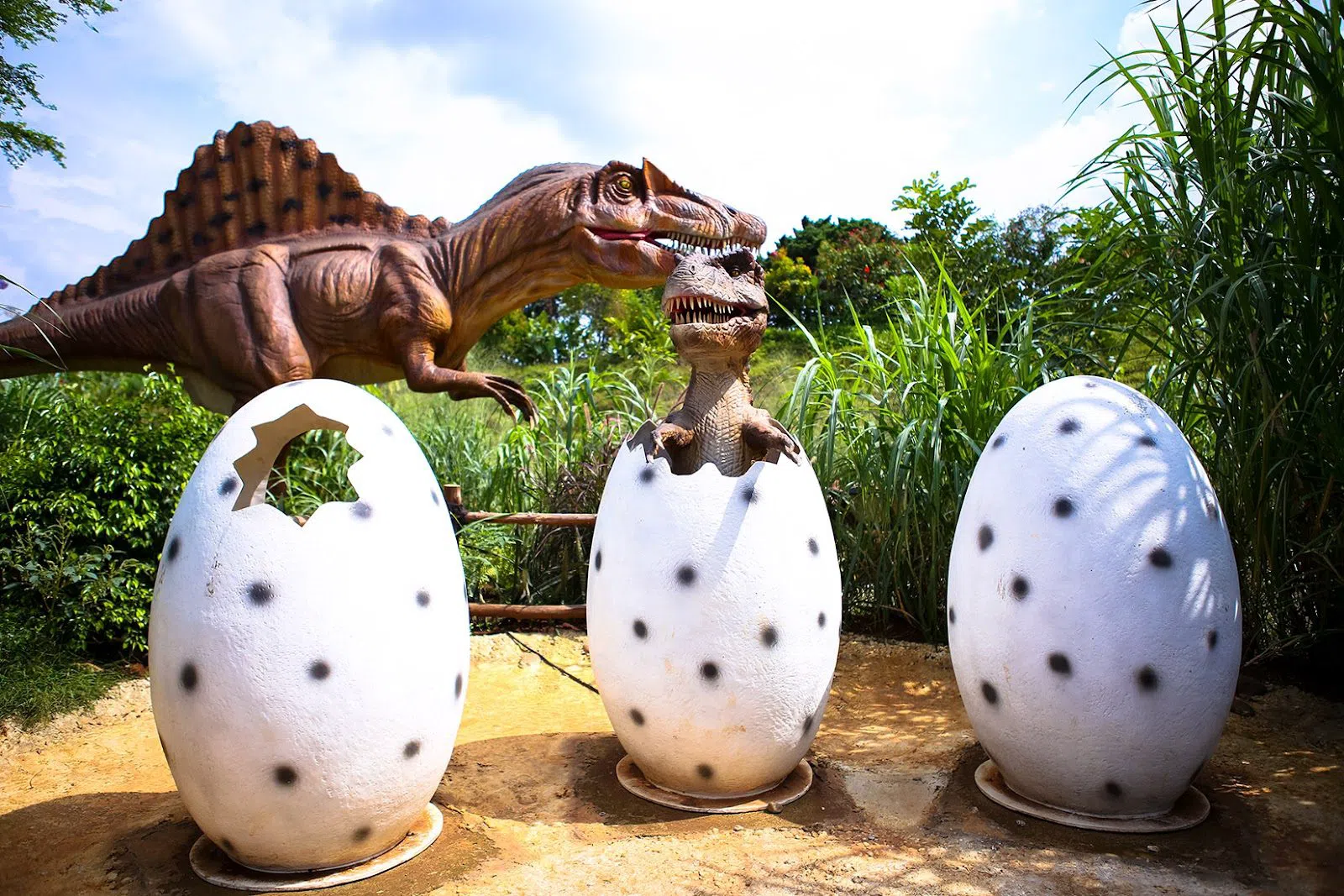
Taman Legenda Keong Emas, beside the theatre dome, is Rp75,000 to enter or Rp98,000 for the all-in wristband covering the Dinosaur Adventure and several rides. It is squarely for families with under-twelves, and the wristband makes headcounts simple for a group. Adults travelling without children can skip it with a clear conscience and spend the money on the cable car and Museum Indonesia instead.
Eating without losing an hour
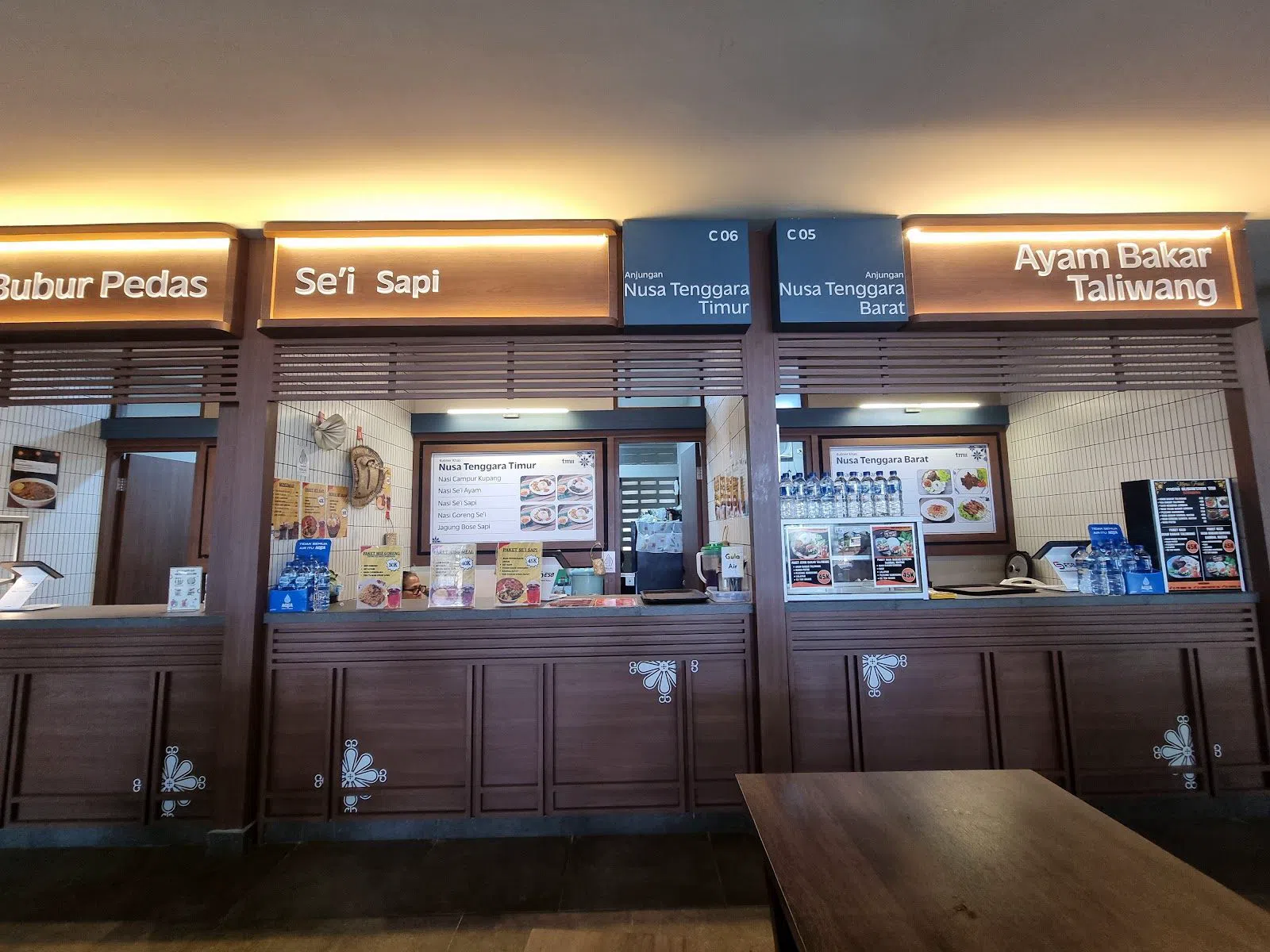
Pasar Nusantara TMII, in the same southern zone as the science centre, serves real regional Indonesian food inside the gates at Rp25,000 to 70,000 a dish, across multiple stalls with flexible seating and no reservations. It is the only sensible option for a large party. Timing is the thing to get right: eat before 11:00 or after 13:00, because the lunch crush here is worse than any ride queue. Weekday hours are 08:00 to 18:30, weekends 07:00 to 20:00.
Green Terrace Taman Mini sits about 700 metres from the main entrance, outside the ticket line, so there is no park ticket and no entrance fee. Several tenants, outdoor tables, roughly Rp30,000 to 120,000 a head: Bebek Renon, Ya Kun Kaya Toast, Vilo Gelato and decent specialty coffee. It opens 09:00 to 20:30, weekends from 10:30. It is also the easiest meeting point in the area, so gather a group here before you go in, or decompress here afterwards rather than queuing twice.
The reason to stay past five
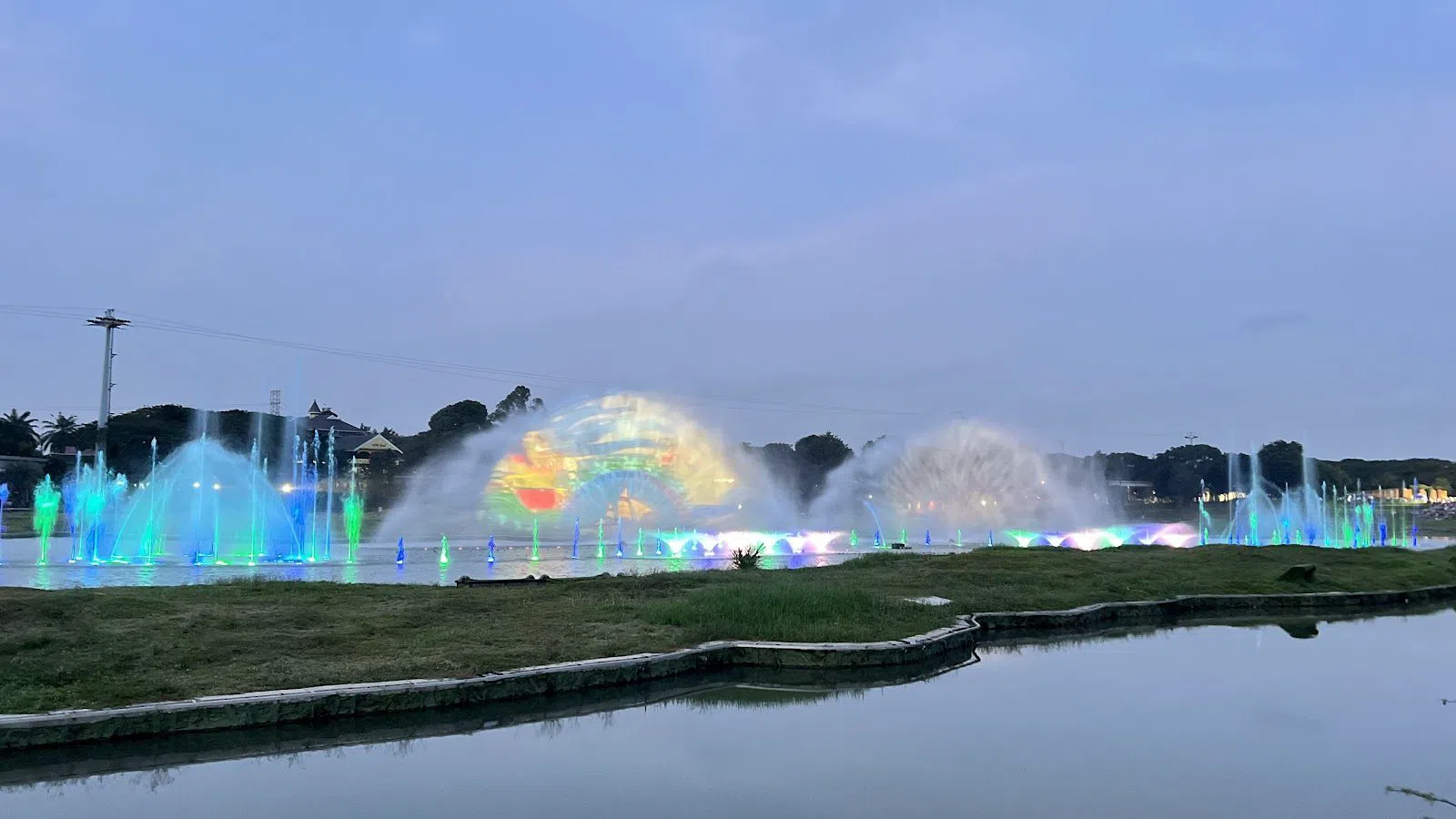
Most visitors leave at five, which is a mistake. The Plaza Promenade and its Tirta Cerita fountain run a free show daily at 18:30, included in park entry, with a roughly 300-drone display added at weekends. It is an open-air standing plaza with no ticket, no booking and no capacity limit, and it is the best free thing in the park. When it finishes, take the shortcut footpath opposite the Contemporary Art Gallery rather than waiting for a shuttle; walking out beats standing in the post-show queue. If you want the drones, that means a weekend visit and the Rp35,000 weekend gate price. For more across the city, our Jakarta guide covers what else is worth the traffic.
Two kilometres out, the heaviest history in the district
Monumen Pancasila Sakti stands at Lubang Buaya, two kilometres from the park, and it is the hardest-hitting stop in this part of Jakarta: the site of the 1965 killings, with a museum building and wide open grounds that take large school and tour groups daily. Entry is Rp5,000 for an adult and Rp3,000 for a student. It closes every Monday and otherwise opens Tuesday to Sunday, 08:00 to 15:30. For October planning, it shut from 25 September to 1 October 2026 for the Hari Kesaktian Pancasila ceremony and reopened on 2 October, so the rest of the month is clear. Do not pair it with the dinosaur park in the same afternoon; the tonal whiplash is unkind to everyone.

How long the day actually takes
Four hours is the honest minimum: cable car, Museum Indonesia, Museum Pusaka, lunch, out. A full day, 09:00 to the 18:30 fountain, covers those plus two of the bigger paid venues and still leaves pavilions unvisited. Walking distances between zones are real; between the north car park and the southern food court you are measuring in kilometres, not metres, which is exactly why the free shuttles matter. Treat them as a bus network with a loose timetable and plan to wait a few minutes for one.
At the door or with a driver
Everything here is sold at the gate or at each venue's own counter on the day. Nothing needs booking ahead for a couple or a family, and the only genuine time-savers are arriving at opening and choosing Station B for the cable car.
A guided private car tour is the alternative, and for some visitors it earns its money: someone else handles the traffic out east, the perimeter parking and the shuttle logic, and you get context on the pavilions you would otherwise read off plaques. Those options run seven days a week and start from 79 USD per person. Across the bookable tours here there are 202 traveller reviews, with the top-rated one at 4.8/5 from 110 reviews. Done independently, the same day costs a fraction of that in tickets, and the premium buys transport, a guide and not having to think.
Is it worth it
Yes, with conditions. If you want one place in Jakarta that lays out the whole country's architecture, textiles and geography in a single walk, nothing else does it, and the car-free site is far more pleasant than it was with traffic running through it. It suits families, anyone with an interest in Indonesian craft or history, and patient walkers. It suits groups especially well: the shuttles, the 836-seat theatre, the food court and the open plaza all swallow large parties without fuss.
It does not suit a visitor with three hours and low heat tolerance, and it does not suit anyone expecting a polished modern theme park. Several pavilions feel tired up close. The park's strength is scale and strangeness, not finish.
Best time to go in October
October is the turn into the wet season here: mornings usually clear and already hot by nine, cloud stacking through the early afternoon, and a heavy shower plausible between roughly 14:00 and 17:00. Build the day backwards from that. Do the cable car and the bird park between 09:00 and 11:00 while the air is clear and the birds are loud. Eat before 11:00 or after 13:00. Put the indoor hours (Museum Indonesia, Museum Pusaka, the art gallery, the science centre or the dome theatre) in the window when the sky is most likely to open. Then come back out for the 18:30 fountain, which the rain has usually cleared by.
Weekdays are cheaper and quieter at every gate and queue. Weekends cost more and are busier but bring the drone show. Avoid Monday if you want the transport museum or the Lubang Buaya monument, both closed. Avoid Friday if the science centre is your rain plan. And if you only have one day, a Tuesday to Thursday visit is the best version of this park.
Practical notes
Getting there. The site is in the far east of the city beside the Jagorawi toll road. Allow an hour or more each way from central Jakarta in traffic, and more on a Friday evening. Ride-hailing drops you at a perimeter gate; your driver cannot take you inside, so agree the pickup gate before you part company. If you drive, pay the Rp35,000 car fee, park at the edge, and switch to a shuttle.
Cash. Most counters take cards or QR payment, but small notes solve every edge case here, including a Rp2,000 museum ticket that no card machine wants to process. Carry Rp300,000 to 400,000 in small denominations for a full family day.
Budget. A lean weekday for one adult (entry Rp25,000, cable car Rp50,000, Museum Indonesia Rp25,000, Museum Pusaka free, transport museum Rp10,000, the Suharto gift museum Rp2,000, a Rp40,000 lunch) lands near Rp152,000, plus Rp35,000 if you bring a car. Add the science centre and the bird park and you are at roughly Rp320,000. The fountain show at the end costs nothing.
What to carry. Water, a hat, a thin rain layer rather than an umbrella, and shoes you can walk eight kilometres in. For somewhere to sleep within reach of the eastern side of the city, start with a Jakarta hotel search and check the drive time before you book. East Jakarta traffic decides more of your day here than the ticket price does.
Vor der Reise
How much does it cost to get into Taman Mini Indonesia Indah?
Park entry is Rp25,000 per person on weekdays and Rp35,000 at weekends. Your vehicle pays separately at the gate (Rp35,000 for a car, Rp20,000 for a motorbike, Rp10,000 for a bicycle, Rp60,000 for a bus), and every attraction inside charges its own ticket on top. A lean weekday with the cable car and three museums comes to roughly Rp152,000 per adult including lunch.
Can you drive your own car around the park?
No. The whole 150-hectare site is a green zone: petrol cars and motorbikes park at the perimeter and only electric vehicles move inside, weekdays 08:00 to 19:30. You get around on free electric shuttles, which take whole coachloads, or by bike or on foot. Most car-tour visitors don't expect that, so agree a pickup gate with your driver before you go in.
How long do you need at Taman Mini?
Four hours is the honest minimum: cable car, Museum Indonesia, Museum Pusaka, lunch and out. A full day from the 09:00 opening to the 18:30 fountain show covers those plus two of the bigger paid venues and still leaves pavilions unseen. Distances between zones run to kilometres, so factor in shuttle waits.
What is closed on which days in October 2026?
Skyworld Indonesia is closed every Friday, which catches people out when it's their rain plan. Museum Transportasi is closed Mondays (otherwise Tue to Sun, 08:00 to 16:00), and so is Monumen Pancasila Sakti at Lubang Buaya (Tue to Sun, 08:00 to 15:30). That monument shut from 25 September to 1 October 2026 for the Hari Kesaktian Pancasila ceremony and reopened on 2 October. Teater Tanah Airku only opens for scheduled performances, so check the monthly cultural agenda.
Is it better to book a guided tour or just turn up?
Everything is sold at the gate on the day, so a couple or family needs no advance booking; arriving at the 09:00 opening and using cable car Station B saves more time than any ticket. A guided private car tour is worth it if you'd rather not handle the traffic out east, the perimeter parking and the shuttle logic, and want context on the pavilions. Those tours run seven days a week and start from 79 USD per person; independently, the same day costs a fraction of that in tickets.